Round vs Oval Proofing Basket: Which Shaping Tool Wins?
You've seen both in bakery shelves and online shops, and you're wondering which one actually matters for your bread. The honest answer is that both work beautifully, but they serve different loaf styles. Pick the wrong shape, and your dough fights the basket instead of relaxing into it.
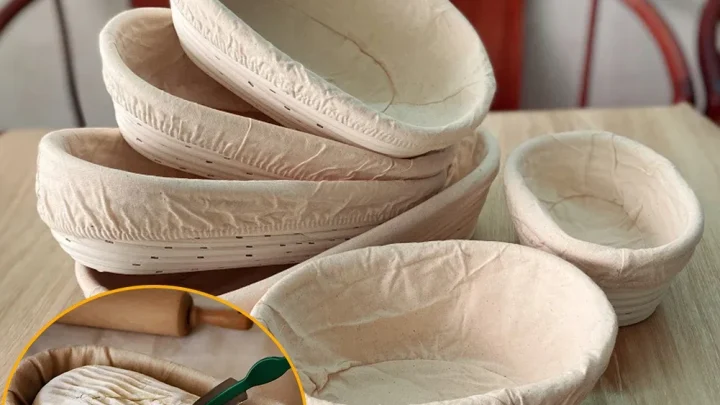
Manufacturer specifications for standard bannetons typically rate round baskets at 22, 25, or 30 cm across, while oval baskets run roughly 25×13 cm up to 30×15 cm. As of 2026, most home baking setups include one of each, but if you're buying your first basket, this guide helps you choose based on the bread you bake most. That single choice affects how your dough holds its shape, how it scores, and even how the final crumb develops.
Why This Comparison Actually Matters
The shape of your proofing basket isn't a decoration choice. It's a structural decision that determines whether your dough keeps its tension or slumps into a flat, sad disk.
Here's the core principle: a proofing basket supports the dough during its final rise. The walls hold the dough upright while the gluten relaxes and the yeast produces gas. Without that support, high-hydration dough will spread sideways like a pancake.
Round baskets cradle dough into a sphere. Oval baskets cradle dough into an elongated log. This matches how you shape the dough before it goes into the basket.
A round ball of dough placed in an oval basket will relax and spread along the long axis, destroying the tension you worked so hard to build.
Think about the last time you saw a lopsided loaf. Chances are, someone shaped a boule and proofed it in an oval basket, or shaped a batard and tried to cram it into a round basket. The mismatch does more damage than most bakers realize.
So the real question is not which basket is "better." The real question is which shape matches the loaf you're baking.
Quick Answer: Round vs Oval at a Glance
A round proofing basket is for boules. An oval proofing basket is for batards. Choose the shape that matches your dough's final form.
Round baskets support even, 360-degree tension. Oval baskets support elongated loaves and prevent sideways spread. Both work with high-hydration dough, but you need the right wall height.
Match your basket to your Dutch oven too. An oval batard needs an oval Dutch oven for proper oven spring. A round boule fits a round Dutch oven perfectly.
For most home bakers, start with a round basket if you bake in a round Dutch oven. Buy an oval basket if you prefer sandwich-style slices or bake batards regularly.
How Proofing Baskets Work: The Dough Support Principle
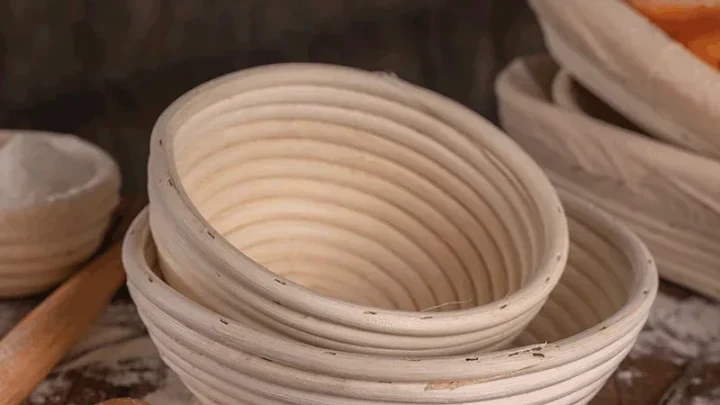
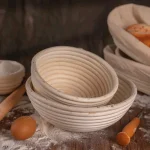
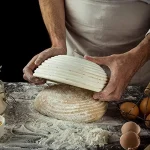
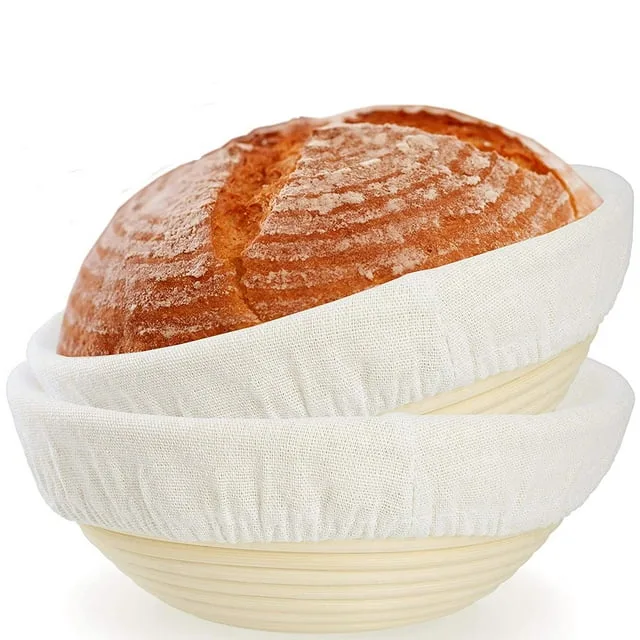
A proofing basket, also called a banneton or brotform, is a rigid container that holds dough during its final fermentation. The basket gives the dough a defined shape while the gluten relaxes and gases expand inside the dough.
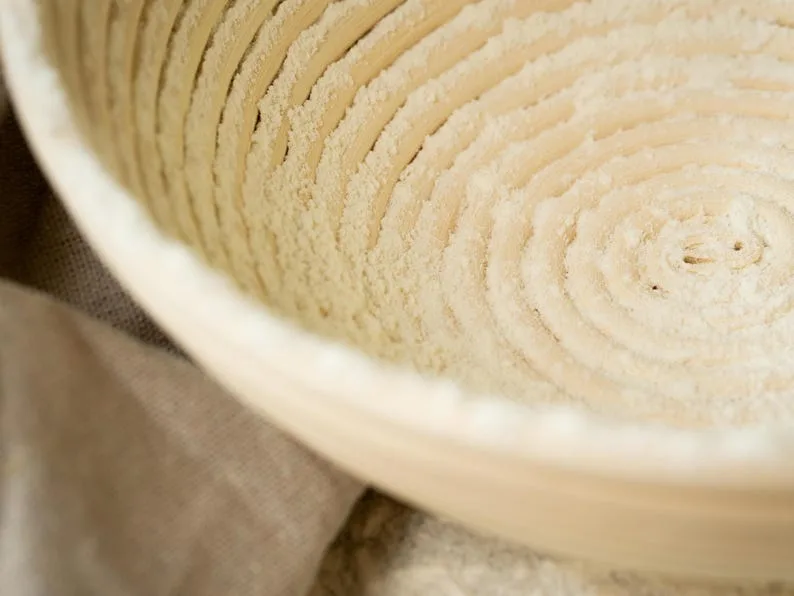
The basket's walls do three jobs. They support the dough so it rises upward instead of outward. They wick moisture away from the dough surface, which helps form a dry skin that scores cleanly.
And they leave characteristic rings or spiral patterns on the crust that give artisan bread its signature look.
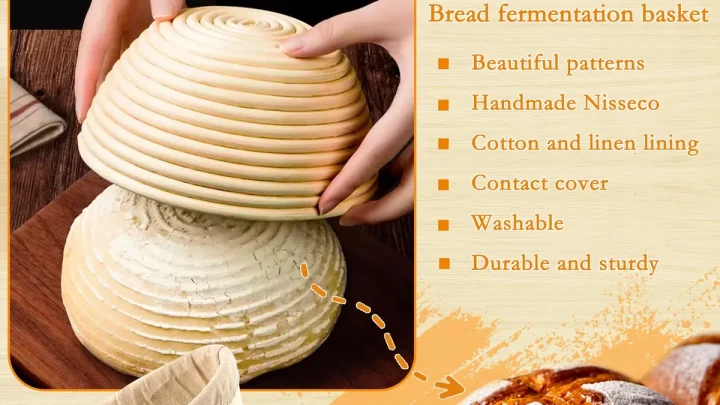
Two materials dominate the market: natural rattan and wood pulp. Rattan is traditional, breathable, and leaves those beautiful spiral marks. Wood pulp baskets are smoother, often denser, and hold their shape longer.
Both work well, though rattan requires more careful cleaning.
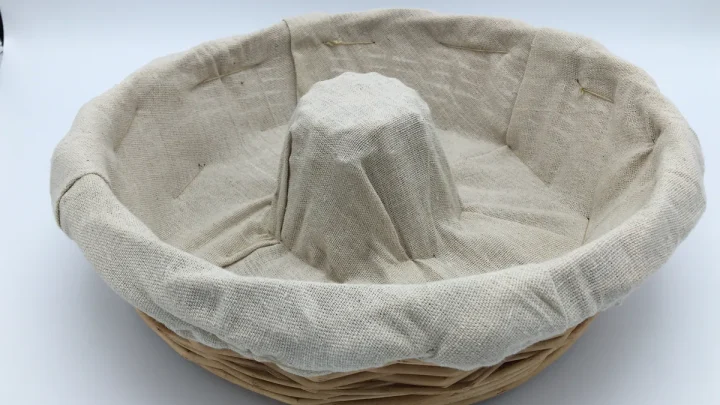
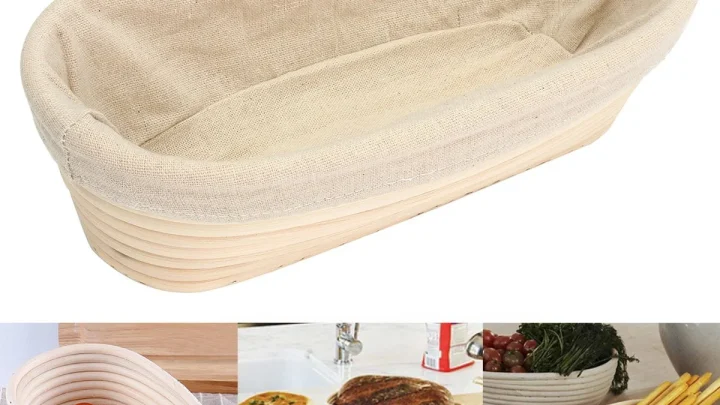
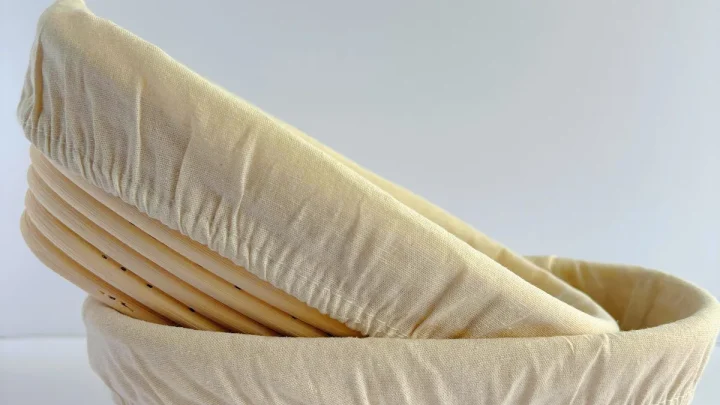
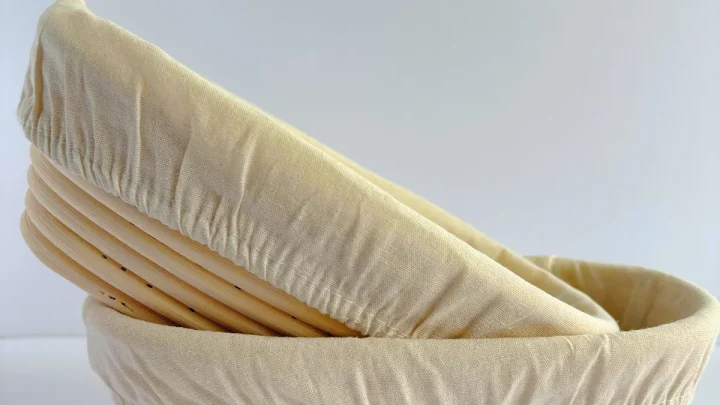
Unlined baskets expose the dough directly to the rattan. Lined baskets have a linen cloth that sits between the dough and the basket walls. The liner makes turning out easier and helps with very sticky, high-hydration doughs.
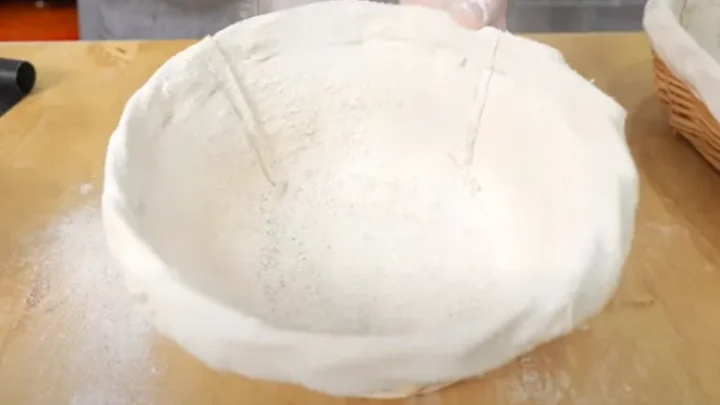
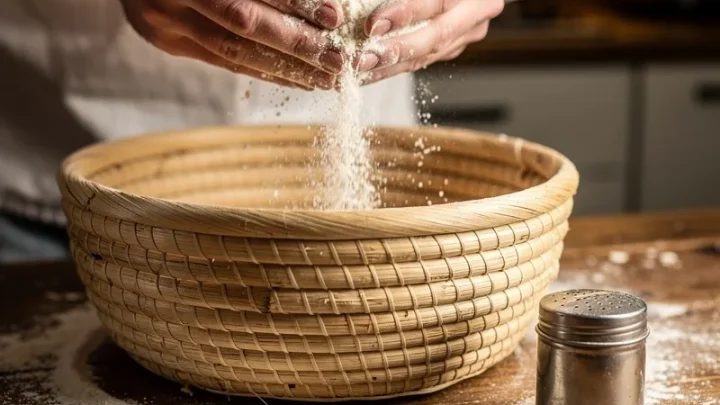
The way dough interacts with the basket surface matters more than you might think. Dusting the basket with rice flour creates a non-stick layer that prevents the dough from adhering to the rattan. Wheat flour works, but rice flour absorbs less moisture and stays drier through a long cold proof.
As our research shows, the basket shape directly affects how the dough holds its structure during the final rise. A round basket supports a sphere. An oval basket supports an elongated structure.
Get that match right, and your bread will bake taller, score better, and look more professional.
Round Baskets: Built for Boules
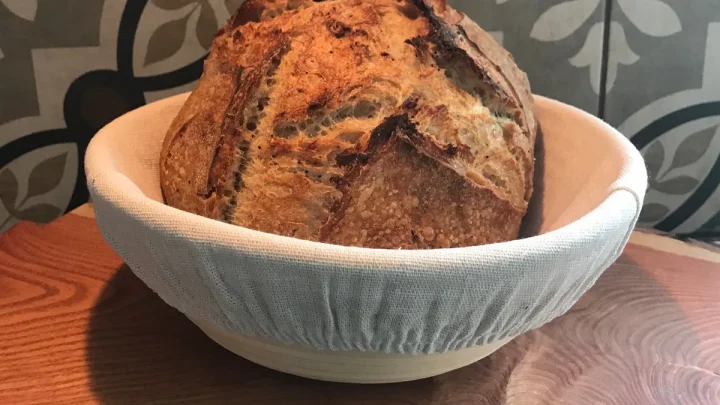
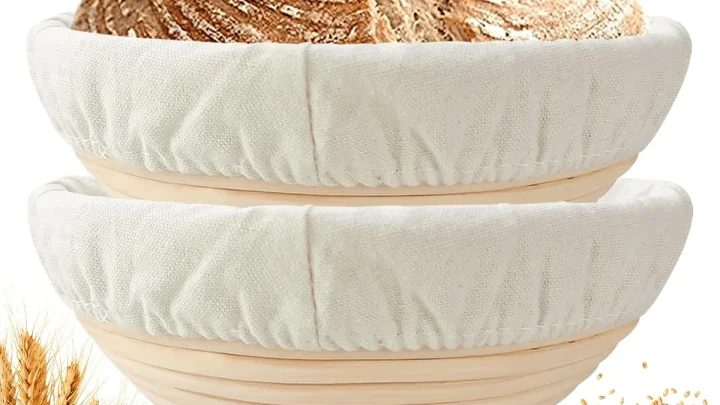
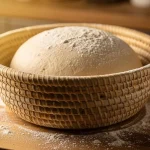
A round proofing basket is exactly what it sounds like: a circular bowl made of rattan, wood pulp, or similar material. It crafts dough into a boule, a classic round loaf that holds a whole universe of textures inside.
How Round Shape Affects Dough Tension
When you shape a boule, you create a smooth, taut ball of dough with a seam at the bottom. Place that ball into a round basket seam-side up, and the walls hug the dough evenly on all sides.
That even contact is the magic of round baskets. The dough receives uniform support across its entire circumference, which helps maintain tension while the dough proofs. When you turn the basket out for baking, the dough is still tight and spherical.
Rounded baskets are best for medium to high hydration dough. A 70% hydration sourdough holds beautifully in a round basket. Even a 85% hydration dough works, provided you shape it carefully and dust the basket generously.
The downside appears when you try to force longer dough into a round basket. A batard will slump and spread, losing its elegant shape. The round walls simply don't provide any longitudinal support.
Best Dough Styles and Hydrations
Round baskets pair perfectly with:
- Classic sourdough boules
- Country-style loaves with mixed grains
- Rye breads with high hydration
- Gluten-free doughs that need firm walls
- Any dough baked in a round Dutch oven
Aggregate reviews from home bakers indicate that round baskets are the most common first purchase. That makes sense. A round Dutch oven is standard equipment, and a round basket fits right into that workflow.
One caveat: size matters. A 500g boule needs a 22cm basket. A 750g boule needs a 25cm basket.
A full kilogram of dough needs a 30cm basket. Check the dough weight rating before you buy.
Oval Baskets: Built for Batards
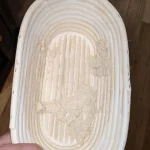
An oval proofing basket is essentially a round basket stretched into an ellipse. It holds dough in an elongated shape that creates longer slices, which look and feel more like sandwich bread.
How Oval Shape Affects Dough Structure
Batards are the classic French loaf shape, sometimes called a "torpedo" or "elongated boule." They need horizontal space to spread out and maintain their length. An oval basket provides exactly that: a long trough that supports the dough along its entire length.
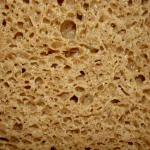
The oval walls prevent the dough from bulging outward and losing its cylindrical form. Instead, the dough relaxes into a graceful oval that bakes into a loaf with a nice open crumb and crisp crust.
For batards, the oval basket is non-negotiable. You could technically proof a batard in a round basket, but it would emerge as a squat, misshapen blob. The elongated shape needs the walls to hold it in place.
Oval baskets do have a tendency to support one side more than the other. The curved ends apply different pressure than the straight-ish sides. This is normal, and it's why proper shaping matters even more with oval baskets.
A sloppy, uneven batard will show every imperfection after baking.
Best Dough Styles and Hydrations
Oval baskets work well with:
- Sourdough batards
- Pain de campagne loaves
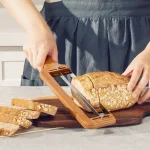
- Whole wheat sandwich loaves
- Seeded or multigrain elongated loaves
- Dough baked in oval-shaped Dutch ovens
As of 2026, oval baskets are showing up in more home kitchens as bakers branch out from the standard round boule. The versatility of an oval loaf, with its longer slices and sandwich-friendly shape, makes it an attractive option.
One important note: oval baskets come in different length-to-width ratios. Some are gently rounded ovals, while others are more elongated. Match the basket's proportions to the style of batard you want to produce.
We recommend checking the exact dimensions on the product page before ordering.
Round vs Oval: Side-by-Side Comparison
Now let's put both baskets head to head. Here's how they stack up across the factors that actually affect your bread.
| Attribute | Round Basket | Oval Basket |
|---|---|---|
| Shape | Circular bowl | Elliptical, elongated |
| Standard sizes | 22, 25, 30 cm diameter | 25×13, 28×14, 30×15 cm |
| Dough weight range | 500g to 1.5kg | 500g to 1.5kg |
| Best loaf style | Boule | Batard |
| Dutch oven match | Round | Oval |
| Slice shape | Round, pastry-like | Long, sandwich-friendly |
| Dough tension | Even 360° support | Longitudinal support |
| Scoring pattern | Spiral or radiating | Single slash or ladder |
| Common mistake | Cramming batards inside | Dough slumping at the ends |
The takeaway here is simple. Round baskets give you even support from every angle. Oval baskets give you directional support along one axis.
Which one fails more often? Aggregate reviewer feedback points to oval baskets causing more beginner frustration. Uneven shaping or overfilling shows up more easily in an elongated form, which gives lopsided loaves.
Match Your Basket to Your Dutch Oven (or Baking Stone)
Here's a hidden rule that trips up a lot of bakers: your basket shape should match your baking vessel, not just your loaf style.
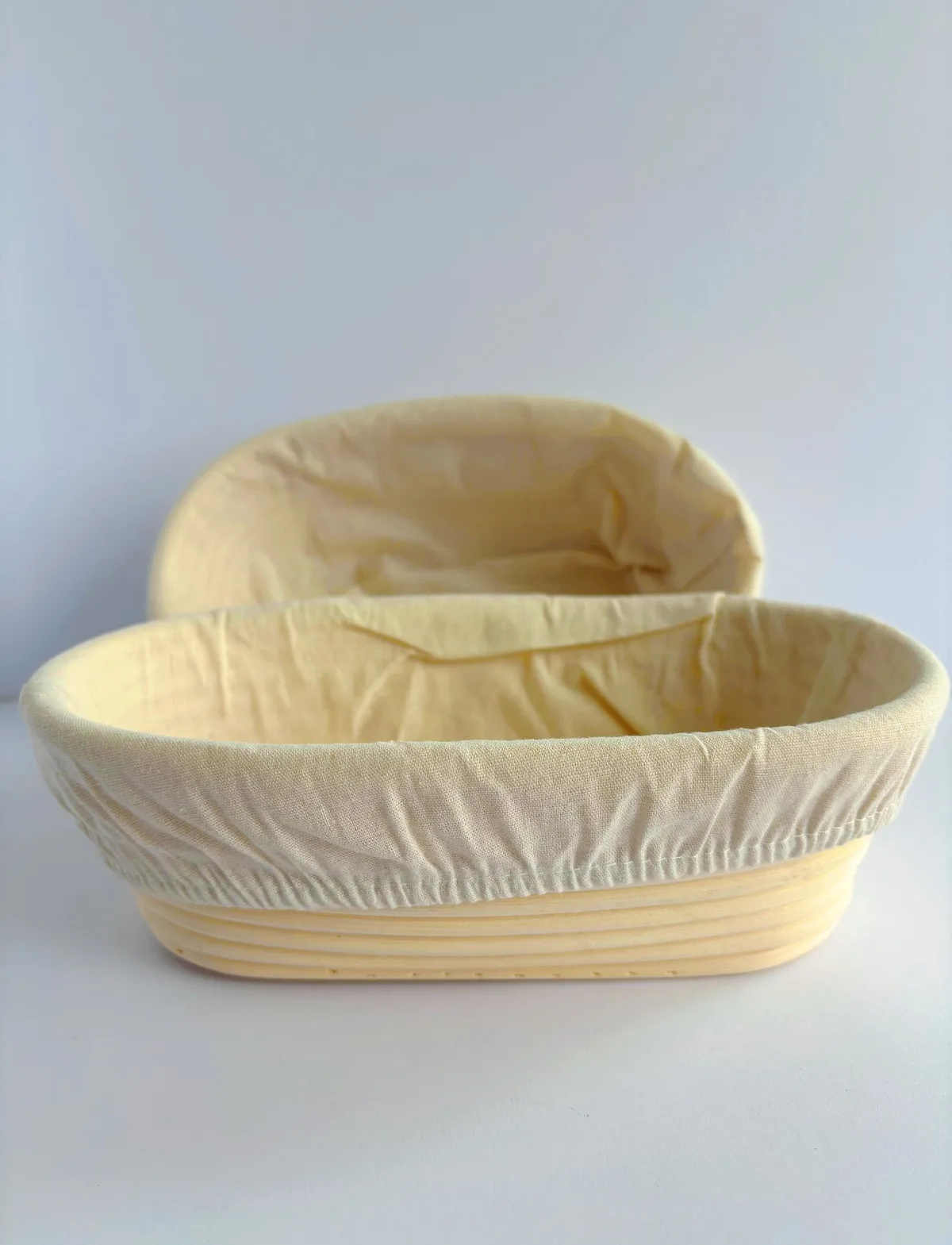
If you bake in a round Dutch oven, choose a round basket. A perfectly proofed oval batard will hit the walls of a round Dutch oven and spring sideways instead of upward. The result is a squashed, uneven loaf with weak oven spring.
If you bake on a baking stone or steel, the basket shape still matters, but with more freedom. You can score and load the dough directly onto the stone, and the oven spring pushes the loaf upward rather than against a pot's walls.
Oval Dutch ovens are less common but exist, and they pair naturally with oval baskets. Verify the dimensions of both before relying on a fit. A 30×15 cm oval banneton needs roughly a 33 cm oval Dutch oven to allow room for the dough to expand.
One more consideration: the size of your baking surface. An oval loaf takes up more length on a baking stone, so check that your stone isn't too small. Round loaves crowd less but limit your batch size.
Common Sizing Mistakes: Why Dough Weight Beats Basket Dimensions
The most common error we see in our research is choosing a basket purely by its physical dimensions while ignoring its dough capacity.
Manufacturers rate baskets by the weight of dough they hold, typically 500g, 750g, 1kg, or 1.5kg. That rating assumes a standard 70% hydration white flour dough. Stiff rye or whole wheat doughs take up less volume, while very slack, 85% hydration doughs take up more.
Here are the common mistakes and their results:
- Overfilling a basket with 1kg of dough when it's rated for 750g causes the dough to spill over the rim during a cold proof.
- Underfilling a basket creates a flat, wide loaf instead of a tall, proud one, since the dough has too much room to spread.
- Mixing shape with weight, like putting a 500g boule in a large oval basket, gives you a misshapen pancake instead of a proper batard.
The fix is straightforward. Match the dough weight to the basket's rating, and choose the shape based on the loaf style. As a rule of thumb, a 25cm round basket handles 500 to 750g of dough, while a 28×14 cm oval does the same.
For a full 1kg boule, step up to a 30cm round basket.
Can You Use the Wrong Shape? Substitutions and Workarounds
What if you only have a round basket but want a batard? Or an oval basket with no round Dutch oven to match? You have a few workable options, though none are perfect.
First, know that the basket isn't the only tool that shapes dough. A couche, which is a heavily floured linen cloth, can support batards beautifully without any basket at all. If you already have a round basket, you can proof a batard in a couche on a baking sheet instead.
If you only have a loaf pan or a mixing bowl, line them with a lint-free kitchen towel and dust heavily with rice flour. The cloth mimics the support of a banneton, though it won't wick moisture as effectively.
You can also try proving a batard in a round basket. Skip the attempt; it rarely works. The dough will relax into a squat blob, and your scoring pattern will look distorted.
Here's the if/then logic that helps:
If you only have a round basket and want an oval loaf, bake a boule instead. It's simpler and produces better results.
If you only have an oval basket and want a round loaf, try placing the dough at the center. The elongated walls will still give you a slightly oval shape, so plan for that.
The best workaround remains the couche. It's cheap, flexible, and completely removes the shape mismatch problem.
How to Use a Proofing Basket: Step-by-Step for Both Shapes
Using a proofing basket correctly matters more than which shape you pick. Here's the full process, adapted for both round and oval baskets.
Step 1: Dust the Basket Generously
Use rice flour for the best release. Wheat flour works in a pinch but absorbs more moisture and tends to stick after a long cold proof. A 50/50 mix of rice and all-purpose flour also performs well.
Sprinkle the flour into the basket and swirl it around, coating every surface, including the seams.
Step 2: Shape the Dough
Shape your dough into a tight boule or batard before it goes into the basket. The preshape and final shaping steps build the tension that the basket then preserves through the proof. A loose, poorly shaped dough will spread and tear, regardless of the basket you use.
Step 3: Place Seam-Side Up
Place the dough into the basket with the seam facing upward. The open side of the dough becomes the bottom crust once you turn it out. The seam side gets baked, creating those attractive spiral marks on the finished loaf's surface.
Step 4: Cover and Proof
Cover the basket with a clean kitchen towel, a plastic shower cap, or oiled plastic wrap. This prevents the dough's surface from drying out and forming a thick skin. Proof at room temperature for 1 to 2 hours, or in the refrigerator for 8 to 24 hours.
Step 5: Turn Out and Score
To turn out, place a piece of parchment or a baking peel over the basket, then flip it quickly and firmly. The dough should release cleanly if properly floured. Score with a bread lame or sharp knife.
Use a single slash for batards, or a cross or spiral pattern for boules.
Step 6: Bake
Transfer the dough to your Dutch oven or baking stone. For best results, bake in a preheated Dutch oven at 450°F to 475°F with the lid on for the first 20 to 25 minutes, then remove the lid to finish browning.
High-Hydration Dough: When Shape Selection Gets Tricky
High-hydration doughs above 80% need extra support. The oval basket's longer walls can cause the dough to slump at the ends if your shaping is loose. Use a linen liner, dust heavily with rice flour, and consider a 30-minute freezer rest in the basket before turning out to firm up the dough.
Buying Guide: Specs, Sizing, and Price Ranges
Standard round baskets run 22 to 30 cm across. Oval baskets typically measure 25×13 cm up to 30×15 cm. Expect to pay roughly $15 to $45 for a quality banneton from a reputable baking supplier.
| Basket Size | Dough Weight | Best For |
|---|---|---|
| 22 cm round | Up to 500g | Small boules |
| 25 cm round | 500 to 750g | Standard boules |
| 28×14 cm oval | 500 to 750g | Batards |
| 30×15 cm oval | 750g to 1kg | Large batards |
Choose the size that matches your dough weight. Overfilling is the fastest way to ruin a proof.
Pro Tips for Better Oven Spring and Crust
Preheat your Dutch oven for at least 45 minutes. Score deeply at a 45-degree angle. Add steam in the first five minutes of baking.
These techniques matter as much as your basket shape.
Pay attention to proofing temperature too. A cold, slow proof in the refrigerator builds flavor and creates a firmer dough that holds its shape better during baking.
Frequently Asked Questions
Does a round basket ruin a batard?
Yes, a round basket will force a batard to spread into a squat disk. Use a couche or a loaf pan instead. Matching the shape gives the best results.
Can I bake directly in a proofing basket?
Never place a rattan basket in a hot oven. It can char or catch fire. Always turn the dough out onto parchment or a peel before baking.
How many loaves fit in a 1kg basket?
A 1kg basket holds one large loaf. Split the dough into two 500g pieces for smaller round or oval loaves instead.
Do I need a linen liner?
Not strictly, but it helps with sticky, high-hydration doughs and makes cleanup easier. Unlined baskets give a stronger spiral pattern on the crust.
Final Verdict: Which Basket Should You Buy First?
Start with a round basket if you bake in a round Dutch oven. Add an oval basket later for batards and sandwich-style slices. Both earn their place in a well-rounded bread-baking setup.

Similar Posts