9 Inch Proofing Basket Explained: What It Is & How to Use
If you've ever pulled a lopsided sourdough loaf out of the oven and wondered what went wrong, a proofing basket might be the fix. The 9 inch proofing basket explained here is the same tool professional bakers use to shape round boules. It holds the dough upright during the final rise, stops it from spreading, and leaves that classic spiral pattern on the crust.
A standard 9-inch round banneton handles 750 to 1000 grams of dough, which matches most home sourdough recipes. As of 2026, most baskets in this category are made from unbleached cane rattan or molded wood pulp. Both materials wick moisture from the dough surface, helping the loaf hold its shape.
Here's what that means in practice.
Quick Answer
A 9-inch proofing basket is a round banneton built for dough weighing 750 to 1000 grams. It supports the dough during proofing. The woven cane absorbs moisture and helps form a dry skin.
This dry skin gives you a tall, evenly baked boule with a spiraled crust. It's the right size for standard homemade sourdough.
What Exactly Is a 9-Inch Proofing Basket?
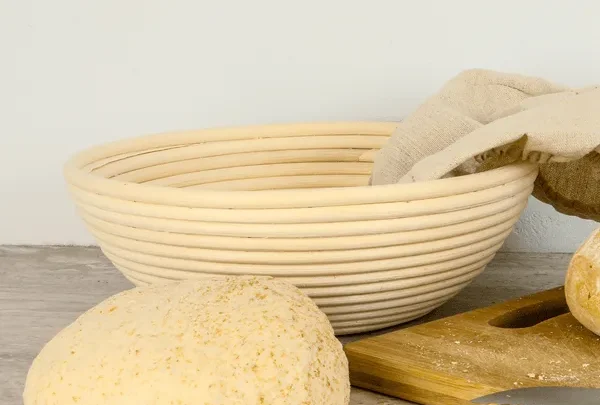
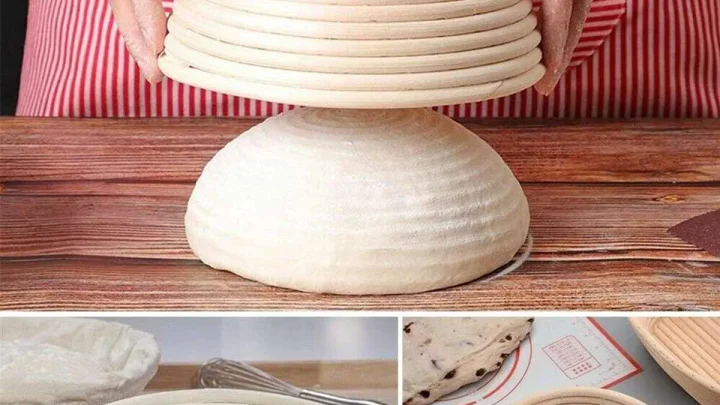
A proofing basket, or banneton, is a rigid container that supports dough while it ferments and rises. The 9-inch version is the round workhorse for home sourdough bakers. It has a wide open top that flares outward, so the dough sits in a bowl-like nest during proofing.
The basket doesn't proof the dough. It shapes it. As the dough expands, the sidewalls hold it upright instead of letting it flatten outward.
That's why a banneton loaf comes out taller and rounder than one proofed on a flat board.
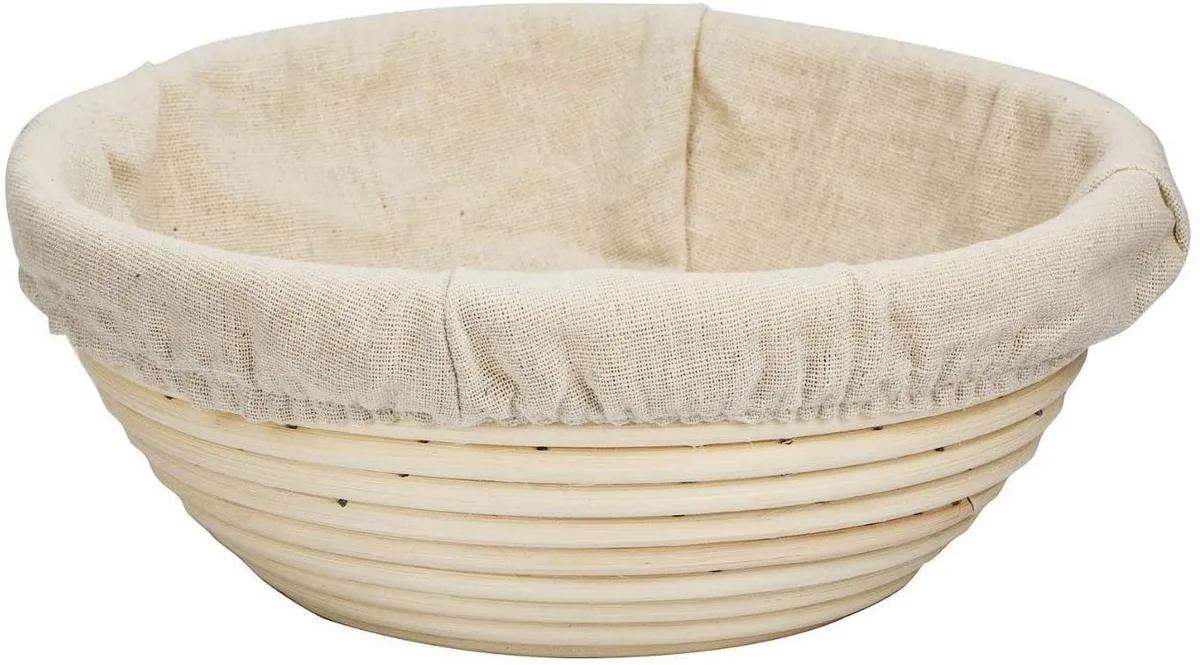
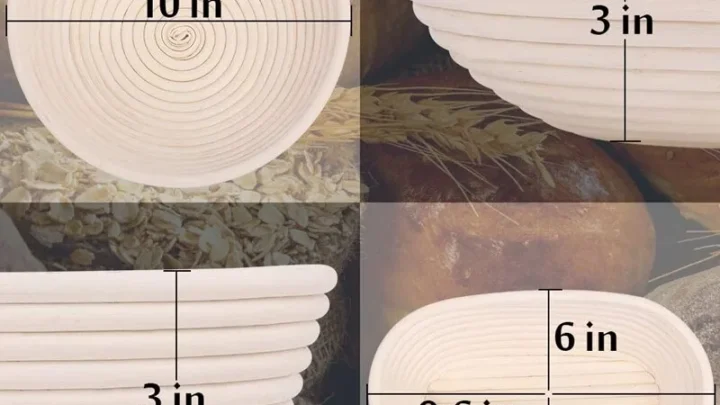
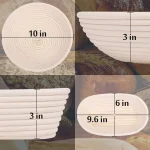
Manufacturer specifications say the top diameter is what gets the "9 inch" label. The basket is typically 3 to 4 inches deep, and the base tapers to about 7 inches across. That geometric taper matters because it lets air circulate around the dough, which helps create a dry surface before baking.
A Quick Visual Breakdown of a Banneton
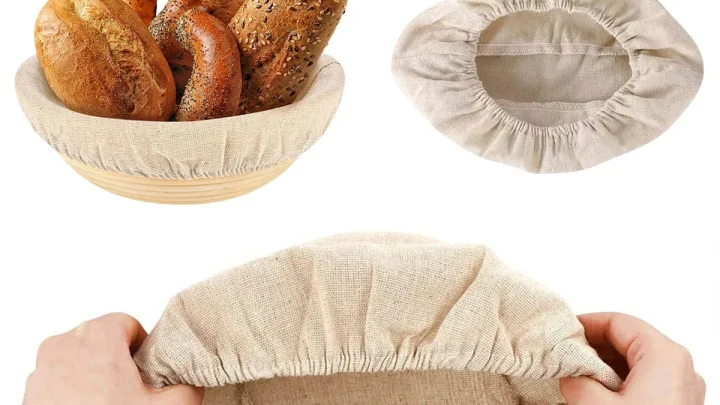
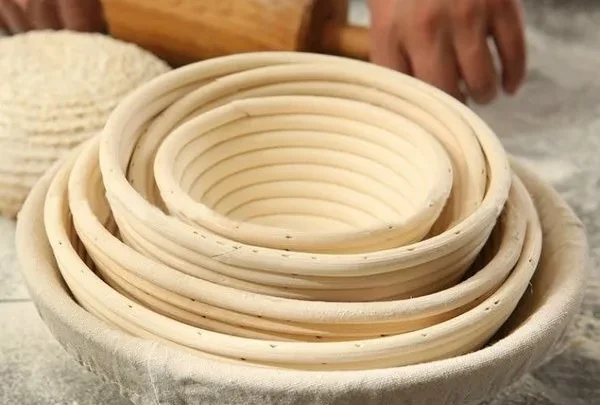
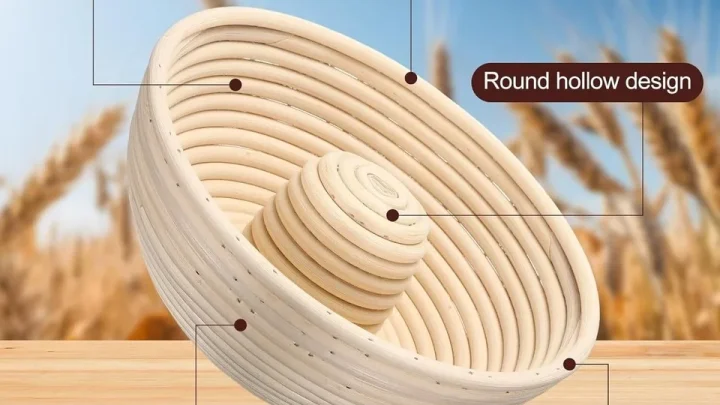
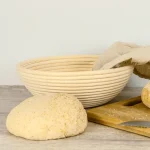
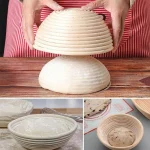
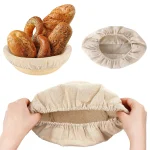
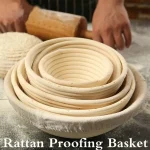
Picture a shallow mixing bowl made of coiled rattan instead of ceramic. The sides spiral upward in a tight weave. Some baskets come with a loose linen liner, while others have a smooth inner coating.
Both do the same job, just with different flour-release properties.
The spiral groove pattern is the detail that matters most. It doesn't come from the dough. It comes from the basket's coils pressing against the dough during proofing.
When you turn the loaf out, those ridges transfer a flour pattern directly onto the crust.
Why 9 Inches Is the Sweet Spot for Round Loaves
A 9-inch basket matches the most common home sourdough recipe size. Flour, water, and starter ratios typically give you a dough ball weighing around 800 to 900 grams after mixing. That fits snugly into a 9-inch basket with enough headroom to rise without spilling over.
Smaller baskets crowd the dough and push it into a mushroom shape. Larger baskets let the dough spread too wide. The 9-inch size balances both problems.
Looking at the Parts: Cane, Liner, Spiral, and Shape
Not all proofing baskets are the same. The material changes how your dough behaves during the proof. The two common styles are natural cane rattan and molded wood pulp.
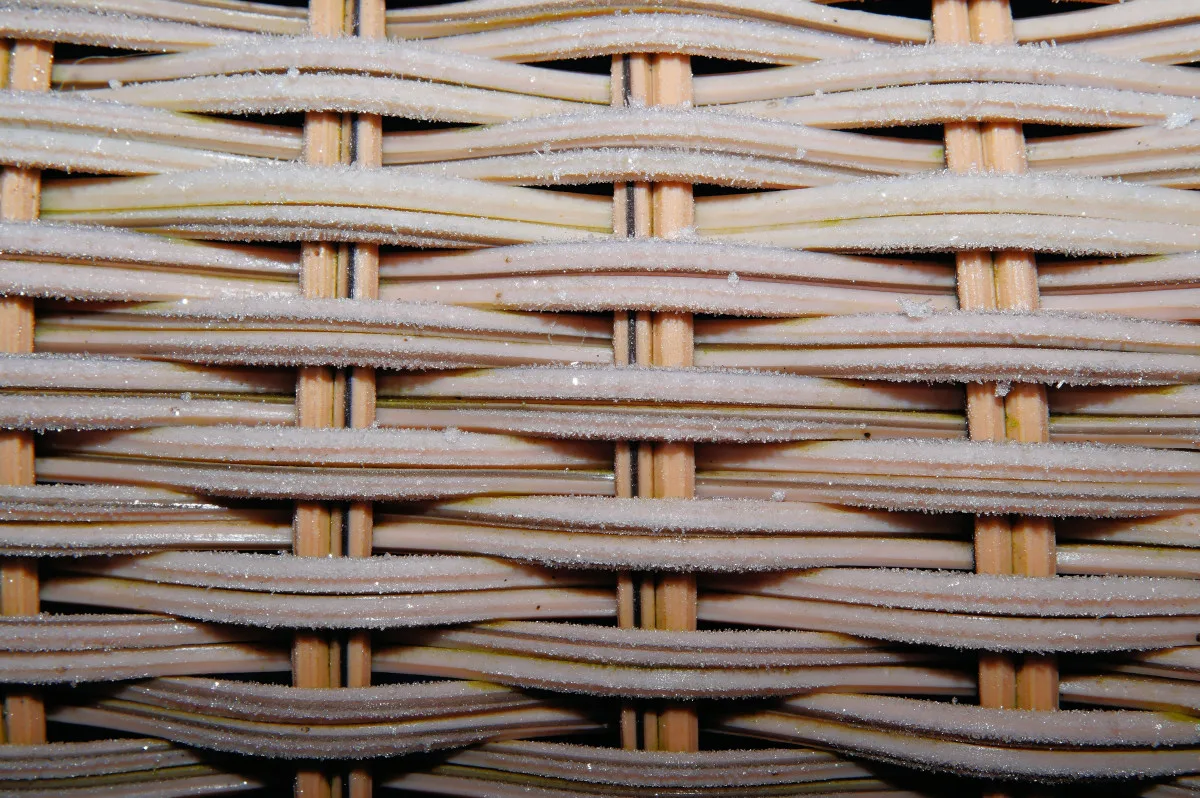
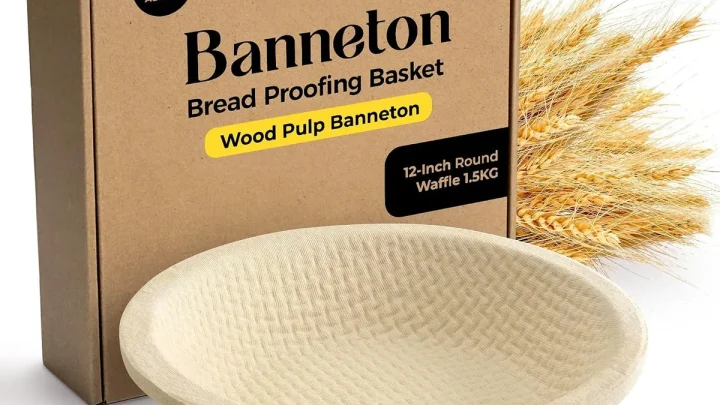
Cane rattan is lightweight, breathable, and has deep spiral grooves. Wood pulp baskets are smoother and need a heavier flour dusting. Both are food-safe, but they differ in release, texture, and care.
Cane Rattan vs. Wood-Pulp Baskets
| Feature | Cane Rattan | Wood Pulp |
|---|---|---|
| Surface texture | Deep spiral ridges | Fine ridges |
| Moisture absorption | High | Moderate |
| Flour needed | Less | More |
| Cleaning | Dry brush only | Dry brush only |
| Price range | $18 to $40 | $12 to $25 |
Cane rattan is the traditional choice, and it gives you the boldest spiral pattern. Wood pulp works, but it tends to stick a bit more, so rice flour becomes essential. Either way, never soak either material in water.
It will warp, crack, or grow mold.
What the Spiral Pattern Does
The spiral pattern is not just decorative. Each ridge presses into the dough and helps hold it in place as it expands. That friction keeps the dough round and prevents sagging.
The pattern also increases surface area inside the basket, which encourages moisture release. That works in your favor because a dry dough surface scores cleanly and produces a better oven spring. The flour settles into the grooves, so the design transfers cleanly when you flip the basket.
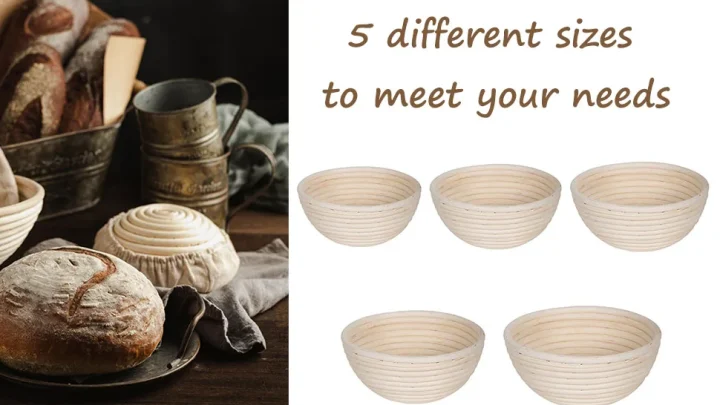
What a 9-Inch Basket Looks Like Compared to Other Sizes
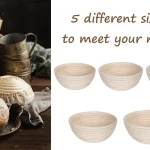
The easiest way to understand a 9-inch basket is to compare it with smaller and larger versions. Size directly changes dough capacity and final loaf shape.
8-Inch vs. 9-Inch vs. 10-Inch
| Basket Size | Dough Capacity | Best For | Bake Vessel |
|---|---|---|---|
| 8 inch | 500 to 700 g | Smaller boules | 4 to 5 qt Dutch oven |
| 9 inch | 750 to 1000 g | Standard boules | 5 to 6 qt Dutch oven |
| 10 inch | 1000 to 1300 g | Large family loaves | 7+ qt Dutch oven |
If you bake with 500 grams of flour, your dough weight usually lands around 850 grams. That fits a 9-inch basket perfectly. A 10-inch basket leaves it too shallow, and an 8-inch basket overflows.
Round vs. Oval Boule Shapes
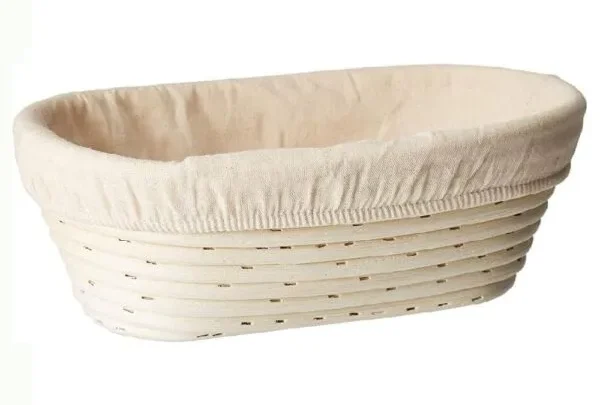
Round baskets produce round boules. Oval baskets produce batards, which are those elongated sandwich-style loaves. Match the basket shape to your shaping method.
A round dough ball belongs in a round basket. An oval batard needs an oval basket. Using the wrong shape forces the dough into an awkward form and can deflate it during turn-out.
If you bake classic artisan rounds, choose the 9-inch round.
Reading the Dough: Visual Cues While Proofing
The basket hides the dough's expansion, but the dough still tells you when it's ready. You just need the right cues.
What Properly Proofed Dough Looks Like
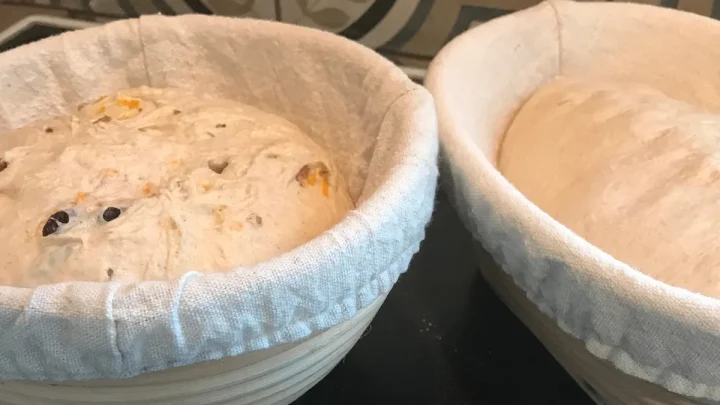
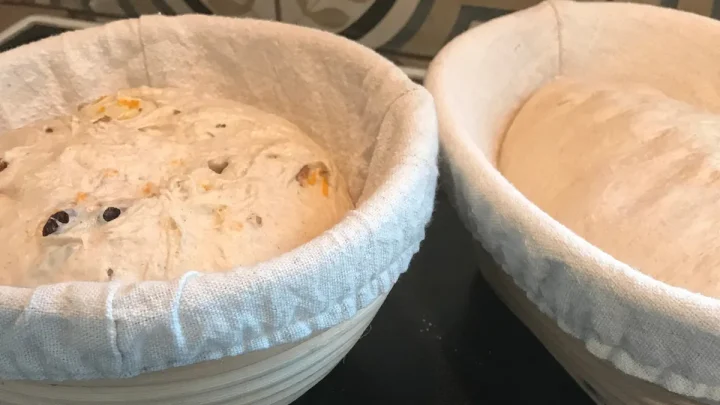
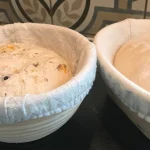
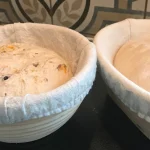
Fully proofed dough inside a 9-inch basket should reach just below the rim. The surface should look smooth and slightly puffed, with small bubbles visible beneath the skin. It shouldn't touch the top edge, and it shouldn't sink back down.
If the dough rises above the rim, it's likely overproofed. That doesn't mean the loaf is ruined, but it will probably spread after turn-out.
Checking the Dome, Jiggle, and Poke Test
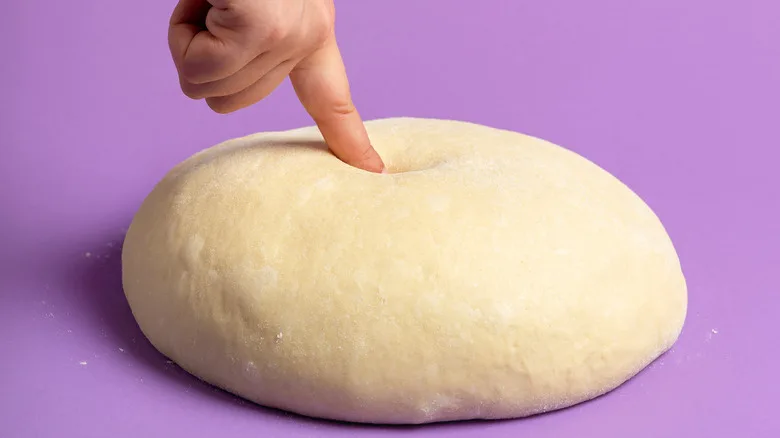
The poke test is the most reliable visual and tactile cue. Dip a finger in flour, then press about a quarter inch into the dough. Release and watch.
- Bounces back quickly: Underproofed, wait longer.
- Springs back slowly, leaves a dimple: Ready to bake.
- Stays indented: Overproofed, bake immediately.
Also give the basket a gentle jiggle. A fully proofed dough wobbles like firm jelly. If it feels dense, it needs more time.
How to Use a 9-Inch Proofing Basket Step by Step
Using a proofing basket is mostly about timing and technique. The steps aren't complicated, but each one affects the final loaf.
Pre-Shaping and Bench Rest
Start with your bulk-fermented dough. Turn it onto a lightly floured surface. Divide it if needed, then shape it into a loose round.
Let it rest for 20 to 30 minutes. This relaxes the gluten so your final shape doesn't tear.
After the rest, shape the dough into a tight boule by pulling the surface taut with a bench scraper.
Dusting the Basket the Right Way
Dusting is the step people get wrong most often. Use rice flour, or a 50/50 mix of rice flour and all-purpose flour. Rice flour doesn't absorb into the dough, so it releases much better than wheat flour alone.
Use about 1 to 2 tablespoons for a 9-inch basket. Sprinkle it evenly across the bottom and up the sides. Tilt the basket as you go to coat the spiral grooves.
Every groove should look lightly dusted, not clumpy.
Seam-Up Placement and Covering
Place the shaped dough into the basket with the seam side facing up. This is the key detail. When you flip the basket out, the seam ends up on the bottom, and you get a smooth, tight surface across the top.
Cover the basket to stop a dry skin from forming. A linen towel, a clean shower cap, or a large plastic bag all work. For a cold proof, refrigerate at 38 to 40°F for 8 to 16 hours.
Turning Out and Scoring
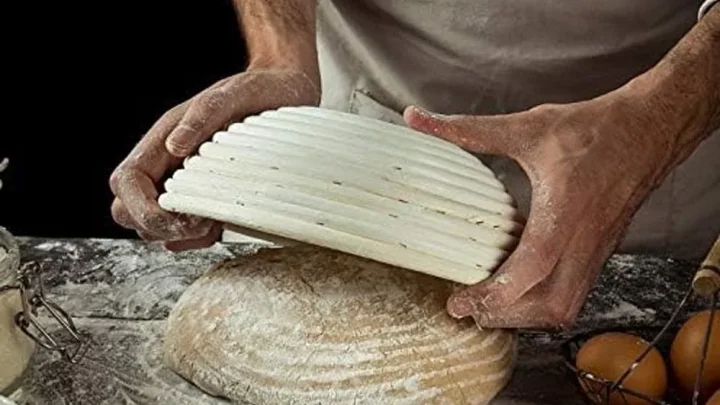
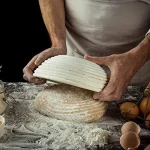
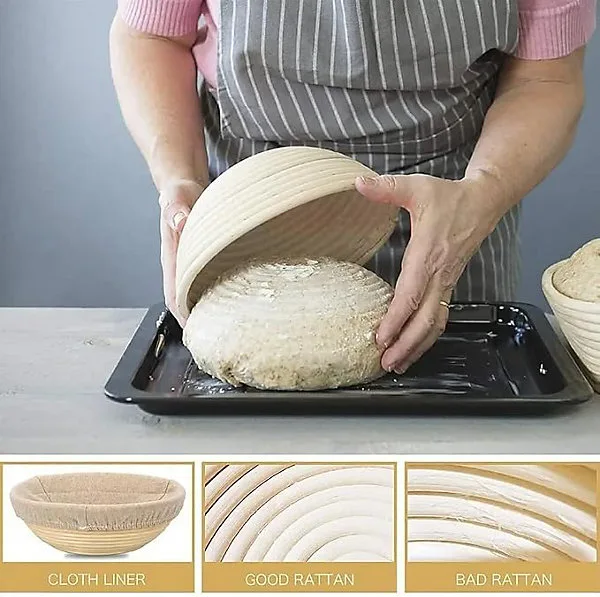
When it's time to bake, lay a sheet of parchment paper over the basket. Set a cutting board or pizza peel on top, then flip the whole thing upside down in one quick motion. The dough should release cleanly.
Score the loaf with a sharp lame or razor blade. Make one or two cuts about a half-inch deep. Bake in a preheated Dutch oven with the lid on for the first half, then remove the lid for browning.
Common Visual Mistakes and How to Fix Them
Dough sticking is the most common issue. It usually means you under-dusted, or you used wheat flour instead of rice flour. Let the dough release naturally when it's stuck.
Pulling it away by hand makes the tear worse.
Another frequent mistake is overproofing. The basket hides how much the dough has grown, so bakers often leave it too long. The loaf spreads after turn-out.
Fix it by checking the dough at the halfway point and using the poke test.
Dough Sticking and Torn Surfaces
A torn crust happens when the dough bonds to the cane. That bond forms when the dough is too wet or the basket isn't floured well. Use a 50/50 rice and all-purpose blend for better release.
Go heavier on the dusting until you learn how your dough behaves.
If a loaf sticks anyway, wait 10 minutes. The dough will relax and pull away from the cane. In our research, waiting beats pulling in almost every case.
Flat Slab Instead of a Boule
This usually points to weak gluten structure, not a basket problem. If the dough passes the poke test but flattens immediately, give it more strength during final shaping. Increase the bench rest time and tighten the boule.
An overproofed dough also flattens. When in doubt, bake it anyway. Even a modest rise is better than losing a loaf entirely.
Flour Marks Too Heavy or Too Pale
Too much flour leaves a chalky patch on the crust. Too little flour makes the pattern barely visible. Use a small sieve and dust from about a foot above the basket for even coverage.
Real-World Scenarios: What Happens at Different Dough Weights
Dough weight determines whether the basket fits or fights you. Here's a quick reference from manufacturer capacities and common recipe yields.
| Dough Weight | Basket Fit | Typical Result |
|---|---|---|
| 500 g | Loose | Low, wide boule |
| 750 g | Snug | Balanced round loaf |
| 900 g | Nearly full | Tall artisan boule |
| 1100 g | Overflowing | Risk of sticking |
750 g Round Loaf
This is the sweet spot for recipes using 500 grams of flour. The dough fills the basket about halfway and bakes into a tall, domed boule that fits a 5 to 6 quart Dutch oven.
1000 g Large Boule
A 1000-gram loaf sits close to the rim. It works, but you have less room for error. If it overproofs, it can mushroom over the edge and deform during turn-out.
500 g Small Loaf
A 500-gram dough ball looks lost in a 9-inch basket. It spreads wider than it rises, so the final loaf comes out short and flat. Use an 8-inch basket for this size.
Taking Care of the Basket So It Keeps Working
Bannetons last for years with the right care. They also fail quickly if you soak them. The worst thing you can do is submerge one in water.
Brushing and Air-Drying
After each bake, turn the basket over and knock out loose flour. Use a dry brush to sweep the grooves clean. If crumbs get stuck, let them dry completely before brushing again.
Air-dry the basket fully before storing it. Moisture trapped in the cane can cause mold in a few days. Store it in a dry cabinet, not in a sealed plastic bag.
What to Do If Mold Shows Up
Mold means the basket is compromised. You can try brushing it off, but spores often stay in the cane. If you see charcoal gray or green patches, replace the basket.
The cost of a new one beats the risk of baking mold into your dough.
Alternatives If a 9-Inch Basket Doesn't Fit Your Bake
Not every baker needs a banneton. These alternatives work for specific loaf styles.
- Towel-lined bowl: Works for a rustic round, but no crisp flour pattern.
- Oval banneton: Perfect for batards and sandwich loaves.
- Freeform proofing: Use a floured couche or board. Dough spreads more, so shaping matters.
- Loaf pan: Best for straightforward sandwich bread. No spiral pattern.
The 9-inch round basket is ideal for classic sourdough boules. If you bake mostly sandwich loaves or baguettes, skip it.
Smart Specs and Data to Keep Handy
| Specification | Value |
|---|---|
| Top diameter | 9 inches (23 cm) |
| Bottom diameter | About 7 inches (18 cm) |
| Height | 3 to 4 inches (8 to 10 cm) |
| Dough capacity | 750 to 1000 g |
| Typical hydration | 65% to 80% |
| Warm proof time | 1 to 2 hours |
| Cold proof time | 8 to 16 hours |
| Rice flour dusting | 1 to 2 tablespoons |
| Price range | $15 to $40 |
These numbers come from standard manufacturer spec sheets and common sourdough recipe yields. Use them as a baseline when comparing baskets or adjusting your recipe. For bakers who want to go deeper, the Bread Bakers Guild of America offers professional guidance on dough handling and proofing practices.
Quick Answers to Common Questions
Do I Need a Linen Liner?
Not necessarily. A liner eases cleanup, but it hides the spiral pattern. If you want classic banneton rings, skip the liner and dust well with rice flour.
Can I Bake Inside the Basket?
Never. The basket is only for proofing. Cane and wood pulp will burn and smoke at baking temperatures.
Always turn the dough out onto parchment or a peel.
What Flour Works Best for Dusting?
Rice flour is the clear winner. Use it by itself or mixed half and half with all-purpose flour. It doesn't absorb into the dough the way wheat flour does.
How Do I Know When My Dough Is Ready?
Use the poke test. Press in with a floured finger. If it springs back slowly and leaves a small dent, it's ready.
If it bounces back instantly, wait longer. If it stays indented, bake now.
Why Does My Dough Stick to the Basket?
Sticking comes from under-dusting or overproofing. Excess moisture on the dough surface also bonds to the cane. Increase your rice flour and watch the proofing time.
Final Verdict: Is a 9-Inch Proofing Basket Worth It?
Yes, if you bake standard sourdough boules. A 9-inch round banneton gives you tall, consistent loaves with that bakery-style spiral pattern. It's simple, lasts for years, and works with the most common home recipes.
Match the basket to your dough weight. An 8-inch basket suits 500 to 700 gram loaves, and a 10-inch handles over 1000 grams. For most bakers using 500 grams of flour, the 9-inch size is exactly right.
Skip it only if you bake sandwich bread or baguettes almost exclusively. For artisan rounds, this basket is a genuine upgrade.

Similar Posts