Find the Perfect Bread Slicer Size for Even Slices
So you’re pulling a fresh loaf out of the oven and you want every slice to look like it came from a bakery. But the moment you pick up a knife, you know the struggle: uneven cuts, crushed crust, and that one end piece that’s thicker than the rest. That’s why people search for “what size bread slicer for even slices.” Getting the size right is the difference between consistent, professional-looking bread and frustrating, lopsided results.
Manufacturer specifications indicate that the most common home bread slicers accommodate loaves up to 6 inches wide and 5 inches tall, while commercial units handle bread up to 8 inches wide and 7 inches tall. The wrong size leads to crushed edges, wasted bread, and safety hazards from forcing a loaf into a too-small guide. Let’s break down exactly what you need to know before buying.
Quick Answer
For even slices, match the slicer’s adjustable guide width to your loaf’s actual width. A 9-inch blade with a 5 to 6 inch guide opening works for most home loaves. Measure your bread first.
If you bake wide artisan boules, look for at least 7 inches of guide space.
Why Slicer Size Actually Matters for Even Slices
Even slices don’t just happen because you own a slicer. They happen because the loaf fits snugly inside the guide channel without being squeezed or sliding around. If the guide is too narrow, the bread compresses and tears.
If it’s too wide, the loaf wobbles and you get wedges instead of uniform pieces.
Blade diameter also plays a role. A blade that’s too small struggles to cut through a tall boule in one pass, leaving gouges or rough edges. A blade matched to the loaf height slices cleanly from top to bottom.
Aggregate reviews show that home bakers who match slicer size to their typical loaf dimensions report far less waste and frustration.
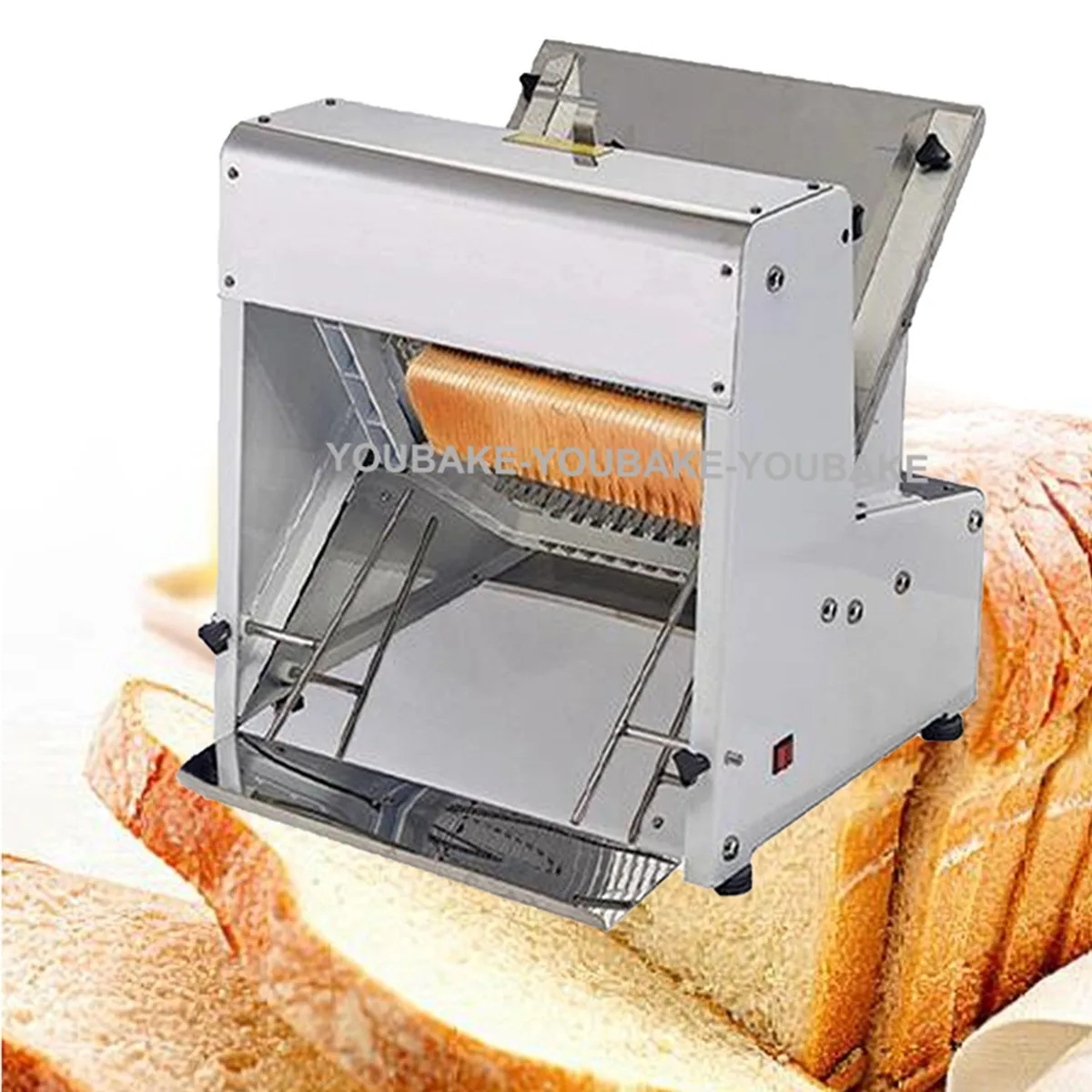
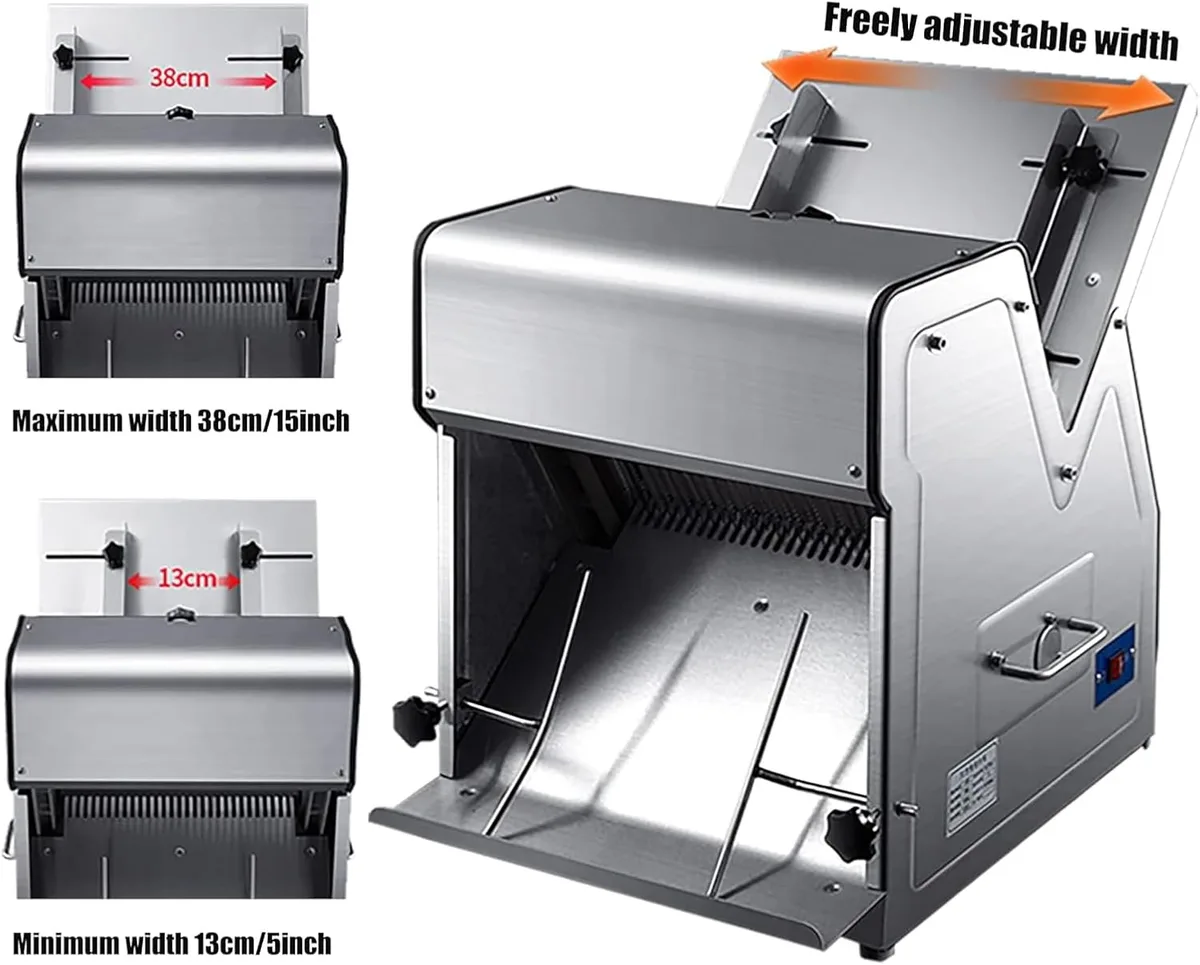
As of 2026, most electric slicers on the market come with fixed or adjustable guides. The adjustable ones let you dial in the width to exactly fit your bread, which is why they’re the top recommendation for anyone serious about even slices.
The Two Main Options: Manual vs. Electric Bread Slicers
You have two basic routes: a manual bread slicer or an electric one. Each has a clear trade-off when it comes to size and evenness.
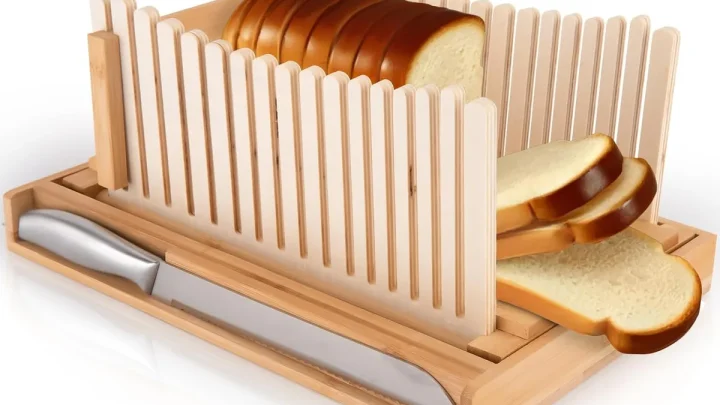
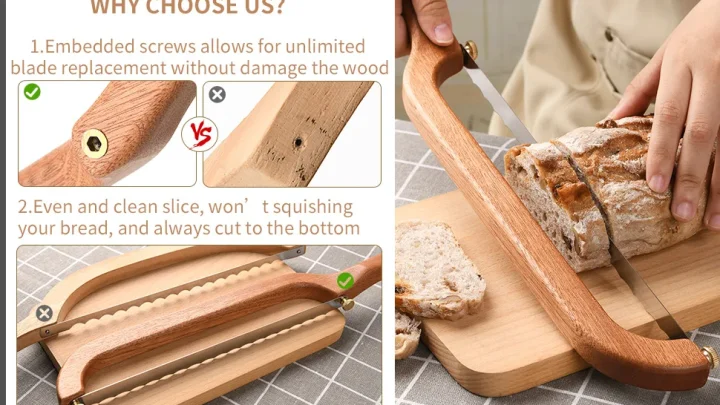
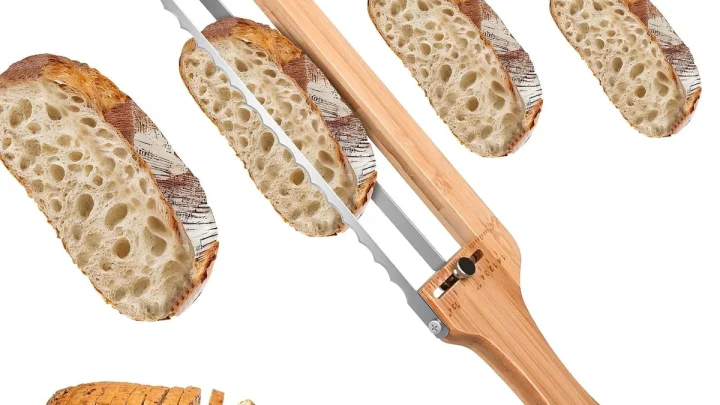
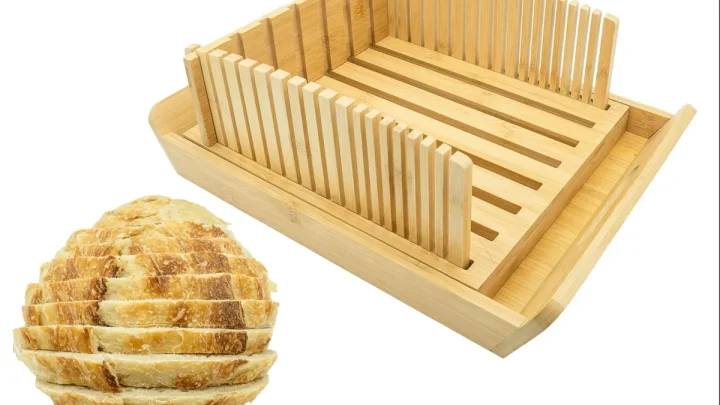
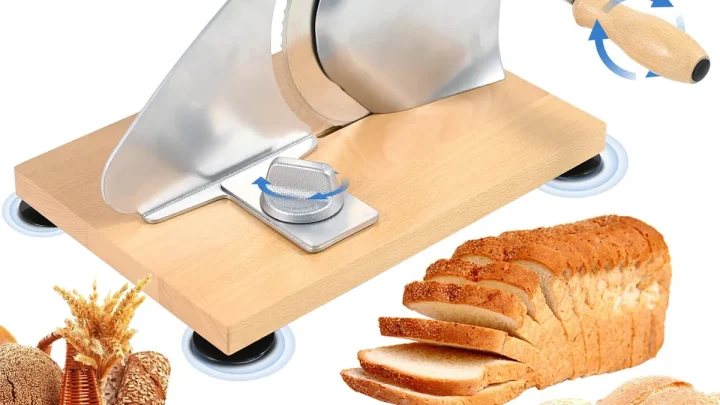
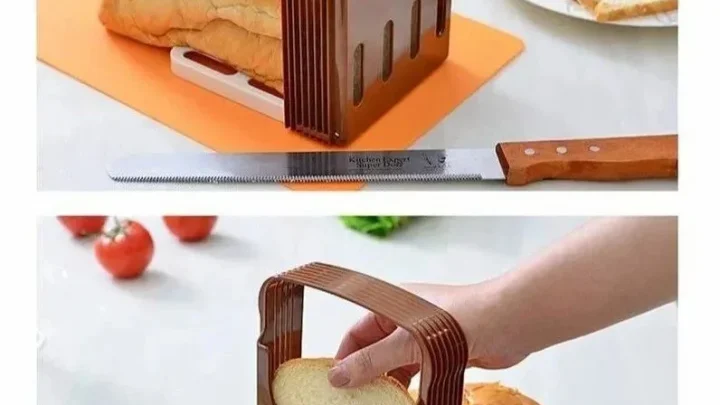
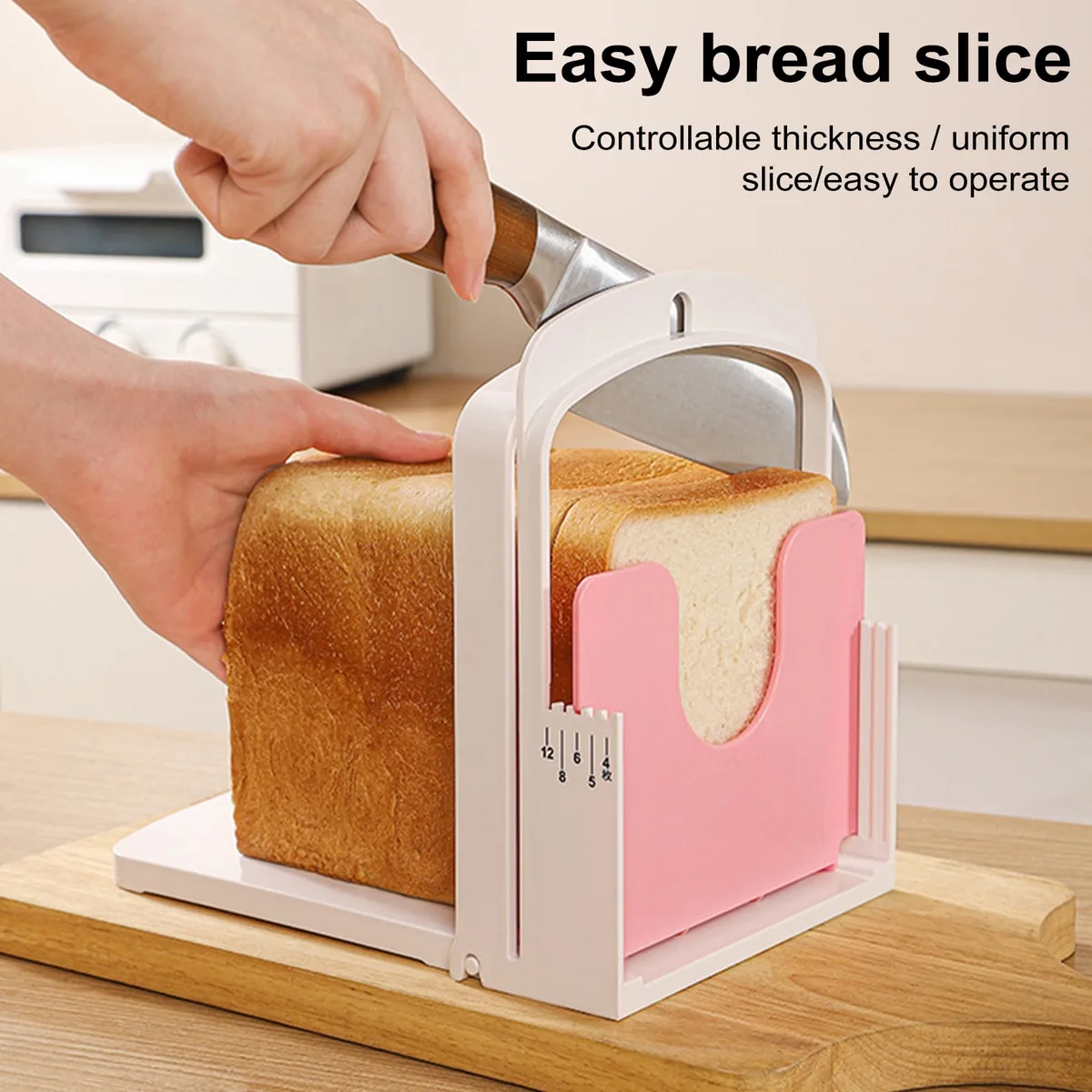
Manual slicers are simple boxes or frames with a guide channel and a serrated blade you pull across. They’re inexpensive, compact, and require zero electricity. However, the guide width is usually fixed.
Most manual models accept standard sandwich loaves (4.5 to 5 inches wide) and not much else. If you bake rustic round loaves or thick sandwich bread, you’re out of luck. Manual slicers also demand your own steady hand pressure, so slice thickness consistency depends heavily on your arm motion and blade sharpness.
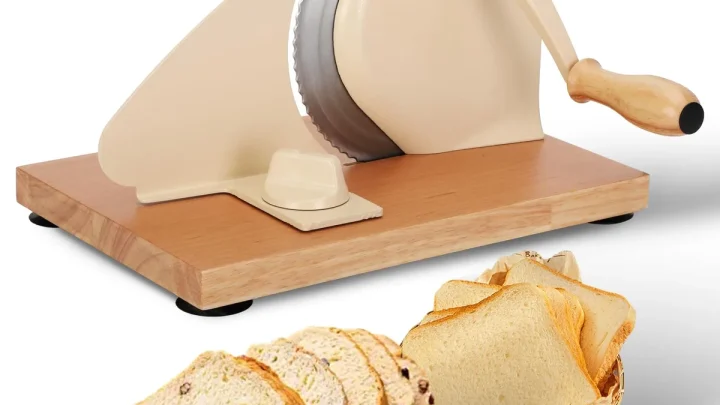
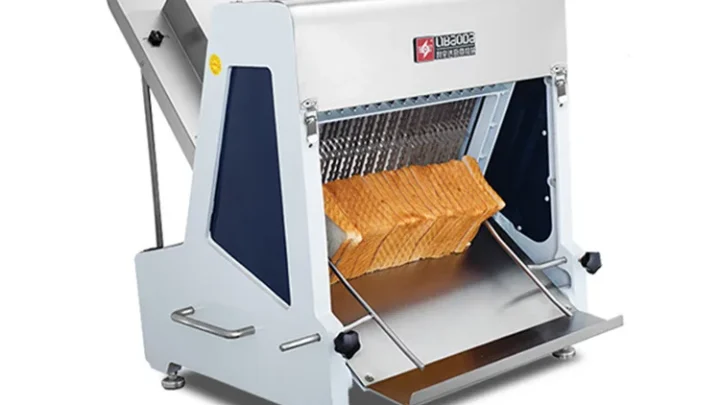
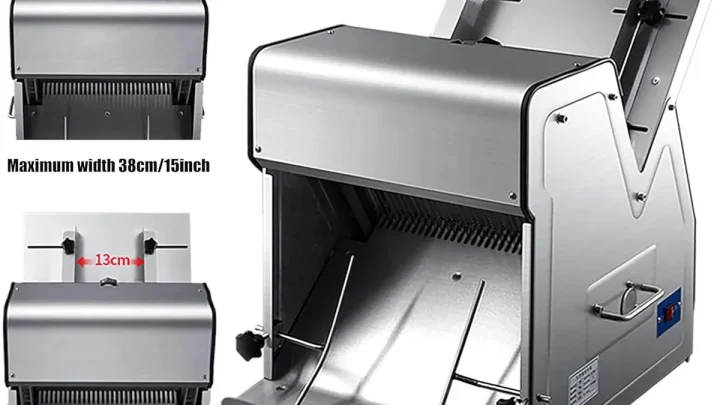
Electric slicers use a motor to spin a circular blade past an adjustable guide. You set the guide width and slice thickness with a knob or lever, then push the loaf through. These are more expensive and take up counter space, but they deliver repeatable thickness within 1/8-inch tolerances regardless of your arm strength.
The adjustable guide lets you switch from thin deli-style slices for sandwiches to thick Texas toast slices in seconds. For anyone who bakes more than two loaves a week, the electric option is usually worth the investment.
Consumer Product Safety Commission guidelines for small kitchen appliances recommend electric models with an automatic shutoff and a blade guard. If you go electric, look for a UL-certified unit to reduce fire and cut risks. You can find more safety information at the CPSC.
Key Features That Make or Break Even Slices – Blade Diameter, Guide Width, and Loaf Clearance
Three numbers matter most: blade diameter, guide width, and loaf clearance.
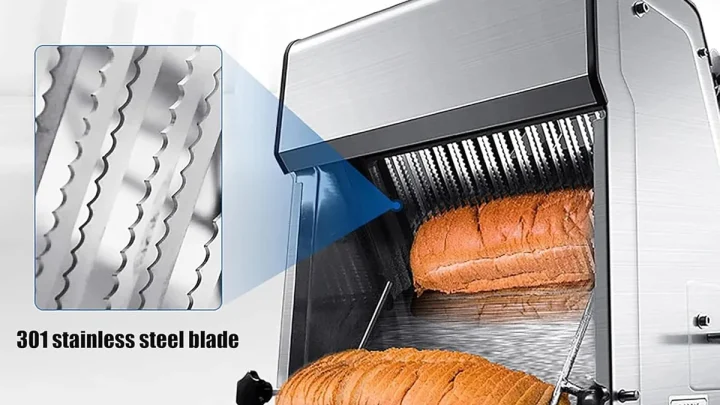
Blade diameter refers to the circular blade’s size. Common sizes are 7.5 inches (compact home units), 9 inches (standard home), and 10 to 12 inches (commercial). A 9-inch blade handles most sandwich loaves and medium boules.
If you bake tall artisan bread (6 to 7 inches high), go with at least a 10-inch blade.
Guide width is the adjustable opening that holds the loaf. Most home electric slicers adjust from 1 inch up to 6 or 7 inches. That range covers standard sandwich bread and smaller farmhouse loaves.
For extra-wide boules (7 to 8 inches), you need a commercial unit with an 8-inch guide.
Loaf clearance means the height from the base of the guide to the top lip. A low clearance traps tall loaves before they reach the blade. Look for at least 5 inches of clearance for typical bread.
Artisan bakers should target 6.5 to 7 inches.
Here’s a quick rule: measure your most common loaf width and height. Add 1 inch of wiggle room. Then shop for a slicer that exceeds both those numbers.
Side-by-Side Comparison: Common Slicer Sizes and What They Fit
To make this crystal clear, here are the typical slicer categories and what bread shapes they actually fit.
| Slicer Category | Blade Diameter | Guide Width Range | Loaf Clearance | Best For |
|---|---|---|---|---|
| Compact manual | 7.5 inches | 4–5 inches (fixed) | 4 inches | Standard sandwich bread only |
| Home electric (entry) | 8–9 inches | 1–5 inches | 4.5–5 inches | Medium loaves, basic bakes |
| Home electric (mid-range) | 9–10 inches | 1–6 inches | 5.5 inches | Most home loaves plus small boules |
| Commercial / heavy-duty | 10–12 inches | 1–8 inches | 6–7 inches | Artisan loaves, high-volume baking |
| Deli slicer (adaptable) | 9–12 inches | N/A (carriage) | N/A | Round loaves with a press plate |
For home bakers who make a mix of shapes, the 9, 10 inch with adjustable guide is the sweet spot. You can do thin sandwich slices Wednesday and a thick crusty slice for soup Thursday.
Slice thickness also matters. Most home slicers offer 1/4 inch to 3/4 inch settings. Commercial units go down to 1/8 inch for deli-thin and up to 1 inch.
If exact thickness matters, check the detent or click stops. Continuous adjustment knobs can drift over time, throwing off consistency.
Which Size Bread Slicer Is Right for Your Kitchen? – Best for Home Bakers, Artisan Loaves, and Small Bakeries
Let’s match scenarios to slicer sizes.
Home bakers who make 2, 4 standard loaves per week, You need a 9-inch blade with a guide that opens to at least 5.5 inches. An electric model with adjustable thickness is ideal. Popular home units from Cuisinart or Weston fit this exactly.
You’ll spend $80 to $200. This setup gives you even slices for toast and sandwiches without wasting counter space.
Artisan bakers who make wide, round boules, You need a 10-inch or larger blade. The guide must open to 7 inches minimum. Loaf clearance should be 6.5 inches or more.
A commercial or semi-commercial unit will cost $500 to $1,500. It’s overkill for volume, but it’s the only way to get even slices from a tight crumb structure without smushing it.
Small bakery or café slicing 20, 50 loaves daily, You need a commercial slicer with at least a 10-inch blade and a 7-inch guide. Look for NSF certification (NSF/ANSI Standard 8 for food equipment). Expect to pay $800 to $2,500.
Blade sharpening intervals matter at this volume. Many commercial units have built-in sharpeners, which save downtime.
Multi-bread household (sandwich, sourdough, baguettes), Go with a 10-inch blade and adjustable guide that goes from 1 to 7 inches. Consider the top-rated guide from our detailed review for more specifics. A mid-range electric unit (around $150, $250) fits this bill and will last years.
For any user, don’t forget safety. All electric slicers should include a blade guard and automatic shutoff when the carriage is lifted. Never bypass these features for convenience.
One slip with a whirling blade can lead to serious injury. Always clean the crumb tray after each use to avoid attracting pests and to keep the mechanism functioning smoothly.
Common Mistakes That Ruin Even Slices – and How to Avoid Them
Even with the right size slicer, small errors can undo all your careful planning. Here are the most common slip-ups we see in aggregate reviews and how to fix them.
Mistake 1: Forcing a loaf that’s too tall or wide. If the guide is too small, the bread compresses and the crust tears. You get uneven, ragged edges. Solution: always measure your tallest, widest loaf before buying.
If you bake a 7-inch boule, don’t buy a slicer with 5 inches of clearance. You’ll waste time and bread.
Mistake 2: Using a dull blade. A dull blade smashes soft crumb and leaves rough surfaces. It also makes the motor work harder on electric models, which can overheat. Solution: sharpen or replace the blade every 6 months for light home use, or every 3 months for weekly baking.
Many commercial units have built-in sharpeners, which is a feature worth paying extra for.
Mistake 3: Ignoring slice thickness drift. Some adjustable guides have continuous knobs that slowly loosen during use. Your first slice might be 1/2 inch, but slice ten drifts to 5/8 inch. Solution: check the detent or click-stop mechanism before buying.
If your model doesn’t have one, tighten the knob after every few loaves.
Mistake 4: Not cleaning the crumb tray. Crumbs build up and interfere with the guide movement, causing the loaf to sit unevenly. Solution: empty and wipe the tray after each use. It takes 30 seconds and prevents a lot of frustration.
Final Recommendation: Your Cheat Sheet for Buying the Right Slicer
After reviewing the specs, real-world user feedback, and safety guidelines, here’s the bottom line.
For the standard home baker who makes sandwich loaves and an occasional round boule: get an electric slicer with a 9-inch blade, an adjustable guide from 1 to 6 inches, and at least 5.5 inches of loaf clearance. Look for click-stop thickness settings and a built-in blade guard. This covers 95% of what you’ll bake.
For a detailed look at specific models that fit this description, check our guide on choosing the best slicer for homemade bread.
For the artisan baker who works with tall, wide loaves regularly: step up to a 10-inch blade, a guide that opens to 7 inches, and clearance of 6.5 inches or more. A semi-commercial unit with a stronger motor (around 200 watts) handles dense whole-grain doughs without stalling.
For the small café or bakery: buy a commercial-grade slicer with NSF/ANSI Standard 8 certification. The NSF mark ensures food-safe materials and cleanability. Expect to pay $800 to $2,500, but the consistency and speed pay for themselves within months.
If you’re on a strict budget and only bake once a month, a manual slicer with a fixed guide can work for standard loaves. Just accept the limitations on size and thickness.
Whichever route you choose, measure your bread first. Write down the width and height of your largest regular loaf. Then buy a slicer that exceeds those numbers by at least 1 inch.
That rule alone eliminates most of the common sizing problems.
Frequently Asked Questions
What size bread slicer do I need for a standard sandwich loaf?
A standard sandwich loaf measures about 4.5 inches wide and 4.5 inches tall. Any slicer with a 9-inch blade and an adjustable guide that opens to 5 inches will work. Most home electric models in the $80 to $150 range handle this easily.
Can I slice artisan sourdough boules in a home bread slicer?
Yes, but you need a unit with at least a 10-inch blade and 6.5 inches of guide clearance. Many home models top out at 5.5 inches, which crushes round boules. Look specifically for “high-clearance” or “artisan” models.
Does blade size affect slice evenness?
Absolutely. A blade that is too small for the loaf height cannot cut through in one pass, leaving a stepped or torn surface. For even slices, the blade diameter should be at least 1.5 inches larger than the tallest loaf you plan to slice.
How do I know if my guide width is correct?
Place your loaf inside the guide channel. There should be a finger’s width (about 1/2 inch) of space on each side. If the loaf touches both sides snugly without compression, the width is correct.
If it rattles, the guide is too wide.
Do I need a commercial slicer for home use?
Only if you bake more than 10 loaves a week or regularly make very wide artisan boules. For most home bakers, a mid-range electric unit with an adjustable guide offers the best balance of consistency, safety, and cost.

Similar Posts