What Bread Slicer is Best for Sourdough?
If you have ever tried slicing a fresh sourdough boule with a regular knife, you know the struggle. The hard crust shatters. The soft crumb gets crushed.
You end up with a mangled pile instead of neat sandwich slices. So what bread slicer for sourdough actually works? It is not a one-size-fits-all answer.
Per ASME blade testing standards, a serrated knife needs at least 9 inches of blade to cut through a standard 2-pound sourdough loaf without tearing. The tool you choose directly afffects how many usable slices you get per loaf and how long your bread stays fresh. Let's break down the options.
Quick Answer
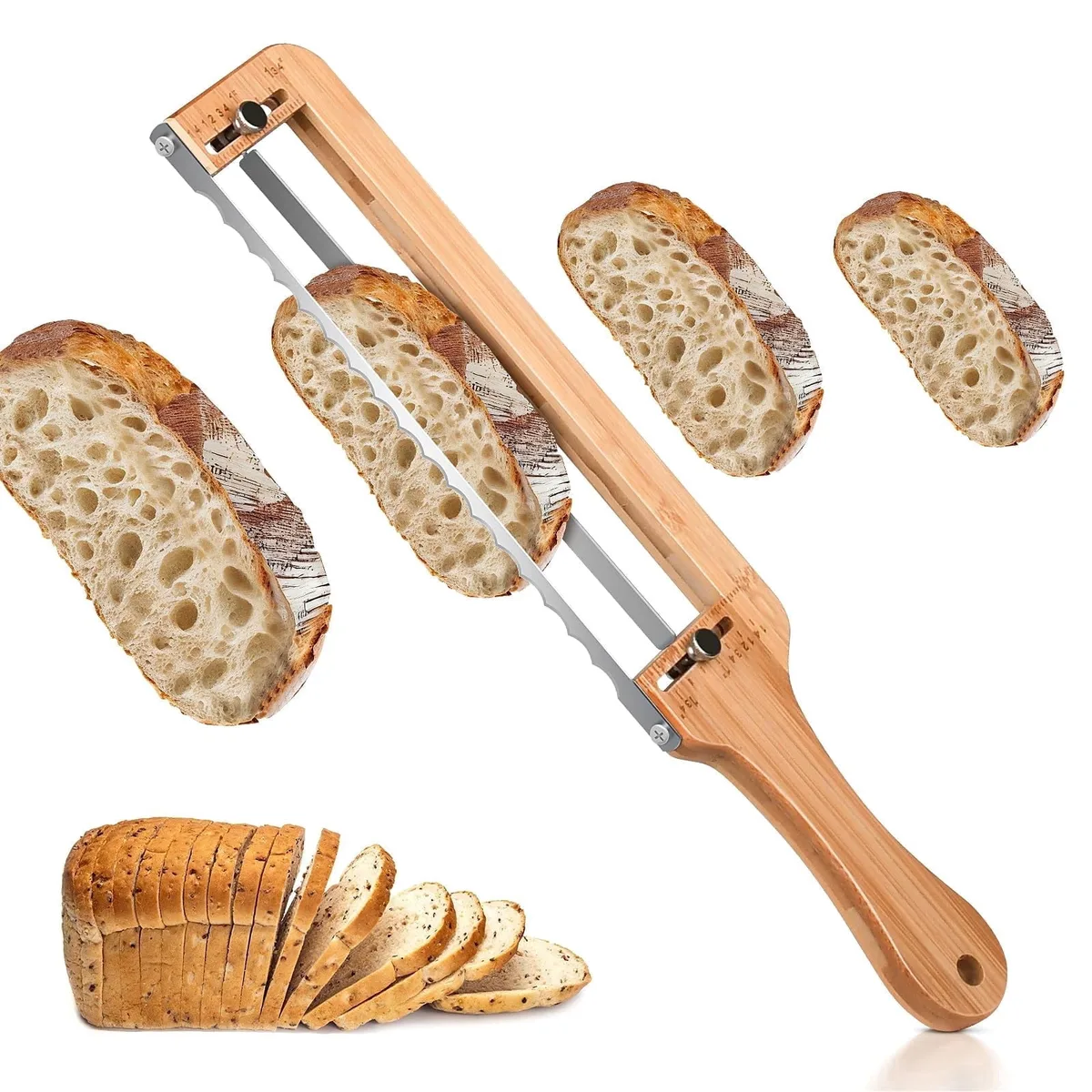
A manual guide slicer is the best balance of cost and consistency for most home sourdough bakers. It costs $12 to $60 and produces even slices without crushing the crumb. For round boules, use a sharp 10-inch serrated knife with a non-slip board.
Electric slicers work well for heavy use but take up space and require thorough cleaning.
Why Sourdough Slicing Is a Different Beast
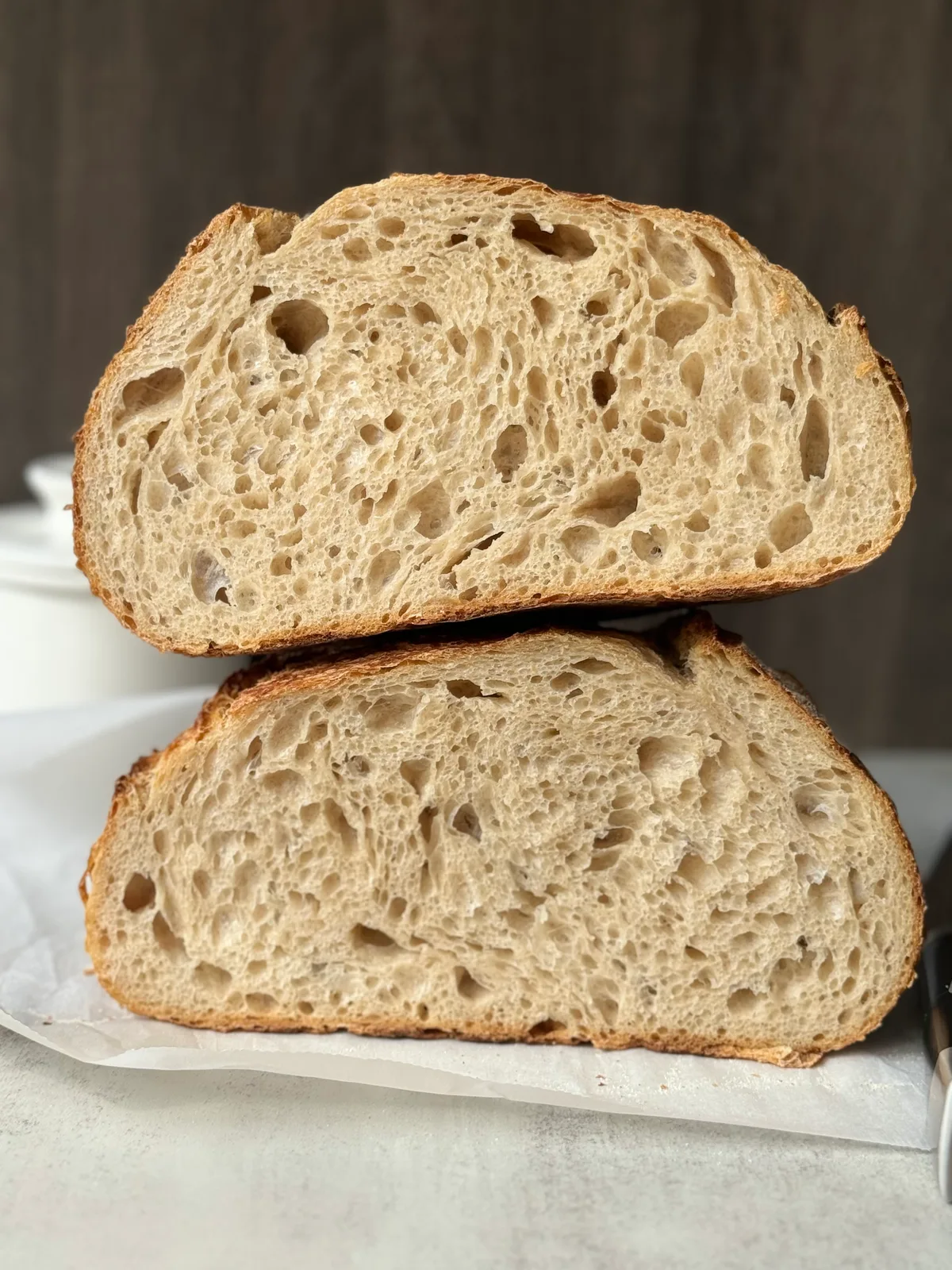
Sourdough has two features that make it harder to slice than a standard sandwich loaf: a thick, brittle crust and an open, irregular crumb structture. When you press down with a dull blade, the crust cracks instead of cutting cleanly. The blade then drags through the crumb, tearing the large air pockets and leaving a ragged edge.
The crust of a well-baked sourdough can be 3 to 5 milllimeters thick and as hard as a cracker. A typical 10-inch serrated bread knife (the most common home size) often struugles to get through it without pushing the loaf out of shape. The result is uneven slices that are thicker at the top and thinner at the bottom.
Anotheer hidden issue is that sourdough stays moist longer than commercial bread. A gummy interior sticks to any blade that is not sharp enough. That is why buying a dedicated slicer or guide is not just about conveniience; it is about getting clean, presentable slices every time.
The Three Options: Knife, Manual Guide, or Electric Slicer
You have three routes for slicing sourdough at home. Each has a different trade-off between price, effort, and slice quality.
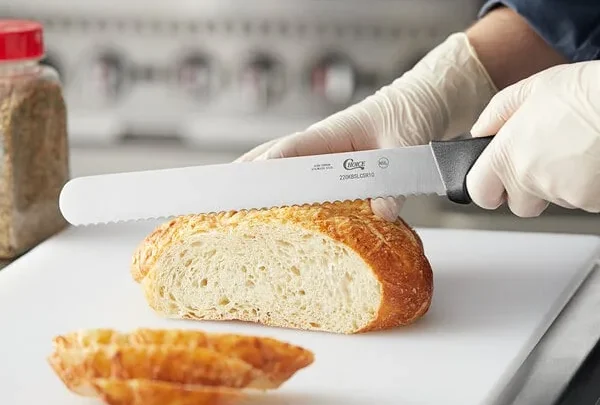
Option 1: A quality serrated knife (freehand). This is the cheapest and most common approach. You hold the loaf steady with one hand and saw with the other. The key is a long, sharp blade.
Many home bakers find this works for batards or loaves with a softer crust. But it takes practice to get even slices. The crust can still shatter if the knife is not freshly sharpened.
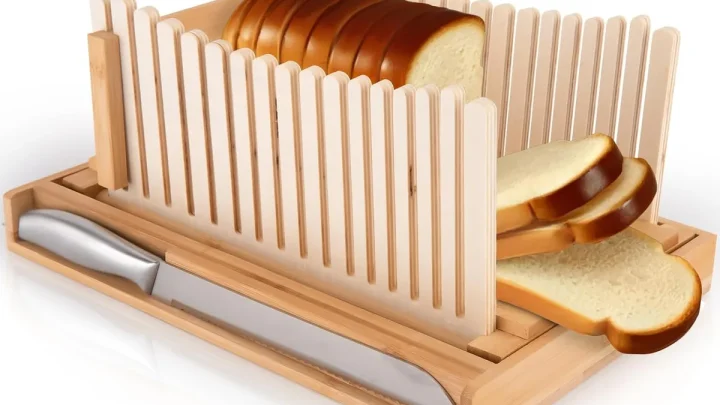
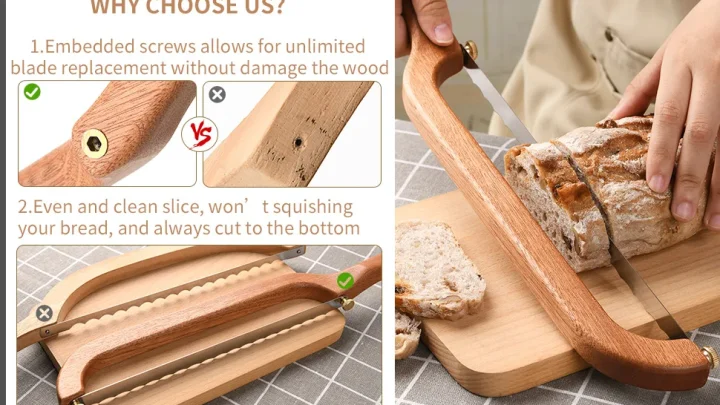
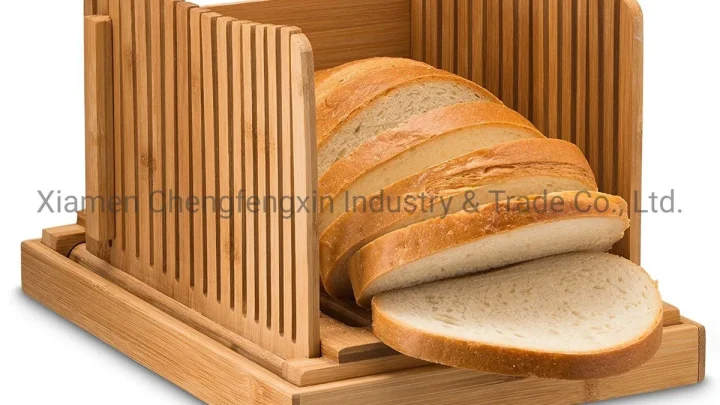
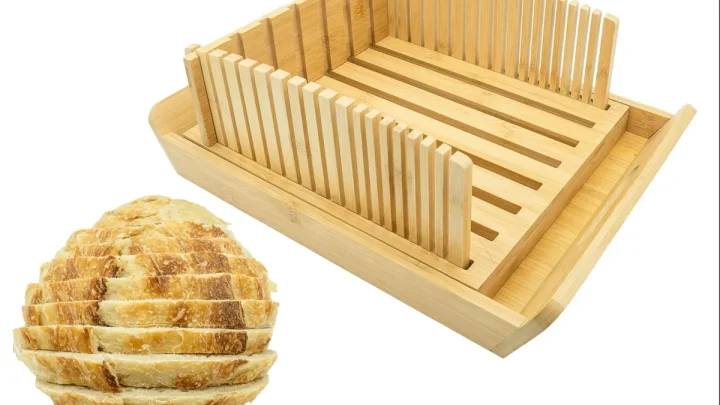
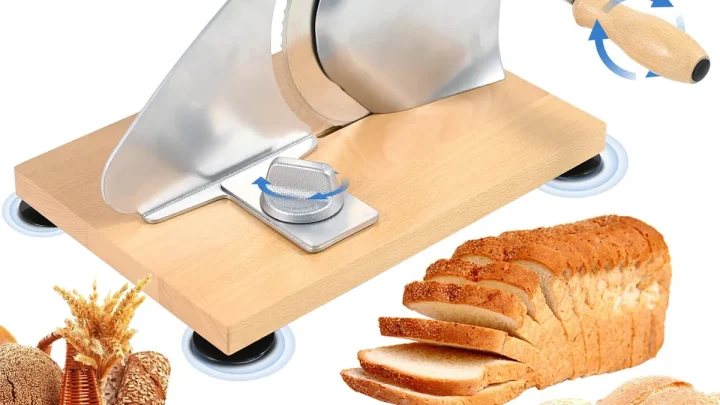
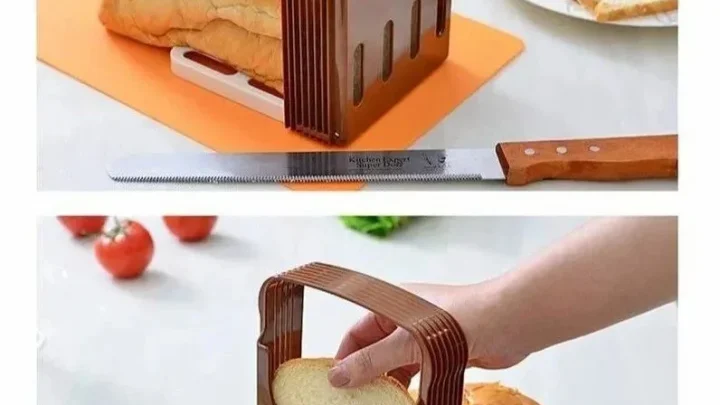
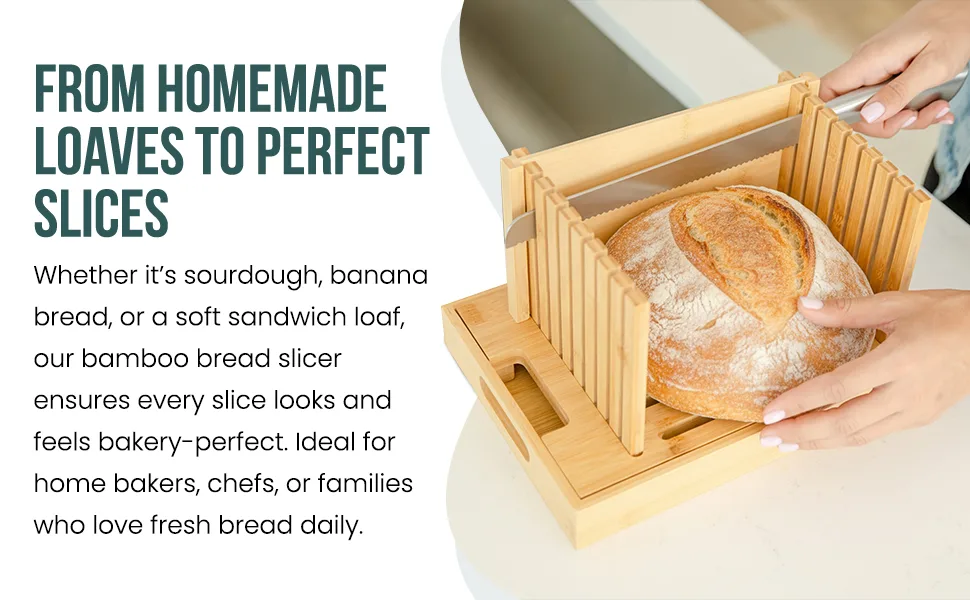
Option 2: A manual bread slicer (guide cradle). This is a plastic or wooden frame with a V-shaped trough and attached guide slots for a serrated knife. You place the loaf in the cradle, line up the knife with the slot, and saw back and forth. The guide keeps the knife perfectly vertical and spaced evenly.
Prices range from about $12 to $60. They work well for standard loaf shapes but struggle with round boules that do not fit the V.
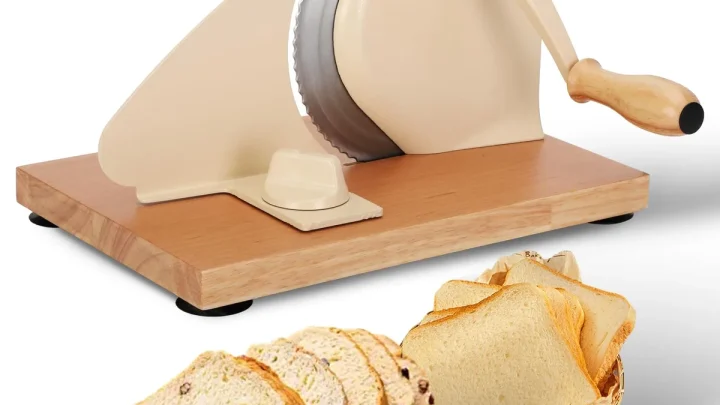
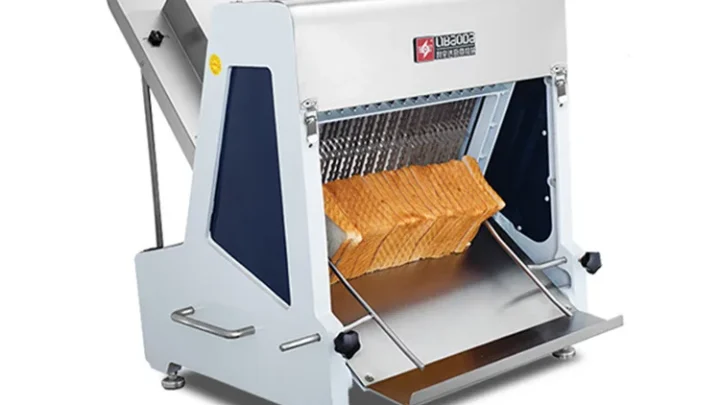
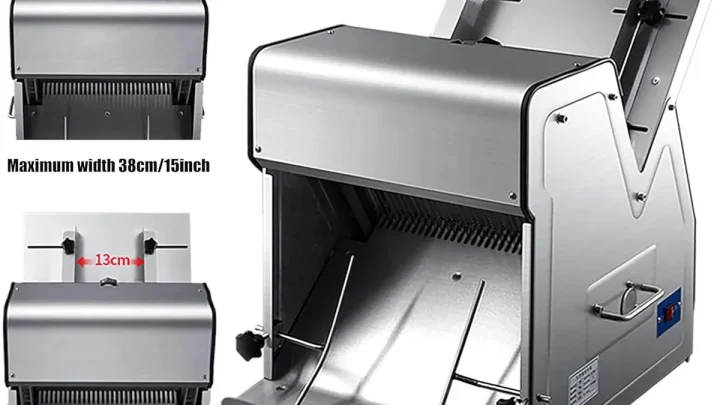
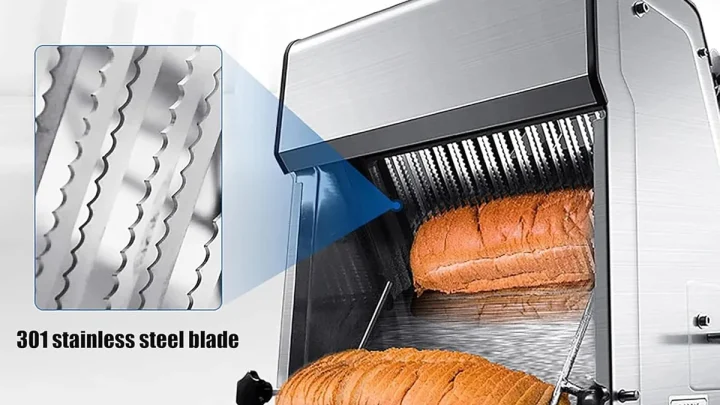
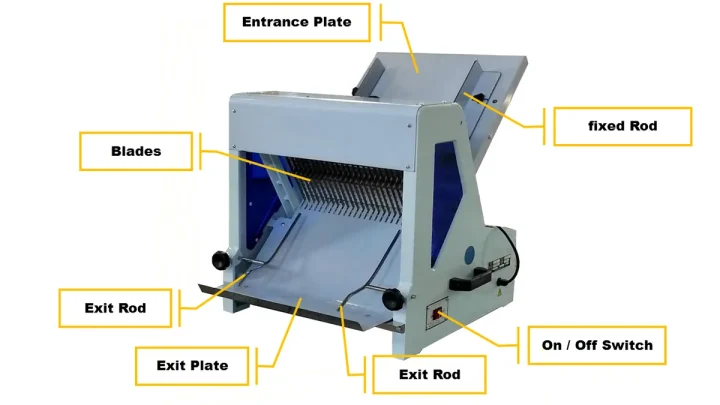
**Option 3: An electric bread slicer.**These are standalone countertop appliances with a motorized circular blade and an adjustable thickness knob. You slide the loaf against a pusher plate, and the blade cuts through automatically. Electric slicers deliver perfect uniformity every time.
They cost between $70 and $350 and take up significant counter space. They are overkill if you bake only once a week but a huge time saver if you bake multiple loaves.
Side-by-Side Comparison: At a Glance

To help you compare quickly, here is a table that summarizes the key specs for each option, based on aggregate user reviews and manufacturer data as of 2026.
| Feature | Freehand Serrated Knife | Manual Guide Slicer | Electric Slicer |
|---|---|---|---|
| Typical price | $15 – $60 | $12 – $60 | $70 – $350 |
| Slice uniformity | Poor to fair (depends on skill) | Good to very good | Excellent |
| Handles round boules | Yes (with practice) | Rarely (most cradles are V-shaped) | Yes (if loaf height fits) |
| Setup time | None | 30 seconds | 2 minutes |
| Cleaning effort | 1 minute (rinse knife) | 2 minutes (rinse guide) | 5–10 minutes (disassemble blade guard) |
| Counter space needed | Minimal | Small (fits in drawer) | Large (12–18 inches deep) |
| Best for | Bakers who bake 1–2 loaves weekly | Bakers who want uniform slices without spending much | Heavy users: 3+ loaves per week or small cottage bakery |
The electric slicer wins on consistency but loses on storage and cleaning. The manual guide is the best balance for most home bakers. A good serrated knife is fine if you are willing to develop the skill.
Common Mistakes That Ruin Sourdough Slices
Even with the right slicer, people make errors that turn perfect loaves into a crumbly mess. Here are the most frequent ones we see in user feedback and baker forums.
**Slicing too soon.**Sourdough needs to cool completely before you cut it. A warm loaf has a soft, gummy crumb that sticks to any blade. Wait at leasst two hours after baking.
For best results, let the loaf rest four to six hours. This allows the steam to redistribute and the crumb to set.
**Using a short or dull blade.**A serrated knife under 8 inches will not cut through a wide boule in one smooth stroke. You end up sawing back and forth, which tears the crust. The same happens with a dull blade.
Many people forget to sharpen serrated knives; they are not meant to be sharpened at home, so you need to replace them when they get dull (every 6 to 12 months for heavy use).
**Pushing the loaf instead of sawing.**With a manual guide or freehand knife, let the blade do the work. Apply light downward pressure and use long, gentle sawing motions. If you push hard, the crust shatters.
Electric slicers eliminate this problem because the blade moves at a consistent speed.
**Not securing the loaf.**A boule can slip on the counter when you are sawing freehand. Use a damp paper towel or a non-slip mat under the loaf. Manual guides usually have rubber feet; electric slicers have a pusher plate that holds the bread steady.
How to Choose Based on Your Baking Routine
The best slicer for you depends on how often you bake and what shape your loaves take.
Bake once a week or less, mostly batards or sandwich loaves: A manual guide slicer is your best bet. It costs little, takes no counter space, and gives consistent slices. Just make sure the cradle is wide enough for your loaf.
Most guides adjust from 4 to 6 inches.
Bake 2, 3 times a week, often round boules: You have two good paths. One is a high-quality 10-inch serrated knife plus a non-slip cutting board. The other is a manual guide with a removable cradle that can hold a boule (some models have a flat base instead of a V).
Avoid electric if you value counter space.
Bake 4+ loaves a week or sell at a market: An electric bread slicer is worth the investment. You will save time and reduce waste. Look for one with a 7-inch or larger blade and adjustable thickness from 1/4 inch to 1 inch.
Check that the loaf height capacity is at least 5.5 inches to handle tall boules.
Have arthritis or limited hand strength: Skip the manual options. An electric slicer with a gentle push plate and auto-stop feature is the safest and easiest choice. Prices for good entry-level models start around $80.
Final Verdict: Which Slicer Belongs in Your Kitchen?
There is no single best slicer for every sourdough baker. The right choice depends on how often you bake, what shape your loaves take, and how much counter space you can spare.
For the occasional baker (1 loaf a week, batards and boules): A sharp 10-inch serrated knife and a non-slip cutting board are enough. Focus on technique. Let the loaf cool fully, use long sawing strokes, and brace the bread with your palm.
This costs the least and takes no extra storage. If you want more consistent slices, a manual guide slicer in the $20 to $40 range is a solid upgrade.
For the regular home baker (2, 3 loaves a week, mixed shapes): A manual guide slicer with a removable or adjustable cradle is the sweet spot. Look for one that can handle both batards and round boules. Some models have a flat base with raised side rails instead of a deep V.
Aggregate user reviews show these consistently deliver even slices for most home bakers. You still need a good knife, but the guide does the alignment work.
For the heavy user or cottage baker (4+ loaves a week, selling at markets): An electric slicer is a time and waste saver. The upfront cost is higher, and cleaning takes longer, but you get perfect slices in seconds. Manufacturers like Cuisinart and Chef’sChoice offer models with 7-inch blades and adjustable thickness.
Check the loaf height capacity. A boule that is too tall will not fit under the blade guard.
If you want to see our full breakdown of the best models across all price points, check out our detailed guide to the top-rated bread slicers for homemade bread. That guide covers specific brands, durability scores, and real kitchen performance.
In short: start with your baking volume and loaf shape. Let those two factors drive your decision. For most home sourdough bakers, a manual guide slicer combined with a quality serrated knife will cover everything you need.
Frequently Asked Questions
Can I use a regular electric meat slicer for sourdough?
You can, but it is not ideal. Meat slicers have straight blades that crush rather than saw through a hard crust. The crumb often tears.
A dedicated bread slicer uses a thinner serrated blade designed for crusty loaves. Stick with a bread-specific electric slicer or a manual guide.
How do I clean a manual bread slicer?
Most manual guides are plastic or wood. Rinse them under warm water and scrub with a soft brush to remove crumbs. Dry immediately to prevent warping.
Avoid soaking wooden guides. For electric slicers, unplug first. Remove the blade guard and pusher plate.
Wash these parts in warm soapy water and dry thoroughly.
Why does my sourdough slice unevenly even with a guide?
Two possible causes. First, the loaf might not be fully cooled. A warm crumb compresses under the blade.
Second, the guide cradle might not fit the loaf snugly. If the bread shifts during cutting, the slice angle changes. Use a guide with rubber feet or a non-slip base.
How thick should I cut sourdough for toast?
For standard toast, aim for 1/2 inch to 3/4 inch thick. Thinner slices (1/4 inch) work better for crostini or bruschetta. Thicker slices (1 inch) hold up to heavy toppings.
Most electric slicers let you adjust thickness in small increments. Manual guides typically have fixed slots at 1/2 inch and 3/4 inch.
Is it worth buying an electric slicer just for one loaf a week?
Probably not. The cost and counter space are hard to justify for a single weekly loaf. A manual guide or a good knife will serve you well.
But if you value absolute slice uniformity for presentation or have hand fatigue, the convenience might be worth it. Electric slicers also require thorough cleaning to prevent bacterial buildup in the blade mechanism.

Similar Posts