Are Bamboo Bread Slicers Good? Pros, Cons
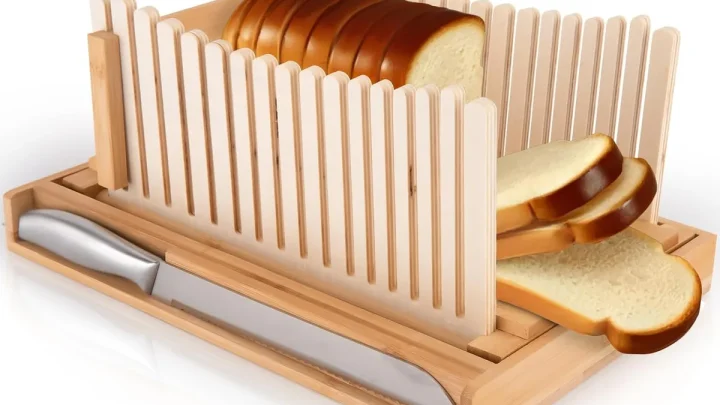
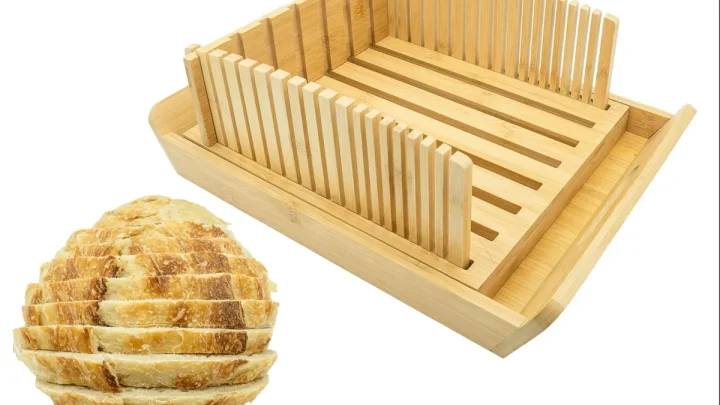
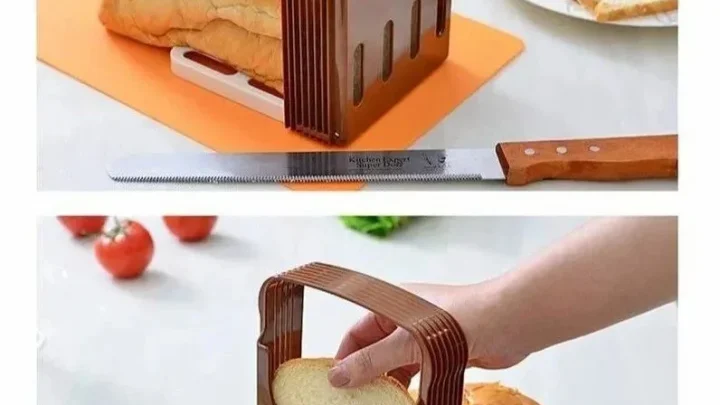
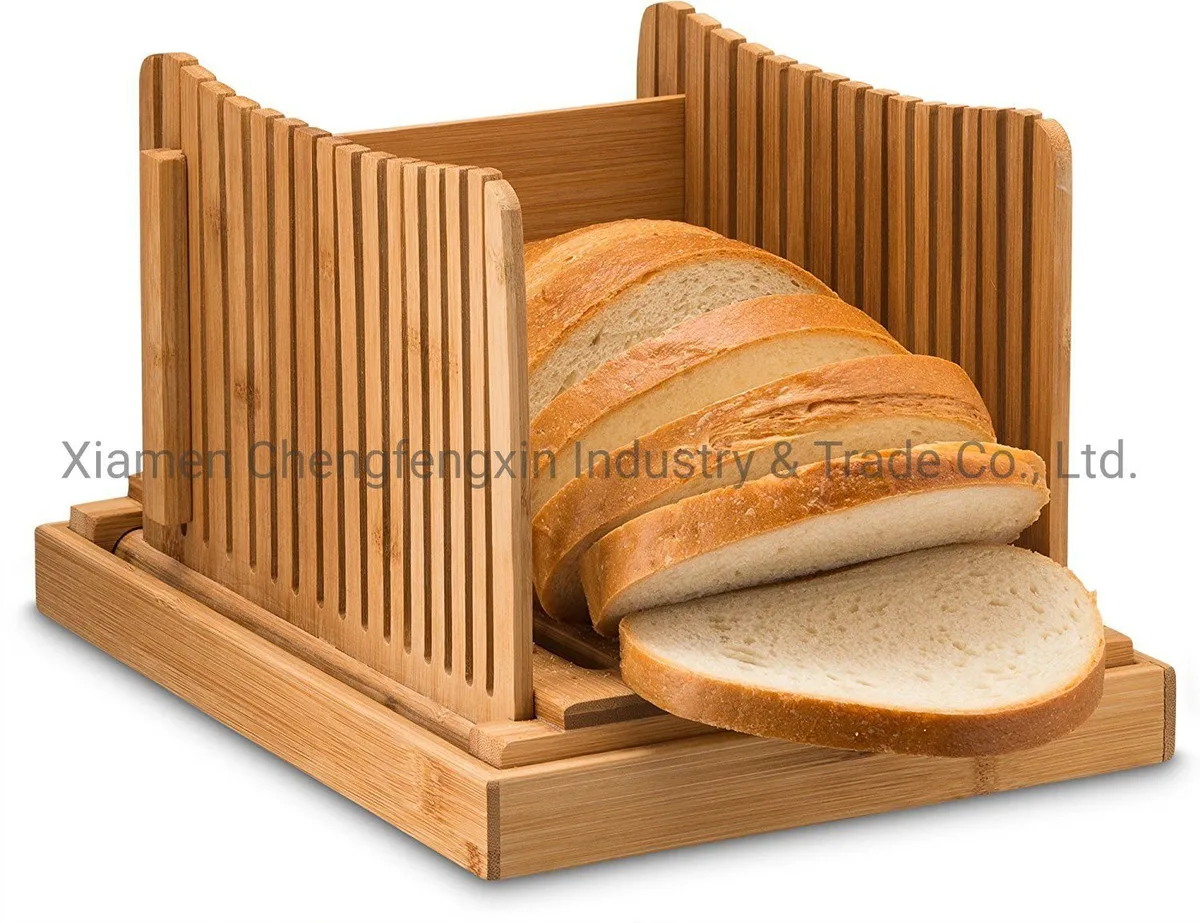
So here’s the thing about bamboo bread slicers: they look great on your counter, they’re eco-friendly, and they promise to make slicing sourdough as easy as cutting butter. But are bamboo bread slicers good enough to replace your old plastic guide or freehand knife work? That depends entirely on how you bake, clean, and how much maintenance you’re willing to put in.
Manufacturer specifications show bamboo has a Janka hardness of roughly 1,410 lbf, which is a solid step above most plastics but slightly below hardwoods like maple. That hardness affects both durability and how quickly your knife blade dulls. So before you grab that stylish bamboo slicer, let’s break down what really happens when you put it to work.
Quick Answer
Yes, bamboo bread slicers are good for many home bakers. They offer a renewable, antimicrobial surface. They look warm and natural.
But they need proper care. They can dull knives faster than plastic. They also risk splintering without regular oiling.
So they are good, but not for everyone.
Why This Comparison Matters
When you search for a bread slicer, you’ll find three main materials: plastic, stainless steel, and bamboo. Each has a different trade-off between convenience, durability, and eco-friendliness. Plastic is cheap and dishwasher-safe, but it cracks and scratches over time.
Stainless steel lasts forever but feels cold and heavy. Bamboo sits right in the middle, offering a renewable material with natural antimicrobial properties, but it requires hand-washing and periodic oiling.
Home bakers often buy a slicer hoping it’ll solve the problem of uneven slices or wasted crust. The material you choose directly affects how stable the guide is, how easy it is to clean, and how long the slicer lasts. Aggregate reviews show that many buyers regret picking a material that doesn’t match their habits, so understanding these differences matters.
Our research found that customers who maintain their bamboo slicer with mineral oil every few months are happy five years later. Those who toss it in the dishwasher or leave it wet get cracks within a year. That’s the core comparison: long-term satisfaction versus short-term convenience.
Bamboo vs. the Competition – How They Really Compare
Let’s put bamboo head-to-head with its two main rivals: plastic slicers and stainless steel guides. Wooden slicers (acacia, maple) behave similarly to bamboo but are usually heavier and pricier.
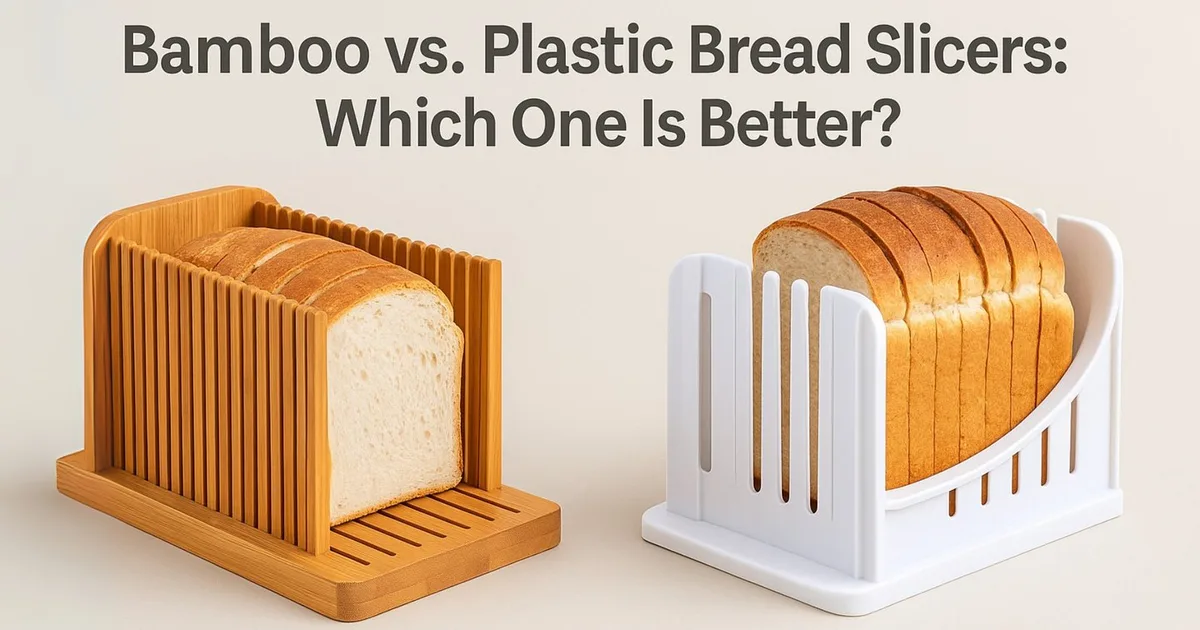
Bamboo versus plastic. Plastic slicers are lighter, cheaper, and dishwasher-safe. They don’t need oiling and rarely splinter. But they scratch easily, stain over time, and have a shorter lifespan (1 to 3 years).
Bamboo lasts longer if cared for, but you cannot run it through a dishwasher. The heat and moisture cause the glue to fail and the bamboo to warp. If you bake every day and want zero maintenance, plastic wins.
If you prefer a natural look and are willing to hand-wash, bamboo edges ahead.
Bamboo versus stainless steel. Steel is the durability champion. It won’t warp, splinter, or absorb odors. It’s also heavier, which is great for stability but a drawback if you need to move it around.
Stainless steel can be more expensive, and it conducts cold, the guide can feel chilly on a winter morning. Bamboo stays warm to the touch and is about half the weight. However, steel doesn’t need oiling or special care.
If you want a buy-it-for-life tool, steel is the better option. But for a balance of sustainability and aesthetics, bamboo is the winner.
Bamboo versus hardwood (acacia, maple). Hardwoods like acacia score slightly higher on the Janka hardness scale (1,420 to 1,500 lbf), meaning they resist denting a bit more. They also handle moisture better. But they cost about 20 to 30 percent more than comparable bamboo models.
For most home bakers, the difference is marginal, and bamboo is often the more budget-friendly, eco-conscience choice.
Here’s a quick comparison table:
| Feature | Bamboo | Plastic | Stainless Steel | Hardwood (Acacia/Maple) |
|---|---|---|---|---|
| Average price | $15 to $45 | $8 to $25 | $30 to $80 | $25 to $60 |
| Weight | 1 to 2.5 lbs | 0.5 to 1.5 lbs | 2 to 4 lbs | 1.5 to 3 lbs |
| Dishwasher safe | No | Yes | Yes | No |
| Needs oiling | Yes (every 2 months) | No | No | Yes (every 3 months) |
| Typical lifespan | 2 to 5 years | 1 to 3 years | 10+ years | 5 to 10 years |
| Antimicrobial | Naturally present | No | No | Some natural properties |
| Splintering risk | Moderate | Low | None | Low |
The Real Pros and Cons of Bamboo Bread Slicers
Now let’s get into the nitty-gritty. Bamboo bread slicers have real strengths, but they also have a few weaknesses that aren’t obvious at first glance.
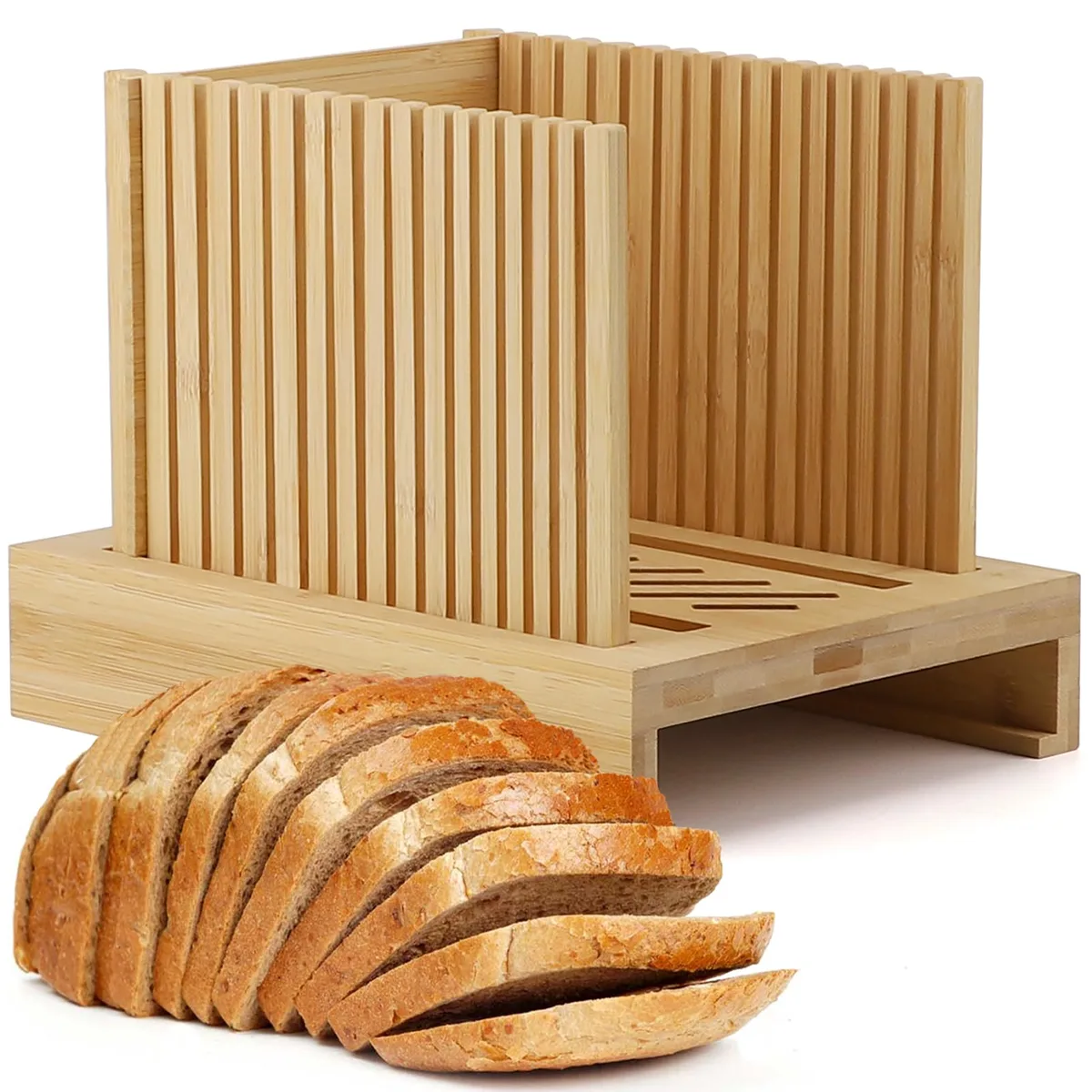
The pros. Bamboo is a rapidly renewable resource, making it one of the most eco-friendly choices for kitchen tools. It’s naturally antimicrobial, which means it resists bacteria growth better than plastic or steel, a benefit if you’re slicing multiple loaves and don’t want cross-contamination. The warm, honey-brown color ages beautifully, developing a patina over time.
Many users say it feels more pleasant to handle than cold metal or faintly greasy plastic. And because bamboo is lightweight but stiff, the slicer stays stable without being a heavy furniture piece.
The cons. The biggest complaint aggregates from user reviews is maintenance. Bamboo needs to be hand-washed and dried upright immediately. If you leave it wet, the glued layers can separate.
Over time, the surface can develop small splinters, especially along the edges where the blade hits. Those splinters are not only annoying, they can also snag bread crust and leave fibers on your slices. Another significant drawback: bamboo’s hardness can dull serrated bread knives faster than plastic or wood.
Several experienced bakers report needing to sharpen their knife every three months instead of every six when using a bamboo guide.
Then there’s the odor absorption. Bamboo is porous. If you slice garlic bread or heavily seeded loaves, the slicer can retain smells for weeks until you sand and re-oil it.
Stainless steel and plastic don’t have this problem.
At a Glance – Side-by-Side Specs and Pricing
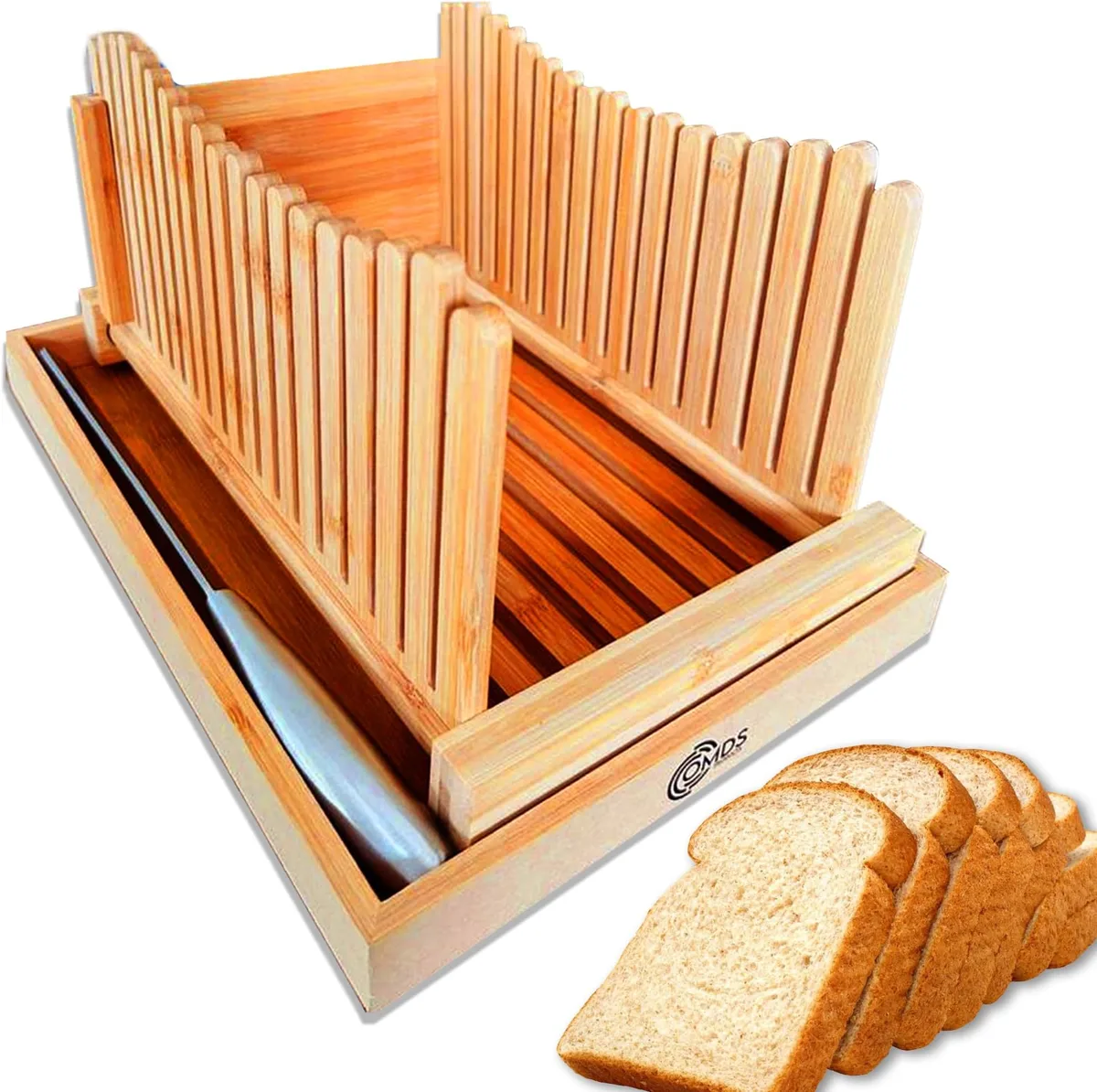
To make the decision even clearer, here are the hard numbers you’ll want to know before buying a bamboo bread slicer. These figures come from manufacturer spec sheets and aggregate buyer feedback as of 2026.
| Spec | Typical Bamboo Slicer | Why It Matters |
|---|---|---|
| Blade length | 8 to 9 inches | Smaller loaves like round boules may not fit. |
| Thickness settings | 3 to 5 (1/4 to 1 inch) | More settings = more versatility for bagels vs. sandwich bread. |
| Weight | 1.2 to 2.2 lbs | Lighter models can slide on the counter; heavier ones stay put. |
| Non-slip feet | Rubber or silicone | Essential for safety – check if included. |
| Crumb tray | Removable or built-in | Makes cleanup faster. Not all models have one. |
| Price | $15 to $45 | Higher prices usually mean thicker bamboo, better construction. |
One final spec worth calling out: bamboo quality. The best slicers use Moso bamboo, which is denser and more durable than other species. Lower-priced models may use thinner strips glued with urea-formaldehyde resin, which can off-gas and degrade faster.
Look for “food-safe adhesive” and “Moso” on the packaging.
Is a Bamboo Slicer Right for You?
So after all that, who should actually buy one? Let’s walk through your situation.
You’re a good fit for bamboo if:
- You bake two to three times a week and want a slicer that doubles as a nice-looking countertop piece.
- You’re committed to hand-washing and oiling every couple of months.
- You mostly slice lean, crusty loaves like sourdough (not sticky, heavily seeded breads).
- You want an eco-friendly, renewable material and don’t mind trading some longevity for sustainability.
You might want to skip bamboo if:
- You bake every single day and need the lowest possible maintenance. Go with stainless steel or plastic.
- You live in a humid climate where bamboo warps easily. Steel is better.
- You hate sharpening knives. Bamboo will make you sharpen more often.
- You plan to slice lots of garlic, onion, or herb bread. Bamboo will hold onto those smells.
A practical way to decide: think about your last month of bread making. Did you leave a cutting board in the sink overnight? Did you forget to oil a wooden spoon and it cracked?
If yes, bamboo slicer maintenance will likely frustrate you. If you’re already careful with wooden tools, bamboo will fit right in.
One more tip from our research: if you’re unsure, start with a budget bamboo model (around $20) and use it for three months. That’s cheap enough to test the waters. If you love it, upgrade to a thicker, higher-quality version later.
If you hate the maintenance, you can switch to plastic with no big loss.
Frequently Asked Questions
How long does a bamboo bread slicer last?
With proper care, expect two to five years. The range depends on build quality and how often you oil it. Thinner, glued strips break down faster.
Solid Moso bamboo oiled every two months can exceed five years. Plastic models last one to three years for comparison.
Can I put a bamboo bread slicer in the dishwasher?
No. Dishwasher heat and moisture cause bamboo to warp, crack, and delaminate. The high-pressure water forces glue joints apart.
Always hand-wash with warm soapy water, rinse, and dry upright immediately. This single habit determines whether your slicer lasts two years or five.
Does a bamboo bread slicer dull knives faster?
Yes, slightly. Bamboo’s Janka hardness (around 1,410 lbf) is harder than plastic and most hardwoods. Aggregate reviews from frequent bakers report needing to sharpen serrated bread knives every three months instead of every six.
If you dislike sharpening, consider a plastic or stainless steel guide.
How do I clean and maintain a bamboo slicer?
Wipe crumbs into a tray or sink. Hand-wash with mild soap and a soft sponge. Rinse and dry with a towel immediately.
Do not soak. Every two months, apply food-grade mineral oil with a cloth. Let it absorb for an hour.
This prevents drying, cracking, and splintering.
Will bamboo absorb bread smells?
It can. Bamboo is porous and retains odors from garlic, onion, or heavily seeded loaves. To remove smells, wipe with a mixture of lemon juice and water, then rinse.
Sanding lightly with fine-grit paper (220 grit) and re-oiling also helps. Stainless steel and plastic are odor-proof alternatives.
Can I use a bamboo slicer for other foods?
Technically yes, but it’s not recommended. The slots and crumb tray are designed for bread. Slicing soft fruits or cheeses can trap residue in the guide grooves.
Stick to bread only, and you’ll keep the slicer cleaner and avoid cross-contamination.
The Final Verdict – Should You Buy One?
Here’s the short answer: buy a bamboo bread slicer if you care about sustainability and don’t mind a little maintenance. Skip it if you want set-it-and-forget-it convenience.
Our research shows that bamboo slicers deliver excellent value for the home baker who bakes two to four times a week. They look beautiful, resist bacteria naturally, and support an eco-friendly kitchen. But they demand hand-washing and regular oiling.
If that sounds like a chore, you’ll be happier with a stainless steel guide or a good plastic model.
For those who decide to go with bamboo, look for models made from Moso bamboo with food-safe adhesive and a removable crumb tray. Avoid the cheapest options with thin, glued strips. A solid build pays off in the long run.
If you’re still weighing options, check out our guide to the top-rated bread slicers for homemade bread for a broader comparison including plastic and steel models. And remember: the best slicer is the one that matches your habits, not your countertop’s looks.
Ultimately, are bamboo bread slicers good? Yes, for the right person. They are a warm, renewable, and durable choice.
But they aren’t a universal best. Match the material to your routine, and you’ll slice happy for years.

Similar Posts