How to Choose an Artisan Bread Slicer
We all know the feeling: you pull a beautiful sourdough boule out of the oven, let it cool, and then reach for a knife. Five minutes later, you've got a jagged mess of crushed crumb and torn crust. Figuring out how to choose a bread slicer for artisan bread isn't about picking the fanciest gadget.
It's about matching the tool to your loaf's structure and your slicing volume.
According to our research, the right slicer can cut a crusty loaf cleanly without flattening the air pockets you spent hours developing. The wrong one crushes them. So before you spend a dime, let's compare the three main types and see which fits your kitchen routine.
Why Slicing Artisan Bread Is Harder Than It Looks
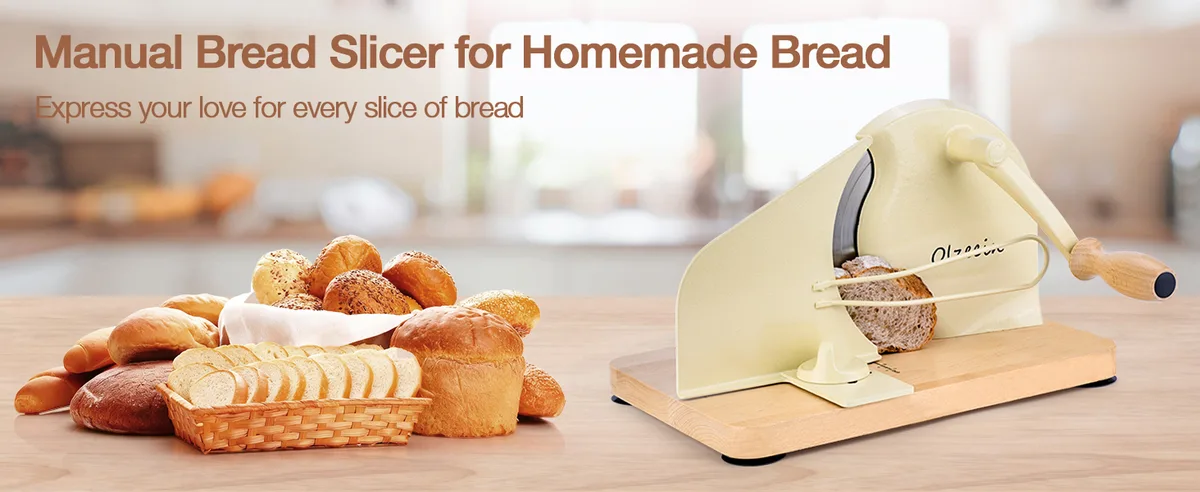
A standard deli slicer works great on dense sandwich loaves. It fails on artisan bread because of two things: a hard, brittle crust and an open, irregular crumb. As of 2026, most home bread slicers on the market still chase uniformity instead of crust protection.
The crust resists a spinning blade, so the motor presses harder and squashes the delicate interior. That's why professional bakeries use wire cutters. A thin wire glides through the soft crumb while the crust snaps cleanly.
The process is slower, but the slice keeps its structure.
If you're slicing a loaf with a thick, blistered crust or large random air pockets, you need a tool that guides the blade without adding pressure. Your freehand knife technique, even a good one, can't offer that stability. That's what a dedicated slicer provides.
Quick Answer: The Right Slicer Depends on Your Crust and Volume
Choose a manual wire slicer if you bake crusty, open-crumb loaves at home. Choose a guillotine-style cutter if you want speed and slice thickness control for softer sourdough. Choose an electric rotary slicer only for dense, sandwich-style bread.
For most artisan bakers, a wire slicer wins. It's cheap, simple, and preserves your crumb. If you bake more than six loaves a week, step up to a heavy-duty manual frame with adjustable wires.
Electric models risk crushing your work unless you only bake firm loaves.
The Three Contenders: Wire Frames, Guillotines, and Electric Slicers
Manual Wire Slicers
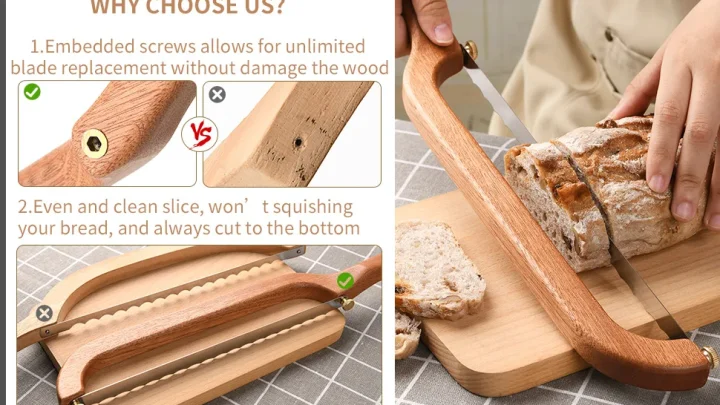
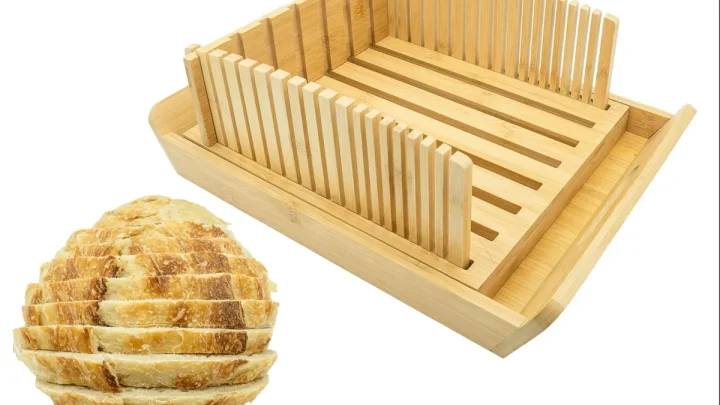
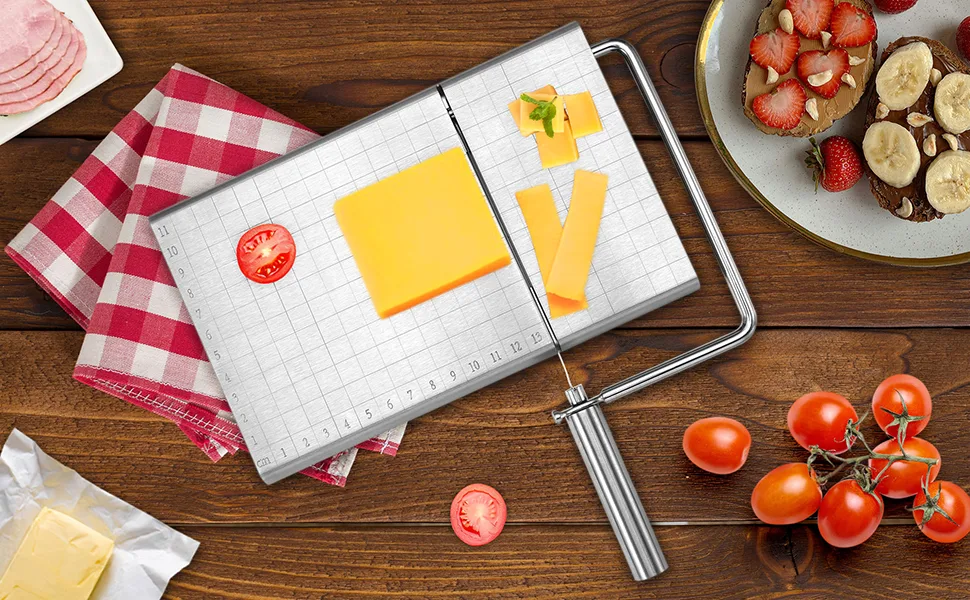
These are frames with one or more taut wires. You press the loaf down through the guide, and the wire does the cutting. They're best for boules, batards, and any bread with a crust that resists a blade.
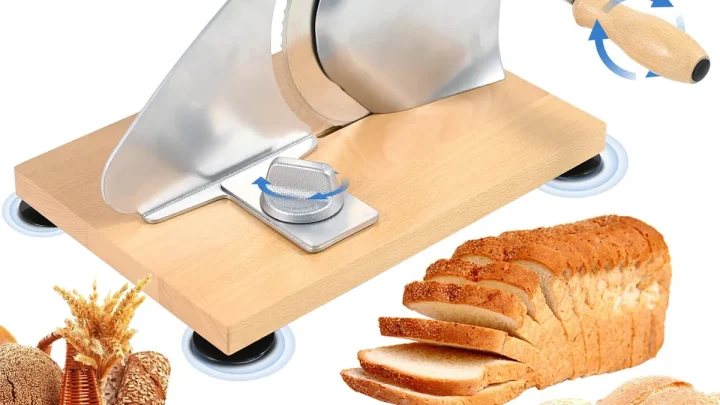
Multi-wire versions slice three or four pieces at once. Prices range from $15 for a simple beechwood frame to $100 for a stainless steel model with adjustable thickness.
Guillotine-Style Push-Down Cutters
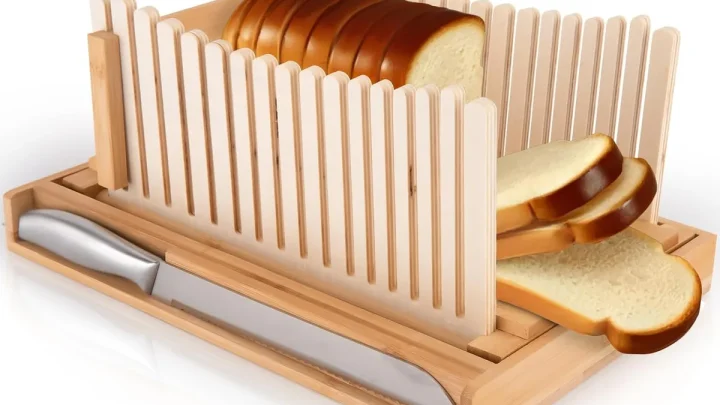
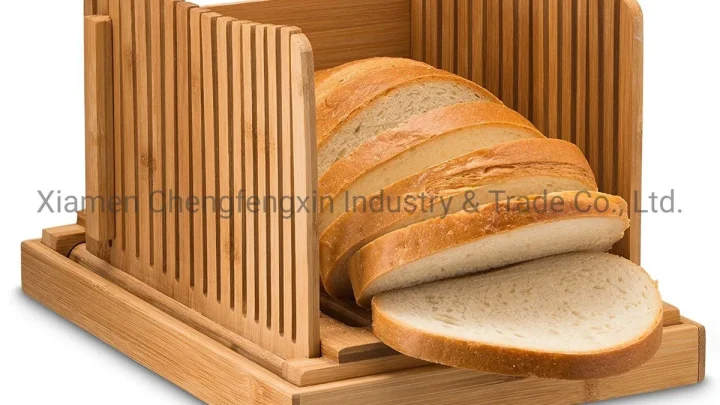
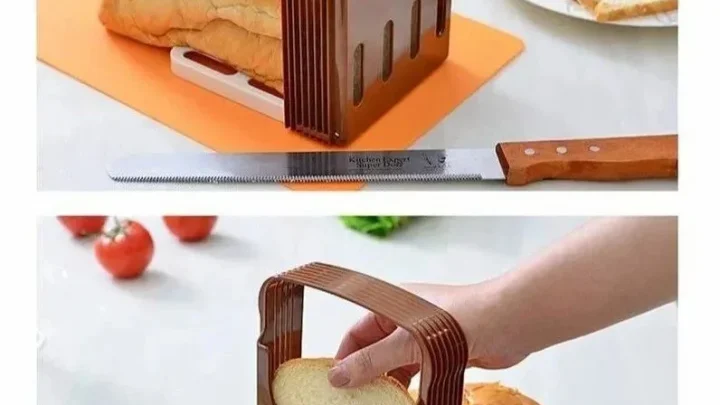
A fixed serrated blade drops straight down through a bread cradle. It gives you crisp, even slices without the forward motion of a knife. Some models have adjustable thickness stops and automatic return springs.
They handle medium-crust loaves well, but very hard crusts can crack rather than cut cleanly.
Electric Rotary Slicers
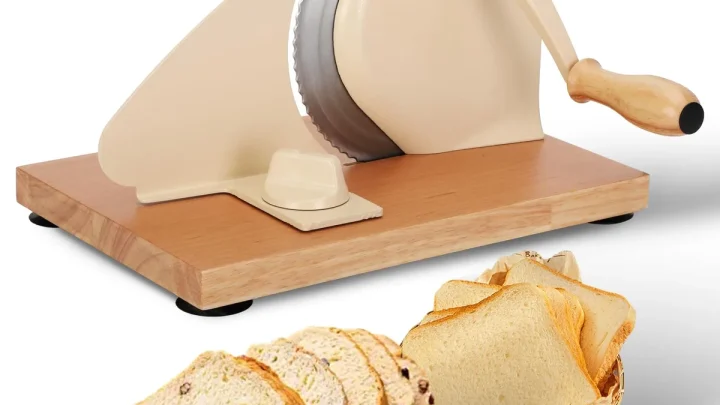
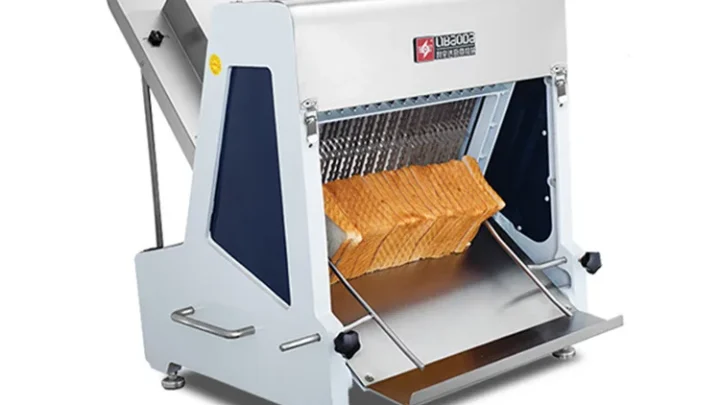
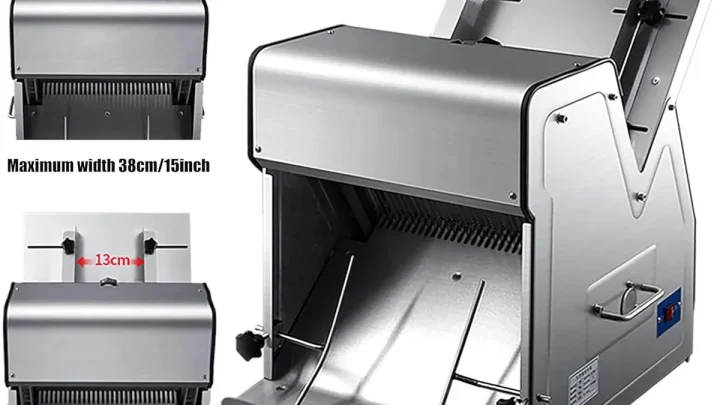
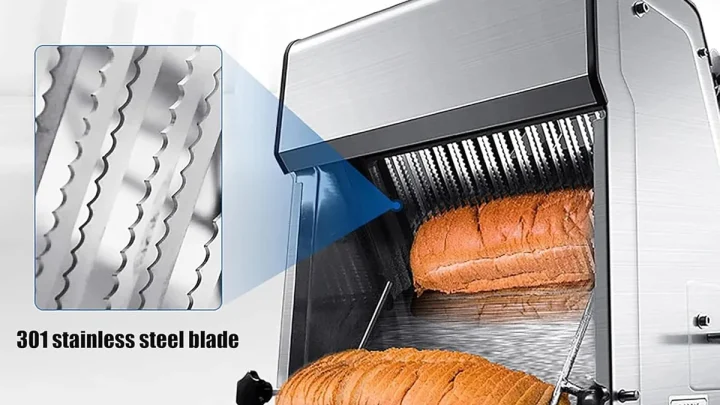
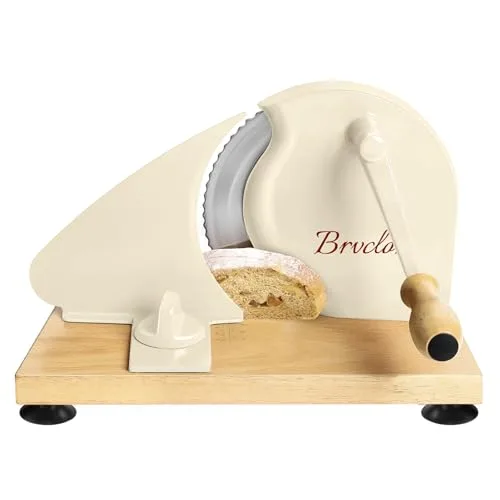
These use a spinning circular blade and a sliding carriage. They're fast and consistent, but the blade's rotational force tears at soft crumb. Unless you're slicing day-old dense rye, they're a risky investment.
Side-by-Side Comparison: What You Actually Get
| Factor | Wire Frame | Guillotine | Electric Rotary |
|---|---|---|---|
| Crumb preservation | Excellent | Good | Poor on open crumb |
| Crust handling | Cuts cleanly | Can crack very hard crust | Tears thick crust |
| Slice thickness adjustability | Limited on cheap models | Good with stops | Excellent |
| Speed per loaf | 30–60 seconds | 10–20 seconds | 5–10 seconds |
| Price | $15–$100 | $30–$250 | $80–$500+ |
| Cleanup | Wipe down | Remove crumb tray | Multiple parts |
The table shows the real trade-off. Speed and adjustability cost you crumb quality. If you've ever watched a beautiful olive loaf get flattened into a pancake, you'll know which factor matters more.
The Overlooked Option: A Great Serrated Knife and a Steady Hand
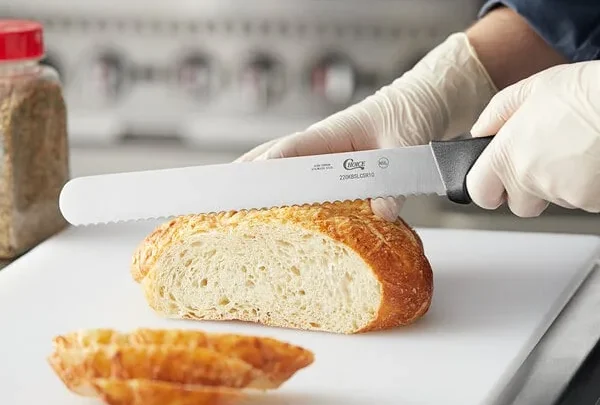
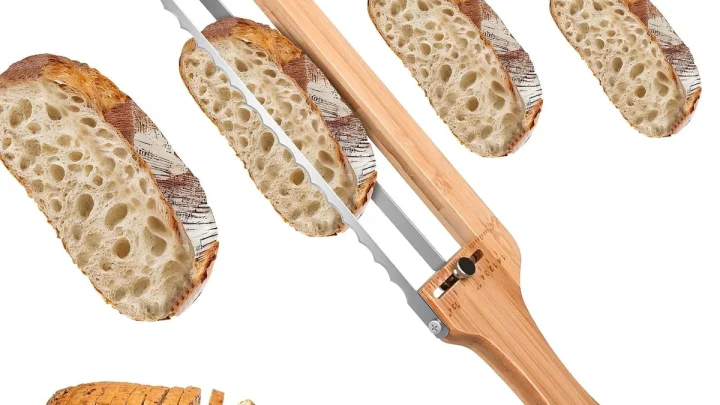
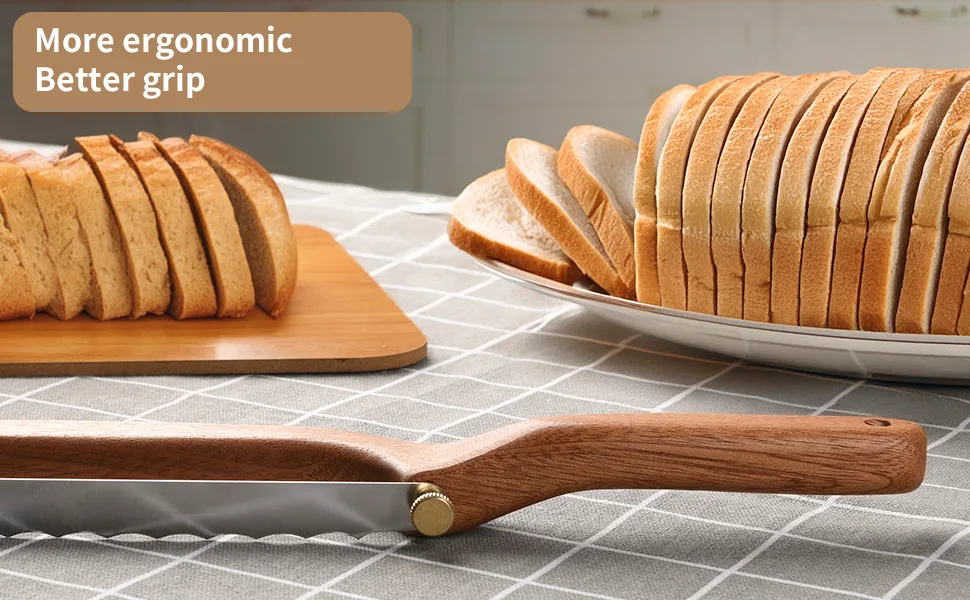
Sometimes the best slicer isn't a mechanical one at all. A quality 10-inch serrated knife can outperform a cheap wire frame if you use the right technique. The knife needs a long, thin blade with deep serrations.
You'll also need a steady hand and a careful sawing motion.
Here's the trick: don't press down. Let the knife's weight do the work and use long, gentle strokes. For a boule, turn the loaf on its side so you're cutting across the largest face.
Support the loaf with a folded kitchen towel to stop it sliding. This method works well for one or two loaves a week.
But when you want identical slices for a sandwich board or gifts, a knife won't deliver the precision. That's when a wire guide helps. It turns a skilled cut into a repeatable, foolproof process.
Who Should Buy Which: Real Scenarios
If you bake a couple of boules a week for your family, a $20 wire frame will serve you perfectly. You don't need speed or fancy adjustability. You need clean cuts that don't crush your open crumb.
This is the simplest, most reliable route.
For a cottage-food seller moving six to ten loaves a day, step up to a stainless steel wire slicer with adjustable thickness. Your margins depend on consistent presentation. Uneven slices look unprofessional, and crushed crumb drives customers away.
Look for a model with tension-adjustable wires.
Restaurants plating thick-cut toast points should consider a guillotine-style cutter. It gives uniform thickness and handles a medium crust without tearing. Just avoid electric rotary models for anything with a delicate interior.
A guillotine with a spring return speeds up service.
Gluten-free bakers, listen closely: your bread crumbles easily under pressure. A single-wire frame with a wide cradle is your safest bet. Electric blades will turn your sandwich loaf into rubble.
Manual wire cutters apply even, gentle force.
What Actually Matters When Buying — The Checklist
Before you hit "add to cart," run through these four specs. They'll save you from a frustrating purchase.
Loaf size is the first filter. Measure your tallest boule and your widest batard. The slicer's opening must clear both.
Many budget frames only fit 4-inch-wide loaves. That's fine for pan bread, but useless for a 6-inch sourdough round.
Slice-thickness adjustability matters if you want variety. Cheap wire frames have fixed positions. Better models offer moveable guides and adjustable stops.
You'll pay more, but you can slice paper-thin for bruschetta or thick for toast.
Material quality affects both safety and lifespan. Look for food-safe hardwood, stainless steel, or BPA-free plastic. The wire should be tapered carbon steel, not cheap monofilament.
It stays taut and cuts cleaner. Per FDA guidance on food-contact materials, confirm any coating or finish is safe for direct food contact.
Don't ignore stability and safety. A good slicer has non-slip feet and a locking lever. You press down, not push through.
If it wobbles, you'll fight it every time. Check the base width before buying.
Maintenance and Long-Term Optimization
A bread slicer is simple, but it still needs care. Wipe the frame and wires after every use with a dry cloth. Bread flour is abrasive and attracts moisture.
Leaving crumbs in the crevices invites rust and dulls the cutting surface.
Most manual wire frames can be re-tensioned or re-wired. Spare wire kits cost a few dollars and extend the tool's life indefinitely. If you notice tearing instead of cutting, the wire needs replacing.
Electric models require more attention. Remove the carriage and blade guard for a full cleaning. Some blades can be sharpened or replaced.
Check the manufacturer's instructions for your specific unit. Never submerge motorized parts.
Store your slicer where it won't get knocked around. A drawer or cabinet organizer works well. The less it moves, the longer it stays aligned.
A bent wire frame is unrecoverable. Keep it level and dry.
Frequently Asked Questions
Why does my electric slicer crush my sourdough?
Electric rotary blades spin too quickly for an open crumb. The force flattens the air pockets before the cut finishes. For artisan loaves, use a wire slicer instead.
Use an electric model only for dense sandwich bread.
Are wire frames worth upgrading to for daily baking?
Yes. Wire frames cost a fraction of electric slicers and preserve crumb structure far better. If you bake daily, choose a stainless steel model with adjustable thickness.
It will pay for itself in fewer wasted slices. Your bread will look as good as it tastes.
Can I slice the bread while it's still warm?
No. Warm bread compresses and gummies up the wire or blade. The crumb hasn't set yet, so it tears.
Let the loaf cool completely, at least 90 minutes. A fully cooled crust gives you the clean, crisp slices you're after.
Do I even need a slicer, or just better knife skills?
A good knife and steady hand work for two loaves a week. If you slice more, need uniform pieces, or have a wobbly loaf, a slicer is worth it. A wire guide costs under $25 and removes the guesswork.
Start there.
The Verdict: A Simple Decision Guide
Here's the bottom line. If you bake crusty artisan loaves with open crumb, buy a manual wire slicer. It's the only tool that preserves your hard work.
For higher volume, get one with adjustable wires and a sturdy metal frame.
If your bread is denser and you want speed over crumb preservation, a guillotine cutter works. Electric rotary slicers are last on the list. They tear soft interiors and cost the most.
Our final recommendation is that most home bakers find a reliable manual guide to be the simplest fix for better-looking slices. It's affordable, easy to clean, and won't wreck your sourdough. When you're ready to compare specific slicer options, start with a wire frame.
Your loaf deserves it.

Similar Posts