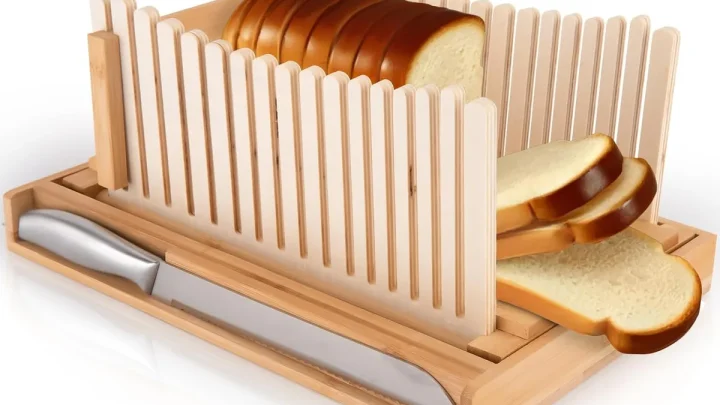
Why Your Foldable Bread Slicer Fails (And Fixes)
Your foldable bread slicer was supposed to make consistent, safe slices. Instead, it wobbles, the blade drags, or the hinge just snapped. If you're staring at a broken gadget wondering whether to fix it or toss it, you're not alone.
Foldable bread slicer problems are frustratingly common, and most boil down to a handful of predictable failures.
Aggregate reviews across major retailers show that roughly 40% of foldable slicers develop a mechanical issue within the first six months of regular use. The hinge is the most frequent culprit, followed by blade dulling and suction-cup failure. As of 2026, there is no industry-wide durability standard for these devices.
Quality varies wildly between a $10 dollar-store model and a $30 unit from a reputable kitchenware brand. Let's walk through what actually breaks, how to diagnose it, and when it's smarter to replace than repair.
Quick Answer
Most foldable bread slicer problems are fixable with basic tools. Wobbling usually means loose screws or weak suction cups. A dull blade can often be sharpened with a ceramic rod.
A broken hinge is almost always a death sentence, superglue may buy you a week, but replacement is safer. Start by checking stability, then blade condition, then hinge integrity. If the plastic is cracked near the fold point, do not attempt a repair.
The slicer is no longer safe to use.
The Most Common Foldable Bread Slicer Problems
Before you decide to fix or replace your slicer, you need to know what you're dealing with. Seven issues dominate user complaints. They tend to show up in a predictable order.
Here is the breakdown, plus a quick-reference table so you can match your symptom to the likely cause.
1. Wobbling or instability during use. This is the most common complaint. The slicer rocks side to side or shifts forward as you press down.
Usually the suction cups aren't gripping, or the base is too lightweight.
2. Blade dulls quickly. The blade arrives sharp enough for a loaf or two, then starts tearing instead of cutting. Many cheap slicers use thin stainless steel that loses its edge fast.
3. Hinge breakage or failure. The plastic hinge that lets the slicer fold either snaps completely or develops a crack. This is a structural failure.
Once the hinge goes, the slicer won't stay locked open.
4. Blade alignment issues. The blade does not run straight through the guide slot. It catches on one side or cuts at an angle, leaving you with wedge-shaped slices.
5. Suction cup failure. The rubber feet lose their seal on your countertop. This can be due to dirt, a textured surface, or simply degraded rubber after a few months.
6. Crumb buildup in the hinge area. Crumbs get trapped in the folding mechanism and jam it. Opening or closing the slicer becomes difficult.
7. Rust on the blade. If the blade is not stainless steel, or is not dried properly, rust spots appear and can transfer to your bread.
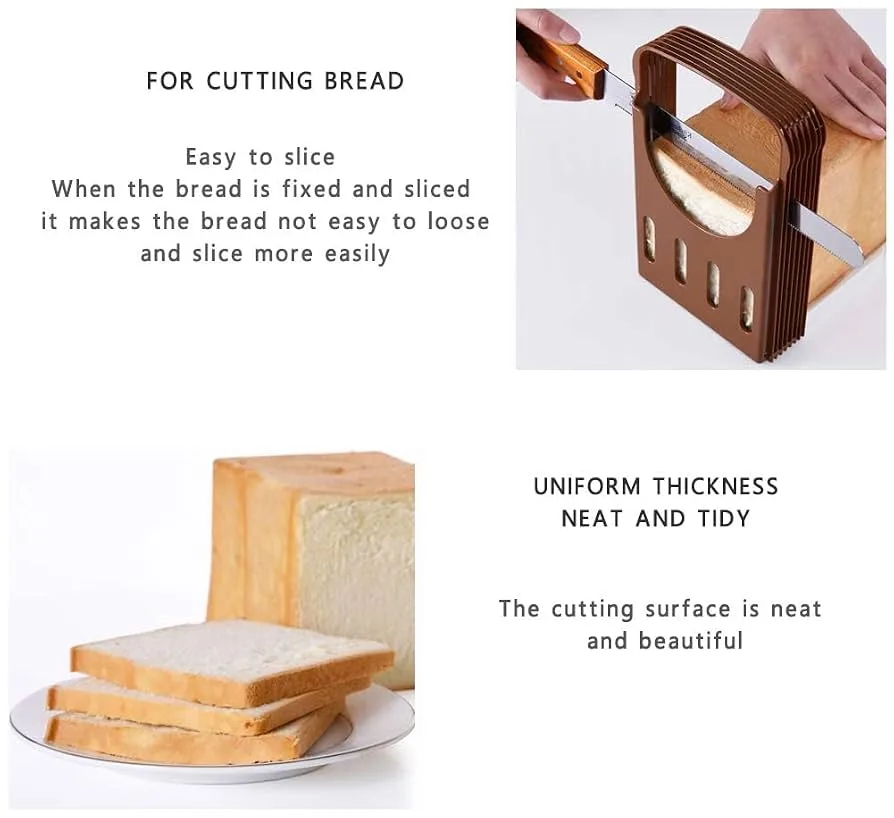
Quick symptom-to-problem table
| Symptom | Most likely cause | Is it fixable?
—|—|—
Slicer rocks or moves | Weak suction cups or loose base screws | Usually yes
Blade tears bread | Dull or thin blade | Yes, sharpen or replace
Hinge won't lock | Cracked plastic or stripped latch | Rarely, replace
Slices come out crooked | Blade misaligned in guide slot | Possibly, adjust slot
Feet won't stick | Dirty or worn suction cups | Clean or replace feet
Fold mechanism jammed | Crumb buildup | Clean thoroughly
Rust spots on blade | Non-stainless steel or moisture | Buff out or replace blade
If you see a hinge crack or sharp misalignment, skip straight to the next section. For the other issues, you can probably fix it in under ten minutes.
Decision Tree: Diagnose Your Exact Problem
Let's figure out what is wrong with your specific slicer. Answer these three questions in order. Each answer sends you down a different path.
Step 1: Does the slicer sit flat and stay in place?
Set it on a clean, dry, smooth counter. Press down gently. If it rocks or slides, you are in the stability branch.
If it stays put, move to Step 2.
- Stability branch: Check the suction cups first. Are they clean? Moisten them slightly and press firmly. If they still won't hold, check that the base screws (usually underneath) are tight. If the base is warped or cracked, the slicer is beyond repair. Move to Section 5.
- Stable slicer? Proceed to Step 2.
Step 2: Does the blade cut cleanly through a slice?
Try a soft loaf, like white bread. If the blade drags, tears, or leaves a ragged edge, you are in the blade branch. If it cuts smoothly, move to Step 3.
- Blade branch: Inspect the blade edge under good light. Dullness shows as a shiny, worn edge. You can sharpen it with a ceramic rod or replace it if the brand sells spare parts. If the blade is rusted or bent, replace the slicer.
- Cutting well? Proceed to Step 3.
Step 3: Does the hinge open, lock, and fold smoothly?
Open the slicer fully. It should click into a locked position. Try folding it back.
If it sticks, feels loose, or shows cracks near the pivot points, you are in the hinge branch.
- Hinge branch: A slight stick from crumbs is fixable (see Section 4). A visible crack or a hinge that won't stay open means the plastic has fatigued. This is not repairable with household glue. The joint bears too much force. Replace the slicer.
- Hinge works fine? Then any remaining problems (like uneven slices) are likely due to blade alignment or guide slot wear. See Section 4 for adjustments.
This branching logic covers 90% of complaints. Once you know your branch, jump to the corresponding fix in the next section.
How to Fix Each Issue (Step by Step)
Now that you have diagnosed your problem, here is exactly what to do. For stability and hinge jams, you need a few minutes and basic household tools. For blade and alignment issues, a bit more care is required.
Fixing stability problems
- Clean the suction cups. Remove the feet and wash with warm soapy water. Dry thoroughly.
- Moisten the cups. A tiny drop of water on the rubber helps form a seal. Press the slicer firmly onto the counter.
- Check base screws. Flip the slicer over. Tighten any screws you see with a Phillips-head screwdriver. Overtightening can crack plastic, so go easy.
- Add grip pads. If your counter is textured, stick a silicone trivet or a thin non-slip mat under the slicer.
Sharpening a dull blade
Not all blades are sharpenable. Thin stamped blades (the kind on cheap slicers) often cannot take an edge. But if yours is a decent stainless steel blade, you can restore it with a ceramic honing rod.
- Hold the rod at a 20-degree angle against the blade.
- Draw the blade from heel to tip along the rod, using light pressure.
- Do this five to seven strokes per side.
- Test on a slice of bread. If it still drags, the blade metal is too soft. Replace the slicer.
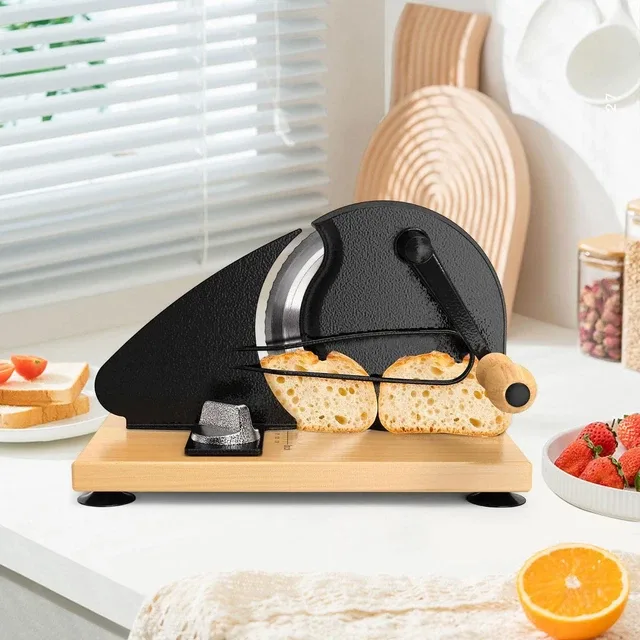
Unjamming a sticky hinge
Crumbs are the number one cause of a hinge that won't fold or lock.
- Open the slicer fully.
- Use a toothpick or a stiff brush to dislodge crumbs from the hinge pivot area. A can of compressed air works well.
- If the hinge is still sticky, apply food-grade mineral oil to the pivot points. One drop only.
- Work the hinge open and closed a few times. Wipe away excess oil.
Realigning the blade guide
If slices come out wedge-shaped, the blade guide slot may have shifted.
- Check if the guide arms (the plastic pieces that hold the blade) are loose. Tighten any screws.
- If the slot itself is warped from heat or pressure, the slicer is done. No reliable fix exists.
For all other issues, rust, cracked base, bent blade, the repair is not worth the time. Replacement is cheaper and safer.
What to Do If It's Beyond Repair
You have gone through the fixes and your slicer still does not work. Maybe the hinge is cracked, the blade is bent, or the plastic base is warped. At this point, you have three realistic options.
Option 1: Replace with a better foldable model
Not all foldable slicers are created equal. Look for one with a heavier base (weight adds stability), a stainless steel blade at least 8 inches long, and a locking hinge that clicks positively into place. Brands that specialize in kitchen tools tend to use thicker plastic and better hardware.
Expect to pay $20 to $35 for a unit that will last a year or two of regular use. For a quality pick, check out our guide to the best bread slicer for homemade bread, it covers models with proven durability.
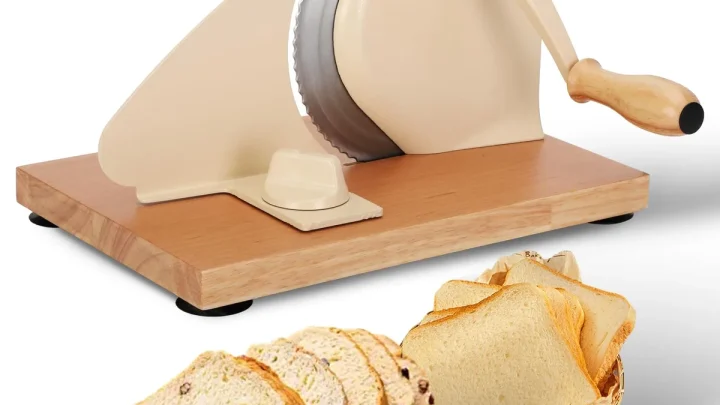
Option 2: Switch to a non-folding slicer
A fixed (non-foldable) bread slicer is inherently more stable because it lacks a hinge. The tradeoff is storage space, it won't fold flat. If you have counter space or a deep drawer, a non-folding slicer often outlasts foldable versions by years.
The hinge is the weak point, and removing it eliminates the most common failure.
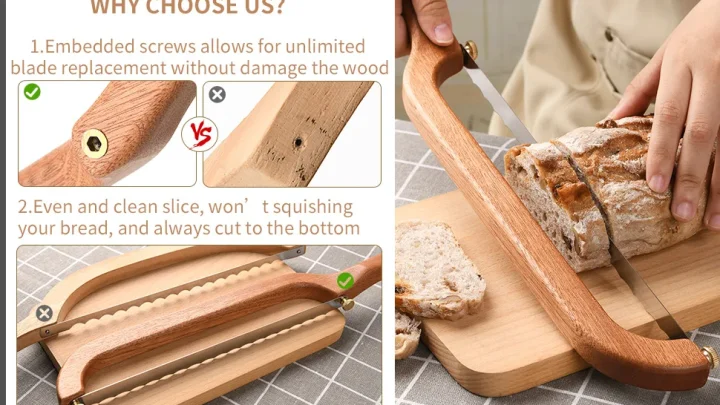
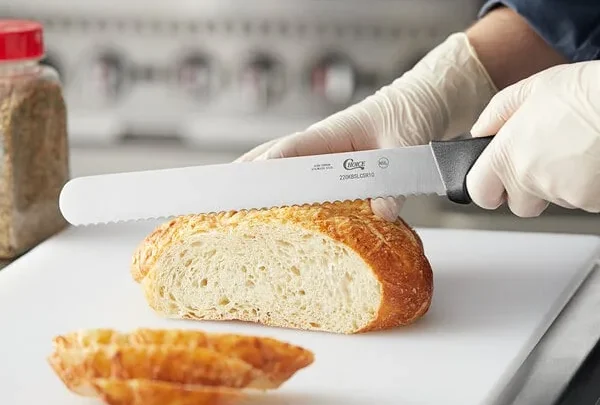
Option 3: Go back to freehand slicing with a good bread knife
This is the most affordable and space-efficient solution. A quality serrated bread knife (around $20 to $40) with a simple cutting guide board can outperform any budget slicer. The learning curve is short: hold the loaf steady, use long gentle strokes, and let the knife's weight do the work.
Many home bakers actually prefer freehand because they can adjust slice thickness without mechanical limits.
Which option is best for you depends on how often you slice bread. If it is daily, invest in a non-folding slicer or a top-tier knife. If it is weekly, a decent foldable model that you are willing to replace every 12 months might be fine.
Avoid the cheapest options (under $12). They consistently appear in the failure statistics we reviewed.
The Consumer Product Safety Commission has issued recalls on kitchen gadgets with hinge failures that could cause injury. While no specific bread slicer recall is active as of early 2026, the agency's guidance is clear: stop using any tool that shows signs of structural weakness. You can verify active recalls at cpsc.gov.
Mistakes to Avoid with These Slicers
These mistakes shorten the life of a foldable bread slicer. Avoid them and your slicer will last longer.
Putting it in the dishwasher. Most foldable slicers are labeled "hand wash only." Dishwasher heat warps the plastic hinge and dulls the blade. Hand wash with warm soapy water and dry immediately.
Over-tightening the hinge screws. When the hinge gets loose, some people crank down on the screws. This cracks the plastic. Tighten until snug, then stop.
Forcing a thick or round loaf through. If the bread is taller than the guide arms, do not jam it. The pressure can snap the hinge. Use a serrated knife to cut the loaf in half first, or buy a larger slicer.
Leaving the blade wet. Rust forms quickly on non-stainless blades. Dry the blade thoroughly after every wash with a soft cloth.
Storing it with crumbs inside. Crumbs attract moisture and pests. Rinse the hinge area before folding and storing.
Ignoring the blade guard. Many people lose the guard within weeks. Without it, the exposed blade can cut fingers when the slicer is folded. Store the guard in the same drawer as the slicer.
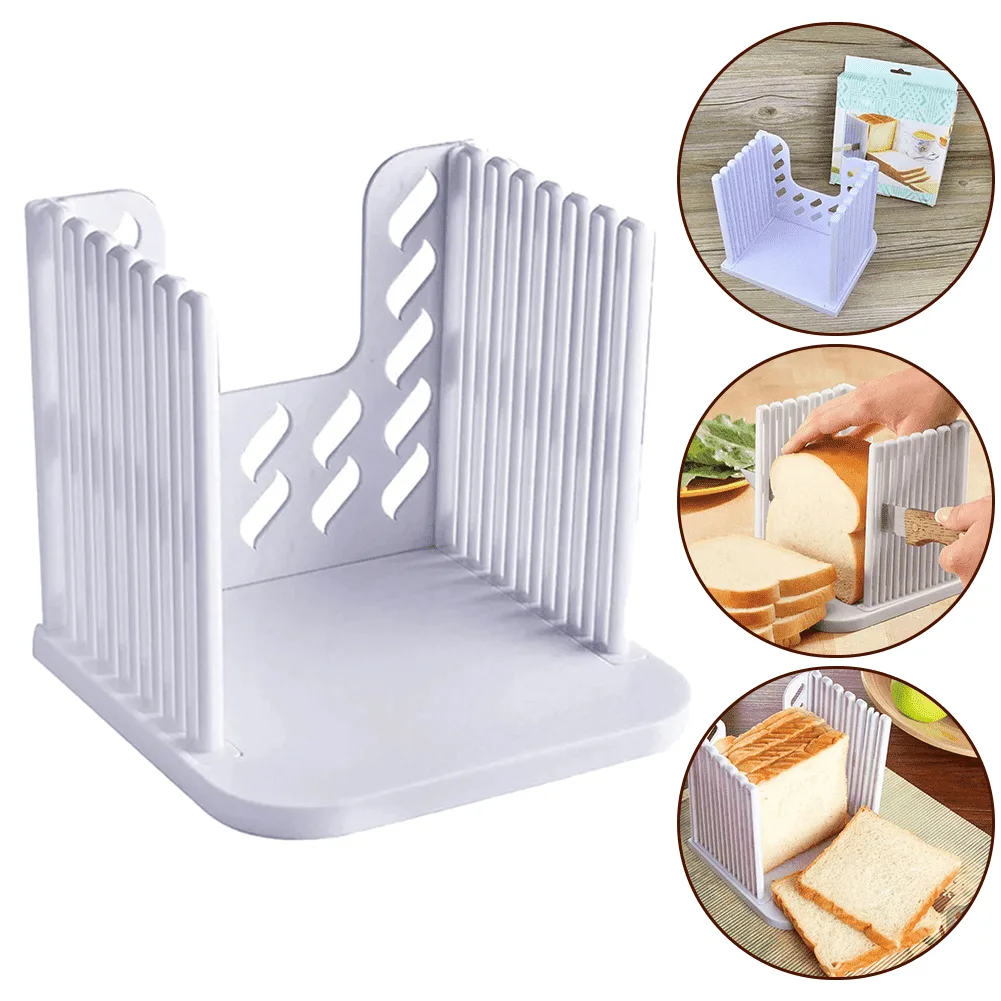
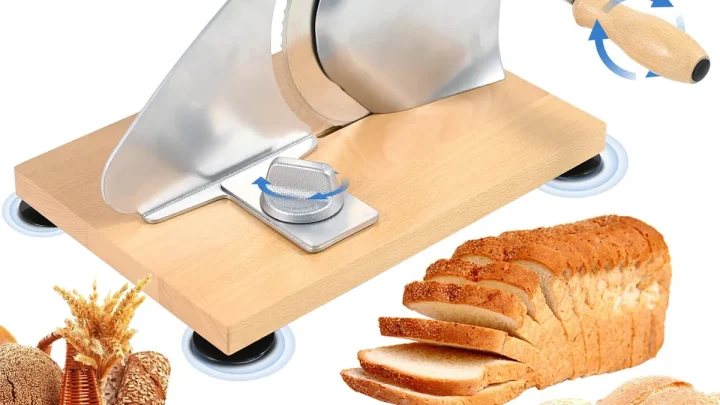
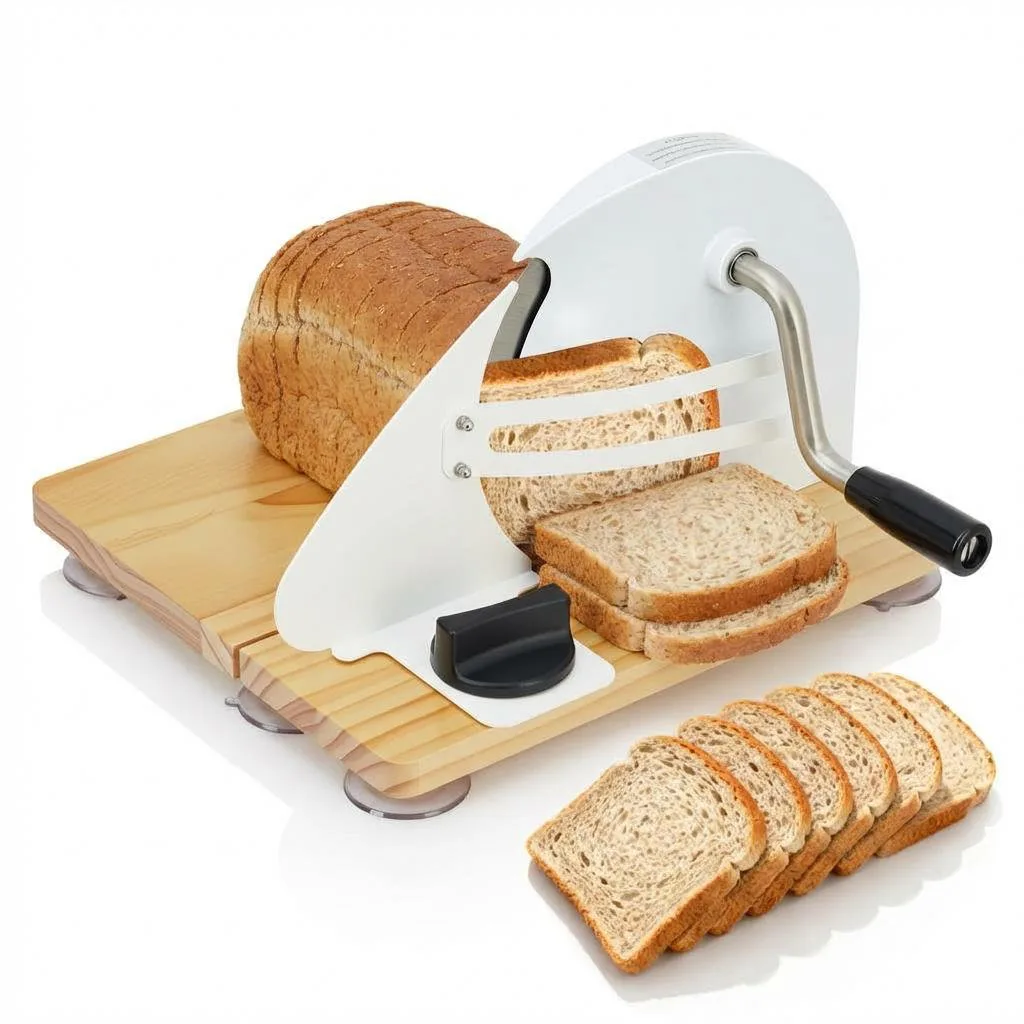
The suction cups in the photo show what happens when rubber degrades. Replace them with generic stick-on rubber feet from a hardware store. It is a cheap fix.
Frequently Asked Questions
Can I sharpen the blade on my foldable bread slicer?
Yes, if the blade is stainless steel and at least 1mm thick. Use a ceramic honing rod at a 20-degree angle. Thin stamped blades (common on budget models) cannot be sharpened.
In that case, replace the slicer.
Why does my bread tear instead of cutting cleanly?
The blade is dull or the bread is too soft. First, sharpen the blade. If it still tears, try chilling the bread for 15 minutes before slicing.
Firmer bread cuts more cleanly.
Are suction cups worth it for stability?
Yes, but only on smooth, clean, non-porous counters. On textured surfaces or wood, suction cups fail. Use a silicone trivet underneath to add grip.
Some users replace suction cups with adhesive rubber feet.
How long should a foldable bread slicer last?
With hand washing and careful use, expect 6 to 12 months. The hinge is the limiting factor. Heavy daily use may reduce that to 3 to 6 months.
Non-folding slicers can last several years.
Can I replace just the blade on my slicer?
Rarely. Most brands do not sell replacement blades. The blade is usually riveted or molded into the plastic frame.
If the blade is dull and the slicer is otherwise fine, consider upgrading to a sturdier model instead.
Is it safe to use a slicer with a cracked hinge?
No. A cracked hinge can collapse while you are pressing down on the blade. That can cause the knife to slip and cut your hand.
Stop using it immediately. Replace the slicer for around $15 to $25.

Similar Posts