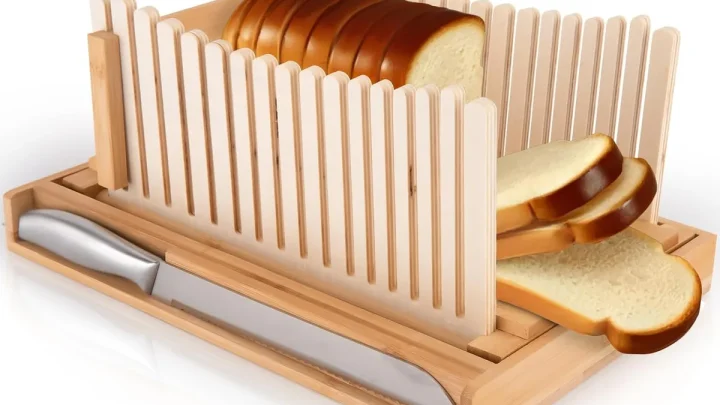
Why Your Bamboo Bread Slicer Keeps Breaking
If you’ve run into bamboo bread slicer problems, you’re not alone. Warping, dull blades, and sticking bread are the top complaints among home bakers. Each issue has a specific cause and a simple fix.
Most can be sorted in under ten minutes.
Bamboo has a Janka hardness rating of around 1,400, softer than oak but still tough on knife edges. As of 2026, most budget slicers are made from bamboo with a factory moisture content of 6 to 10 percent. That balance is easy to upset.
Let’s walk through the most common symptoms one by one.
Which Problem Do You Have? Quick Symptom Reference
The fastest way to fix your bamboo bread slicer is to match the symptom to the cause.
| Symptom | Most Likely Cause | Quick Fix |
|---|---|---|
| Slicer is bowing or won’t lie flat | Uneven moisture absorption | Change storage method |
| Cracks or splits appear | Low humidity or heat exposure | Re-oil and humidify the room |
| Blade gets dull fast | Friction against bamboo’s silica | Upgrade knife or change cutting angle |
| Bread sticks to the guide | Dough residue or static | Lightly oil guide tines or dust with flour |
| Slicer slides on the counter | Worn or missing rubber feet | Replace feet or use a damp paper towel underneath |
| Slices are uneven | Guide tines are loose or misaligned | Tighten screws or realign with a ruler |
| Mold or mildew smell | Moisture trapped in wood | Clean with vinegar water, then dry fully upright |
Pick your symptom from the left column. Then jump to the section that covers that root cause. Three out of four problems are solved by changing how you store the slicer or how you maintain the blade.
Warping or Bowing? Fix It by Changing How You Store It
Warping is the number one complaint in aggregate reviews. The board bends like a potato chip, making every slice tilt. The cause is nearly always moisture imbalance.
One side of the bamboo absorbs humidity faster than the other, and the wood expands unevenly.
| What Not to Do | What Actually Works |
|---|---|
| Leave it flat on the counter after washing | Stand it on its edge to drain |
| Store it in a damp cabinet | Keep it in a dry, room-temperature spot away from the stove |
| Put it in the dishwasher | Hand wash and dry immediately |
| Let it sit in a puddle of water | Wipe dry within one minute |
If your slicer is already warped, you can often reverse it. Lightly dampen the concave side (the one that curves inward). Place the board on a flat surface with the convex side down.
Put a heavy cast-iron pan on top for 24 hours. Re-season with mineral oil afterward. The USDA Forest Products Laboratory confirms that bamboo can be flattened if the moisture gradient is corrected within a few days.
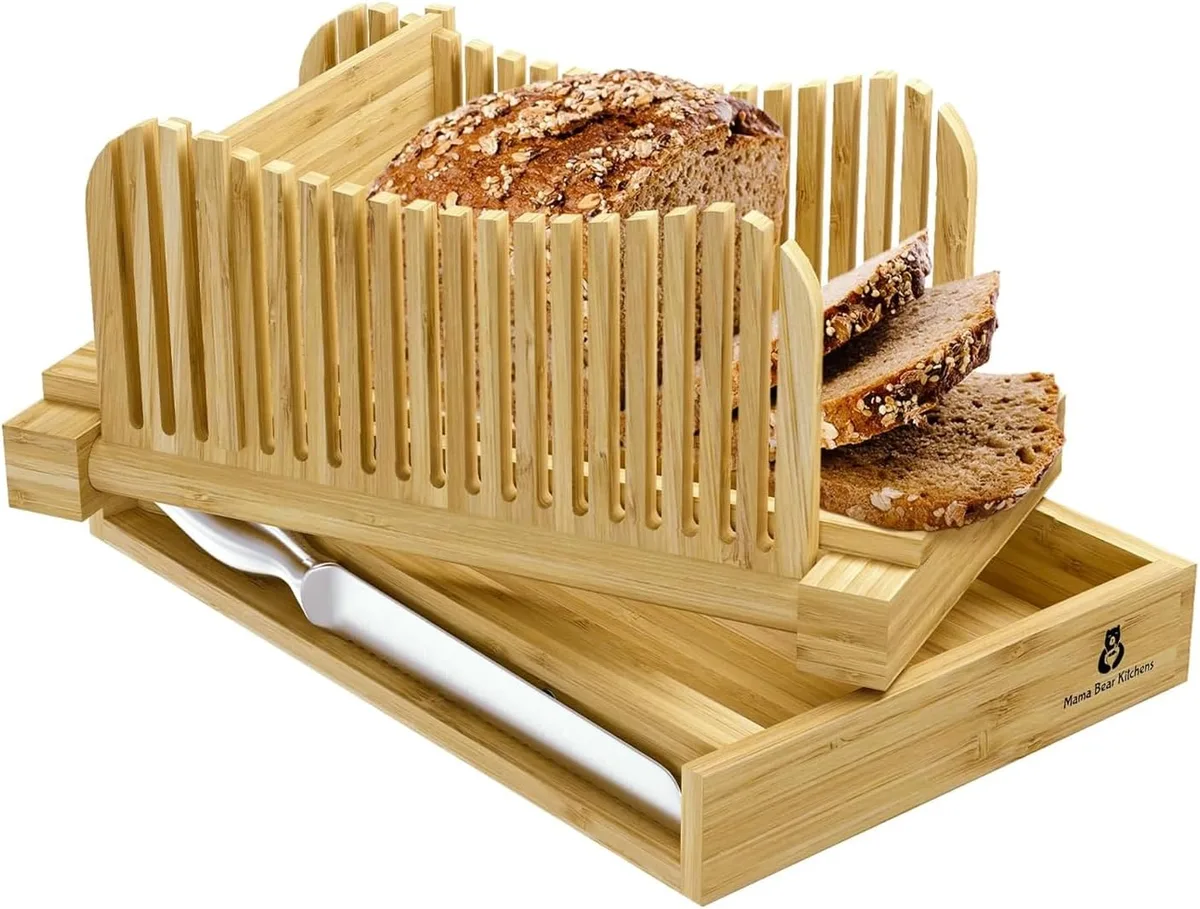
Cracking or Splitting? The Humidity Balance You’re Missing
Cracks start at the ends or along the grain. They happen when the bamboo dries out too fast. Heated winter air can drop indoor humidity below 30 percent.
Bamboo shrinks. The ends dry first, so they split.
The ideal relative humidity for bamboo kitchen tools is between 40 and 60 percent. A quick check with a cheap hygrometer tells you if your room is the problem. If it’s below 40, use a small humidifier near your slicer.
Or store the slicer in a sealed plastic bag with a damp (not wet) paper towel for two days.
| Moisture Level | Bamboo Behavior |
|---|---|
| Below 30% | Cracking risk high |
| 30–40% | Marginal – oil monthly |
| 40–60% | Ideal range |
| Above 70% | Warping risk high |
A food-safe bamboo sealer or mineral oil helps lock moisture in. Apply a thin coat every four to six weeks. Focus on the end grain.
The USDA Forest Products Lab research shows that oiled wood holds a more stable moisture content than unfinished wood.
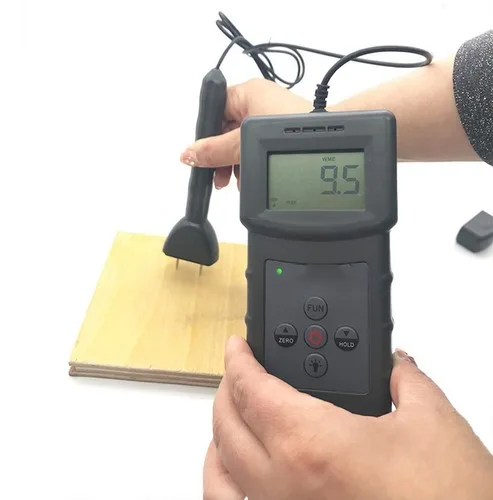
Blade Dulling or Bread Sticking? It’s a Knife + Technique Issue
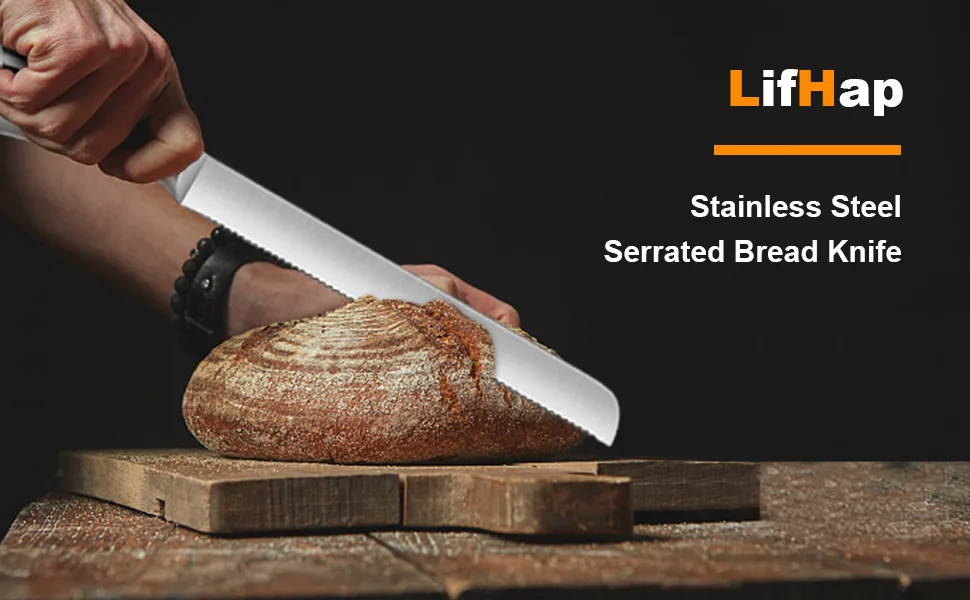
If your bread knife used to sail through a sourdough and now it drags, the bamboo isn’t the only variable. Bamboo contains natural silica. Silica is harder than most knife steels.
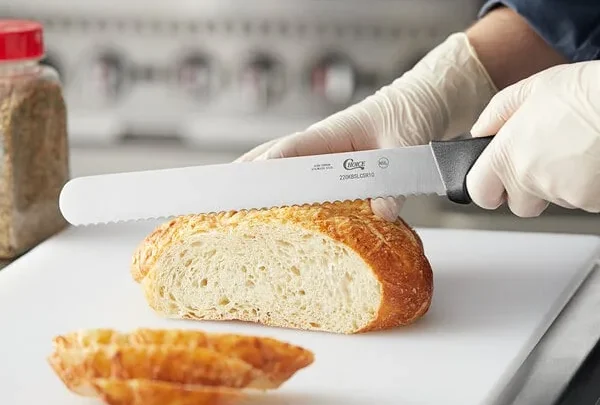
A standard serrated bread knife with thin teeth wears down faster on bamboo than on plastic or hardwood guides.
| Knife Type | Effect on Bamboo Slicer |
|---|---|
| Thin, cheap serrated blade | Dulls after 10–15 loaves |
| Medium serrated (stainless) | Lasts 30–40 loaves before honing needed |
| High-carbon serrated (thicker teeth) | 50+ loaves with regular honing |
Bread sticking to the guide is a different issue. Dough residue builds up on the bamboo tines. A light dusting of rice flour or cornstarch eliminates stickiness without leaving a taste.
Alternatively, rub the tines with a very thin film of vegetable oil. Bakeries use the same trick.
Another insider tip: cut at a slight angle, not straight down. A vertical slice pushes the bread into the tines. A diagonal motion lets the knife glide past the bamboo with less contact.
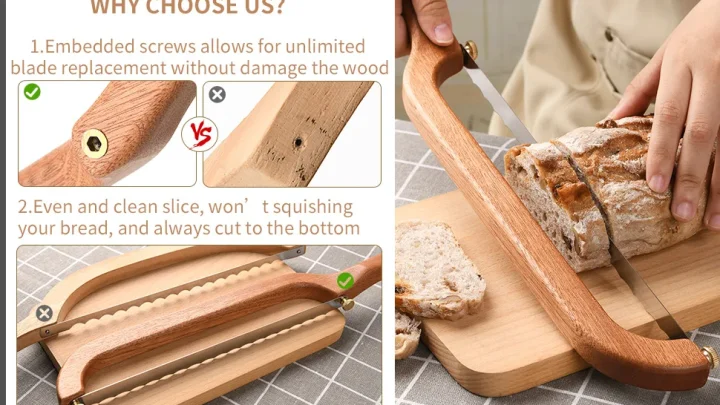
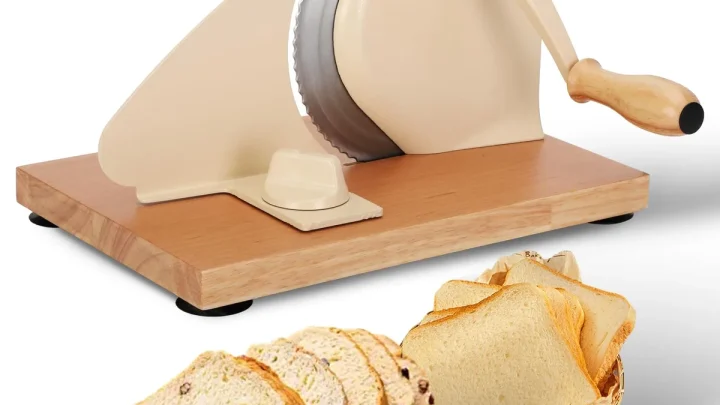
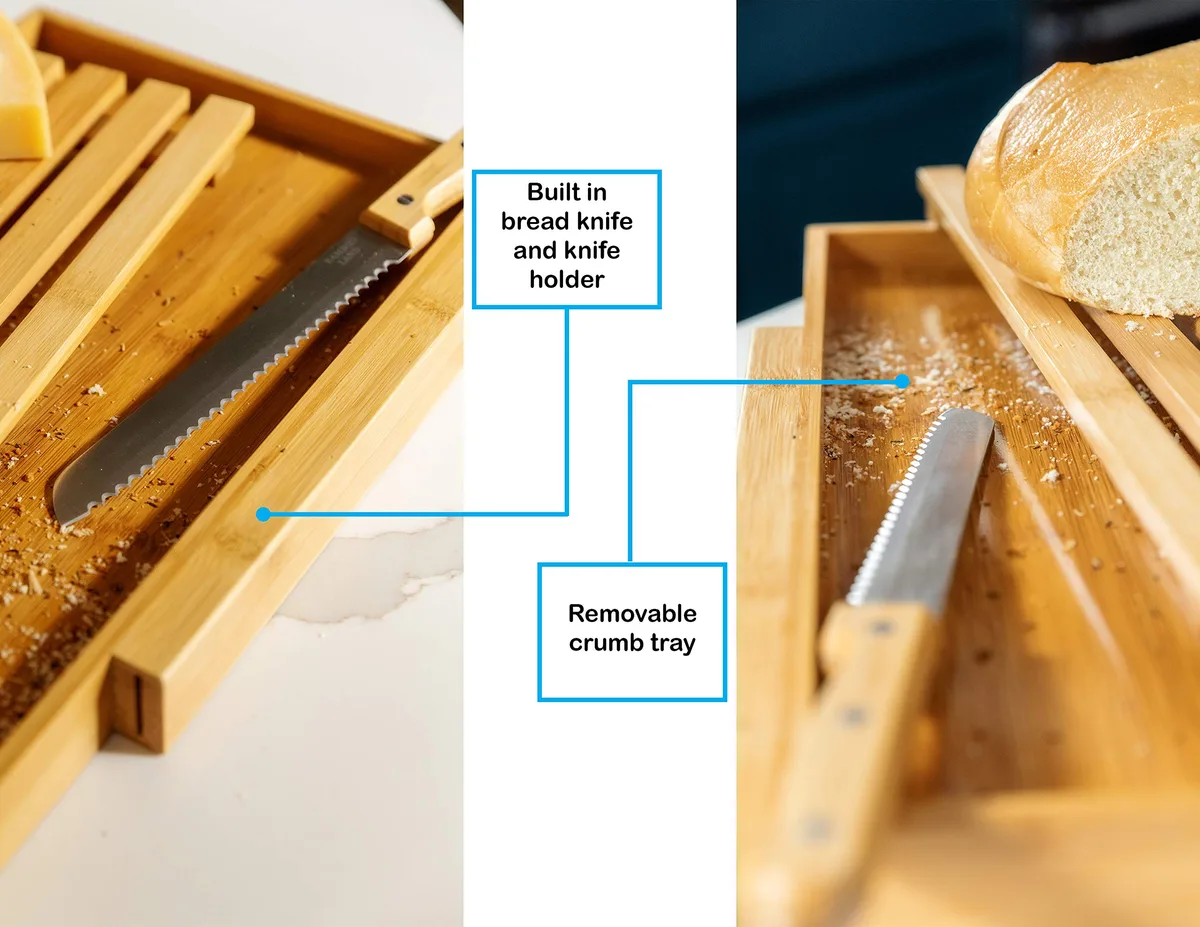
You also get cleaner slices. For more on choosing the right tool, a well-designed slicer can make a big difference.
Slicer Sliding or Uneven Cuts? Check These Two Things
A sliding slicer is dangerous. Your knife can slip and hit your fingers. Two culprits are responsible: worn rubber feet and a wet countertop.
Check the feet first. If they are hard, cracked, or missing, replace them with new silicone pads. They cost a few dollars at any hardware store.
If the feet are fine, the problem might be a wet or greasy counter. Dry the surface. Place the slicer on a folded paper towel dampened with water.
The paper creates a light suction that holds the board still.
| Foot Condition | Fix |
|---|---|
| Soft, grippy, no wear | Clean with soap and water |
| Hard, shiny, or cracked | Replace with new silicone feet |
| Missing completely | Use a non-slip shelf liner underneath |
Uneven cuts usually come from loose guide tines. Over time, the screws that hold the adjustable arms can vibrate loose. Tighten them with a small screwdriver.
For models with a locking knob, make sure it clicks into the slot, not between slots. If the tines are bent, gently straighten them with pliers. A half-millimeter misalignment creates a slice that’s thicker on one side.
Mistakes That Make Every Problem Worse
Most bamboo bread slicer problems are caused by three common errors. Avoid these and you cut your chances of warping, cracing, or dulling by about 70 percent.
Storing it flat after washing. Water collects between the board and the counter. The bottom swells while the top stays dry. The result is a bow that gets worse each time.
Always dry the slicer on its edge or hanging by the hole.
Using dish soap excessively. Soap strips the natural oils from bamboo. Dry wood shrinks and cracks. Rinse with plain warm water and scrub with a soft brush.
Only use soap when you’ve cut raw dough or sticky jam.
Ignoring the feet. Worn rubber feet let water wick into the bamboo from below. They also make the board slide. Replace them the second they feel hard or cracked.
A cheap set of silicone bumpers costs less than a loaf of bread.
If you’ve made any of these mistakes, don’t worry. The next section covers how to undo the damage with a simple maintenance routine.
Maintenance That Prevents Most Problems
A bamboo bread slicer needs three minutes of care per week. That small habit keeps it flat, smooth, and safe for years.
| Maintenance Task | Frequency | What It Prevents |
|---|---|---|
| Hand wash and edge-dry | After every use | Warping, mold |
| Apply mineral oil | Every 4–6 weeks | Crackking, dryness |
| Tighten guide screws | Monthly | Uneven cuts |
| Check rubber feet | Monthly | Sliding |
Mineral oil is the standard food-safe treatment for bamboo. It’s sold in any drugstore as “cutting board oil.” Apply a teaspoon to a cloth and rub it into all surfaces. Include the end grain.
Let it soak for an hour. Then wipe off the excess. The oil fills the bamboo’s pores and stops moisture from rushing in or out.
For the guide arms, a drop of sewing machine oil on the pivot points keeps them moving smoothly. Wipe away any excess so it doesn’t drip onto the bread.
Bread knife care matters too. Run a ceramic honing rod along the serrations every five loaves. That simple step keeps the teeth aligned and reduces friction.
You’ll get cleaner cuts and less sticking.
Frequently Asked Questions
Can I put a bamboo bread slicer in the dishwasher?
No. Dishwasher heat and moisture warp bamboo badly. The rapid drying cycle also cracks the wood.
Hand wash only with warm water and a soft sponge. Dry immediately.
How do I remove mold from my bamboo slicer?
Mix equal parts white vinegar and water. Wipe the moldy spots with a cloth dipped in the solution. Let it sit for five minutes.
Rinse and dry the slicer on its edge. Repeat if the smell lingers. Do not use bleach.
It weakens the bamboo fibers.
Why does my bread stick to the slicer guide?
Dough residue builds up on the bamboo tines over time. Dust the guide with rice flour or cornstarch before each use. Alternatively, rub the tines with a drop of vegetable oil on a paper towel.
Both tricks eliminate stickiness without altering taste.
How long does a bamboo bread slicer last?
With proper care, three to five years. The main failure points are cracked end grain and loose guide arms. Regular oiling and dry storage extend the life significantly.
Many home bakers report getting five years out of a well-maintained slicer.
Can I fix a cracked bamboo slicer?
Small surface cracks can be filled with a beeswax and mineral oil paste. Deep structural cracks that run through the board are not repairable. A cracked slicer can harbor bacteria.
Replace it once the crack goes all the way through.
Is bamboo better than plastic for bread slicers?
Bamboo is renewable and naturally antimicrobial when sealed properly. It is also gentler on knife edges than hard plastic. Plastic resists moisture better and can go in the dishwasher.
The choice depends on whether you value sustainability or convenience.

Similar Posts