The Best Way to Use a Foldable Bread Slicer
You've probably sliced a fresh loaf and ended up with uneven, lopsided pieces that look nothing like bakery cuts. That's why this foldable bread slicer explained guide is worth your time. A foldable bread slicer is a compact, hinged cutting guide that holds a loaf steady while you slice, then folds flat for storage.
It's a simple tool that quietly fixes a common kitchen frustration.
Manufacturer specifications show most slicers handle loaves up to 1.5 pounds and accept standard 10-inch serrated knives. The whole unit folds to under two inches thick, making it a favorite in RVs and tiny kitchens. As of 2026, prices typically run between $12 and $35 depending on materials.
Let's look at what makes this tool work and why the visual design matters more than you'd think.
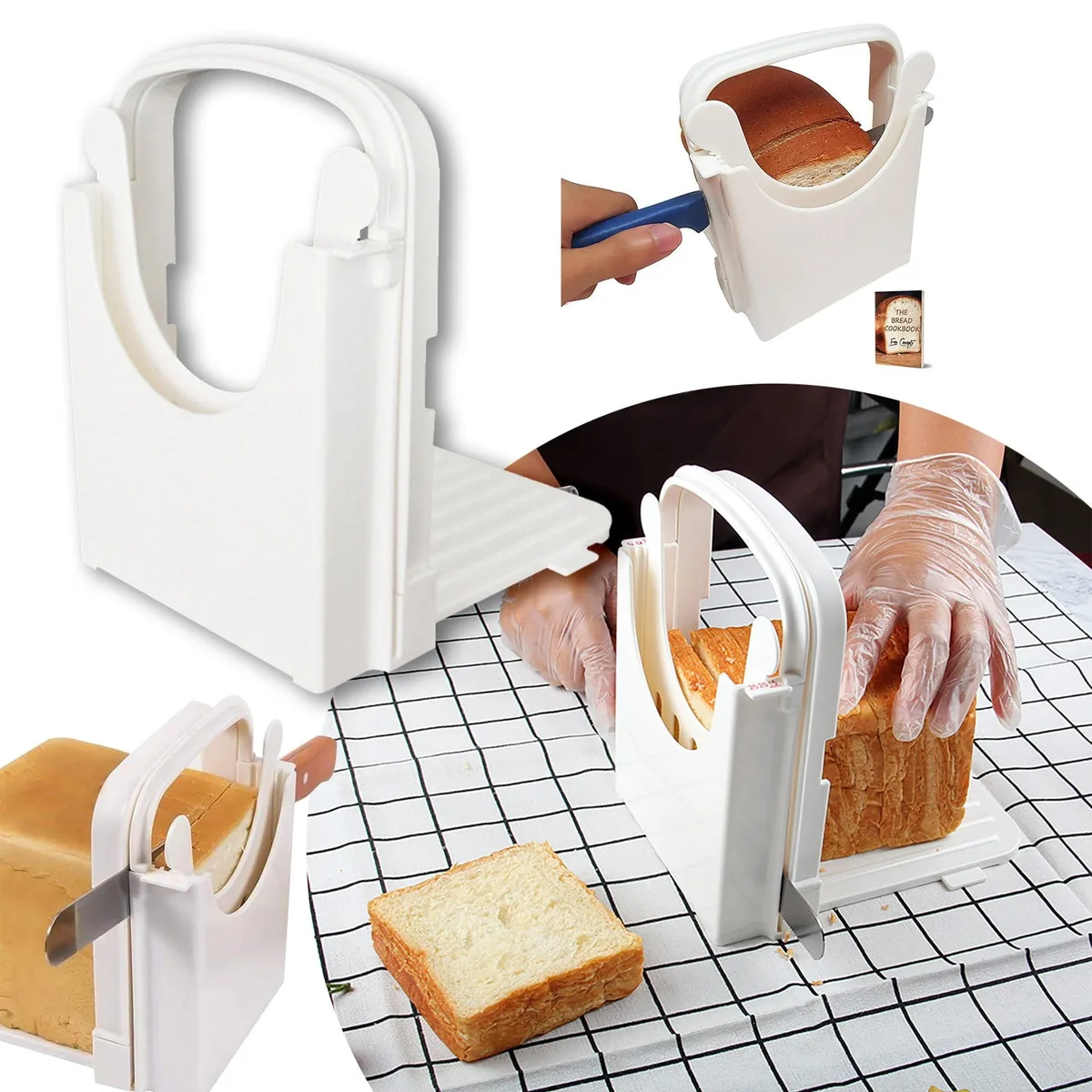
Why Seeing It Matters: The Visual Case
Search for details about this tool online, and you'll mostly find product listings. They give you dimensions and colors. They rarely show you how the tool actually works.
That's because the whole thing is about geometry.
The hinge, the cradle, and the slot all work together in three dimensions. A photo makes that obvious. A paragraph full of prepositional phrases just confuses you.
Why a Text-Only Explanation Fails
Think about explaining a bicycle helmet. You can say it has straps and a shell. But you won't understand the fit or the buckle placement until you see it.
Same story here. The folded slicer looks like a plain cutting board. In that state, it's easy to mistake for a serving tray.
The blade slot is nearly invisible. The hinge is flush.
What a Folded Slicer Looks Like (And Why It's Confusing)
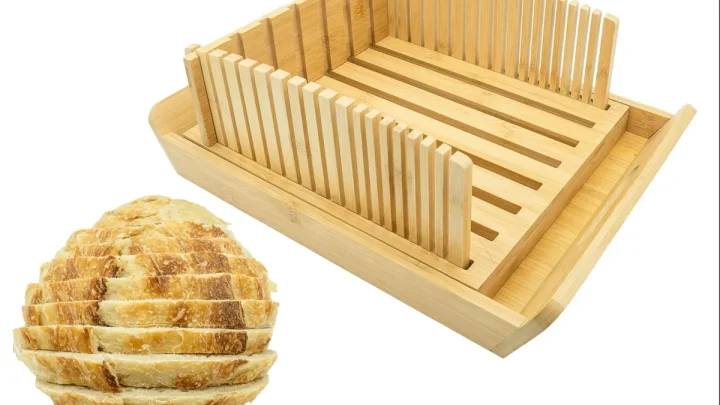
When folded, the whole unit is about the size of a standard cutting board, but thicker. One side has a narrow opening. The other side is smooth.
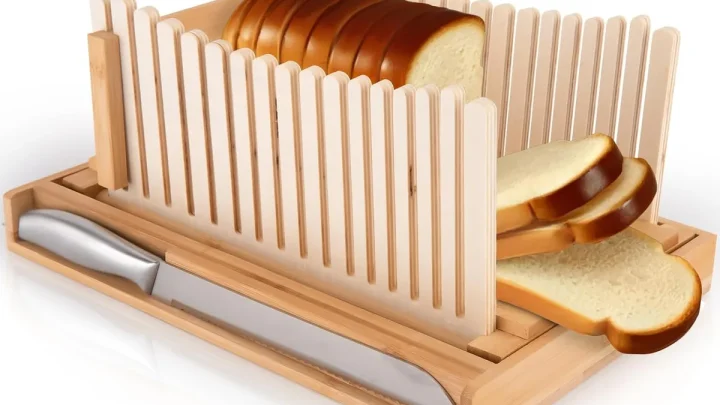
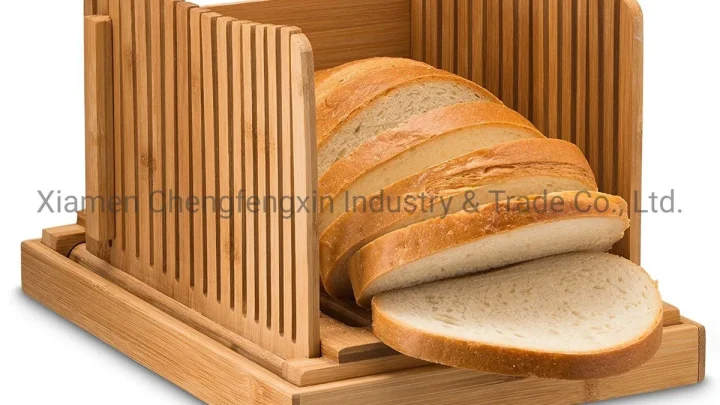
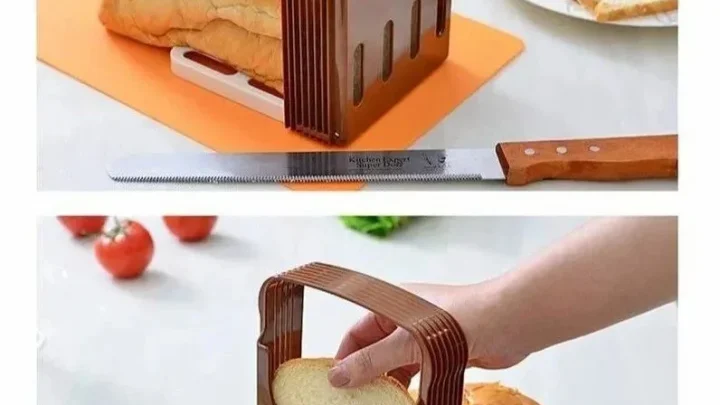
When you unfold it, two side panels flip up and lock into place. Those panels form a V-shaped cradle for your loaf.
That visual transformation is the core of the tool. Without photos, you'd never guess it.
The Anatomy: Key Visual Components to Recognize
The Hinge Mechanism and Locking Clip
The hinge sits along the middle axis. It's usually a metal pin or a reinforced plastic joint. A small locking clip holds the two halves together when folded.
You'll slide that clip open to unfold the slicer.
The Bread Cradle and Blade Guide Slot
The cradle is the curved area where the loaf sits. It's shaped like a shallow trough. Above that trough is the blade slot.
This slot guides your knife straight down. It prevents the blade from wobbling side to side.
The Base and Non-Slip Grip Features
Underneath, most models have a rubberized pad or silicone feet. That grip stops the slicer from sliding on your countertop. Some cheaper models skip this.
They'll move around as you saw through a crusty boule.
Here's a quick look at common materials:
- Body: Food-safe ABS plastic or bamboo
- Hinge: Stainless steel pin
- Grip: Silicone or TPR rubber
- Slot insert: Sometimes removable for cleaning
How It Actually Works: A Step-by-Step Visual Walkthrough
Setting Up on Your Counter
Place the slicer flat on a stable surface. Unlock the clip. Pull the two halves apart until they click flat.
Then lift the side wings into their upright position. You should hear a light snap when they seat correctly.
Aligning the Loaf and Sliding the Knife
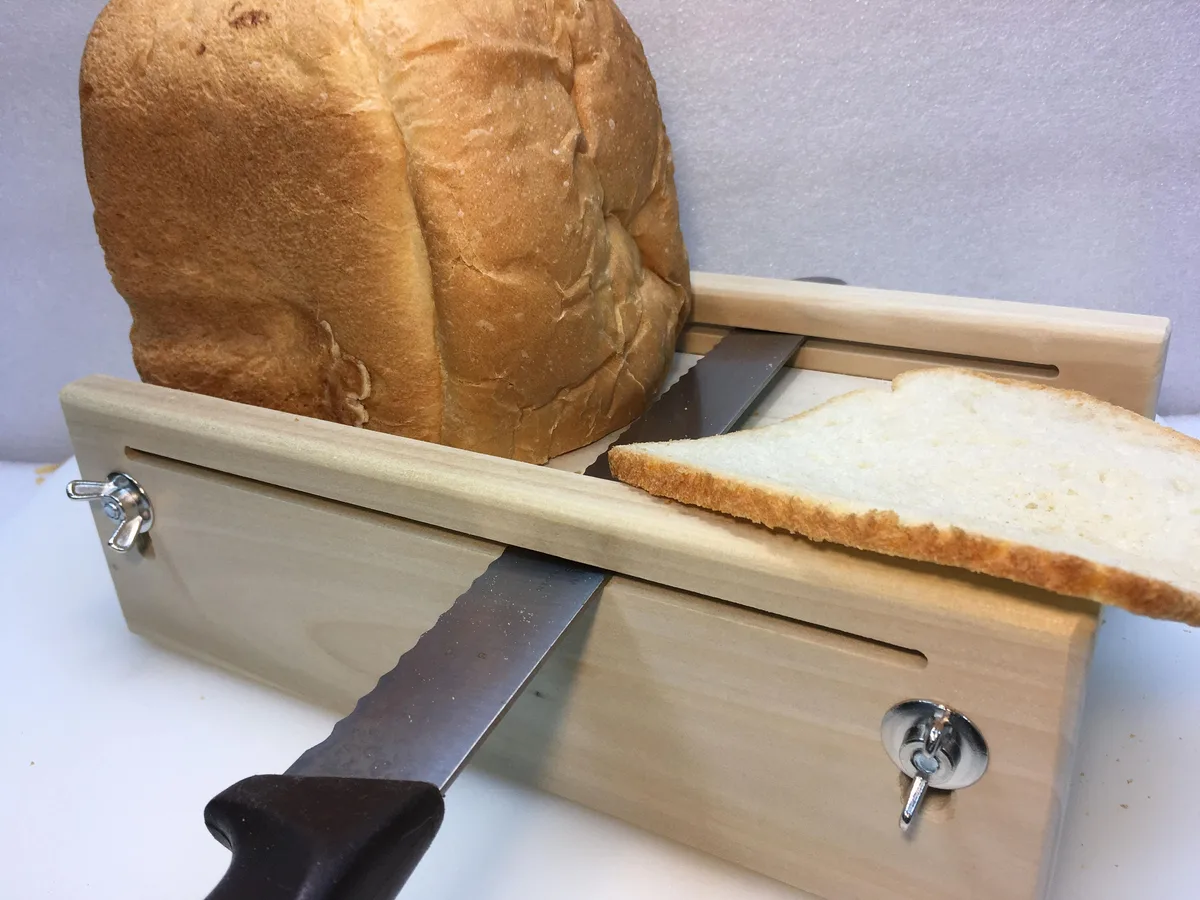
Set your loaf heel-down in the cradle. The bread should fit snugly between the wings. Grab a serrated knife that matches the slot length, usually 10 inches.
Insert the tip into the slot and push back and forth gently.
Let the blade's weight do the work. Don't force it.
Collapsing It Flat for Storage
Once you're done, wipe off the crumbs. Lower the wings. Push the two halves together.
Slide the clip back into place. The whole thing becomes a flat rectangle that slides into a drawer.
The Pros, Cons, and Safety Checks
What You Gain (Space, Consistency, Cleanliness)
You get even slices every time. Crumbs stay mostly contained in the cradle. And you save drawer space because the tool folds flat.
For anyone who bakes often, that consistency is worth the counter space.
The Drawbacks (Loaf Limits, Hinge Wear, Cleaning Hassle)
There are limits. Most slicers only handle loaves up to 1.5 pounds. If you bake huge batards, they won't fit.
The hinge can loosen over months of heavy use. And crumbs collect in the slot. You'll need to brush them out after each session.
Pinch Points, Sharp Blades, and Dishwasher Risks
Watch your fingers during unfolding. The hinge can pinch. Also, never stick your hand near the slot while using the knife.
Most manufacturers use FDA-compliant food-contact plastics per FDA guidelines. But many units aren't fully dishwasher safe. High heat can warp the plastic.
Check your manufacturer's instructions.
If you're comparing this to other methods, you might also want to look at top-rated slicers for different options.
Who It's Right For (And Who Should Skip It)
Perfect for Artisan Bakers and Small Kitchens
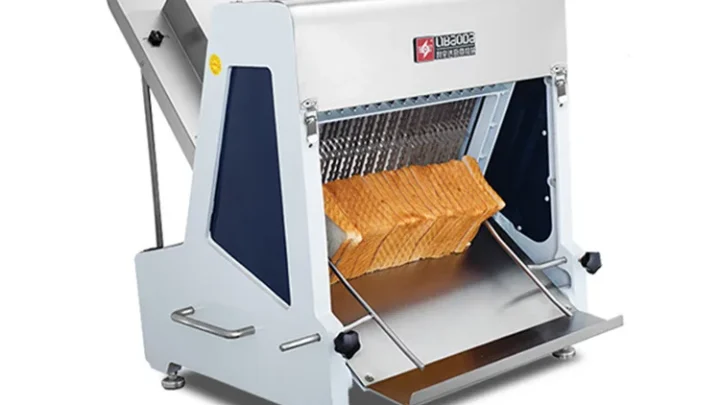
This tool shines with homemade sourdough and country loaves. Thick crusts stand up straight in the cradle. You get professional-looking slices without a $400 deli slicer.
RV dwellers and apartment cooks love how flat it stores.
Not Ideal for Oversized Boules or Thin Sandwich Slices
But it has a narrow window. Round boules wider than your guide slot won't fit. Very soft sandwich bread can still squish if you press too hard.
And you're limited to slice thicknesses around a half inch or thicker.
For thin, even slices like brioche or pullman loaves, you might want a wire-style slicer instead. The foldable guide just doesn't have the control for paper-thin cuts.
Common Visual Mistakes and Maintenance Missteps
Misjudging Loaf Depth and Knife Length
The most common mistake is forcing a loaf taller than the guide slot. If your sourdough boule stands higher than the blade slot, the knife won't reach the bottom. You'll get a thick top crust and an unsliced base.
Measure your loaf before you commit.
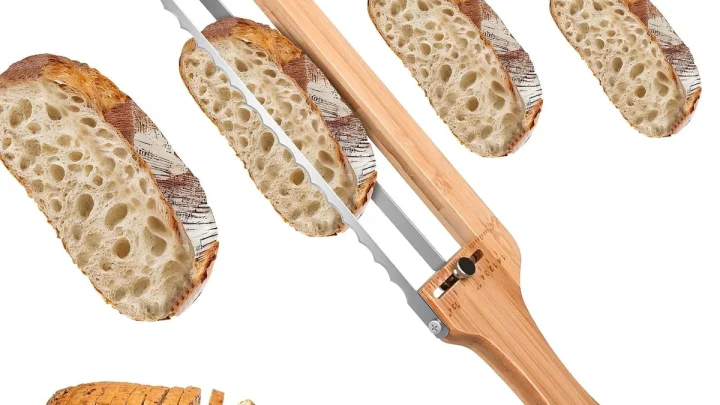
Your knife also matters. Most slicers are designed for a 10-inch serrated blade. A shorter knife won't travel through the full slot.
A longer one scrapes the bottom. Check the manufacturer specs and stick to the recommended size.
Ignoring Hinge Wear and Crumble Trapping
Crumbs love to hide in the hinge and the slot base. Over time, they harden and make the folding action stiff. A quick brush after each use prevents most of that buildup.
Every few weeks, you can rinse the parts if they're water-safe.
The hinge itself will loosen eventually. That's normal wear. If the wings start collapsing mid-slice, it's time to retire the unit.
A wobbly cradle is dangerous near a sharp blade.
How to Keep It Cutting True for Years
Wipe the surfaces after every session. Store it flat or hanging, not squeezed into a crowded drawer. Avoid high heat near the plastic.
And never use a non-serrated chef's knife in the slot. It'll wedge instead of slice.
Frequently Asked Questions
Is a foldable bread slicer worth it?
Yes, if you bake bread weekly and want even slices without buying a large electric slicer. It costs under $40 and folds flat. If you only slice bread a few times a year, skip it.
Will it work for store-bought bread?
It can, but store-bought loaves vary in shape. Standard rectangular sandwich loaves fit fine. Tall artisanal loaves from a bakery might not fit the cradle.
Check the loaf width, not just length.
How do I clean a foldable bread slicer?
Most models have a wipe-clean surface. Use a damp cloth with mild soap. Some removable blade guides are dishwasher safe on the top rack.
Check the manufacturer's instructions before submerging the whole unit in water.
Can I use any serrated knife with it?
You should use a knife matching the slot length, usually 10 inches. A shorter blade won't cut through fully. An extra-long blade might hit the base.
Look for a knife with a rounded tip to avoid scraping the slot walls.
Why does my bread still squish?
You're pressing down too hard. The slicer stabilizes the loaf, but you still need a gentle sawing motion. Let the serrated teeth grip the crust.
Also, slice with a fresh knife. A dull blade crushes instead of cuts.
The Verdict: Should You Actually Buy One?
A foldable bread slicer is a niche tool that solves a real problem. It gives you uniform slices, keeps crumbs contained, and disappears into a drawer. If you bake artisan loaves at home, it's a worthwhile upgrade over freehand knife work.
That said, it's not for everyone. If you only slice soft sandwich bread once a week, you'll probably be fine with a decent bread knife and a cutting board. If you bake oversized boules, the small cradle will frustrate you.
Our research suggests the sweet spot is this: buy one if you bake at least once a week and value consistent slices. Look for a model with a metal hinge, silicone grip, and a removable blade slot. Angled guides that ease the knife through the loaf also help reduce wrist strain.
Want to compare different models side by side? We've rounded up the best slicers for homemade bread with specs and honest trade-offs. That's a good next step if you're ready to pick one up.

Similar Posts