Bread Machine Loaf Sizes Explained: Which Is Best?
If you've ever squinted at your bread machine's buttons and wondered which loaf size to pick, you're not alone. This bread machine loaf size guide exists because most bakers make the same mistake. They choose a size based on how much bread they want, not what their machine can actually handle.
That mistake leads to overflowed pans, collapsed tops, or squat little loaves. Here's a number to anchor you. As of 2026, most home bread machines support a maximum dry flour capacity between 1.5 and 4 cups.
That range produces finished loaves from roughly 1 lb to 2.5 lb. The right size for you depends on your machine's pan and your household's eating habits.
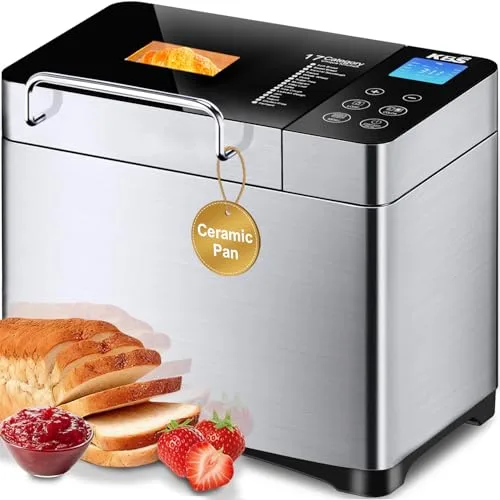
Quick Answer
For most households, a 1.5 lb loaf is the best default. It fits recipes using 2 to 2.5 cups of flour and makes 12 to 14 slices. Cooking for one or two?
Choose 1 lb. Feeding four or more? Choose 2 lb.
Always check your machine's max flour capacity before committing.
Loaf Size vs. Pan Capacity: The Core Confusion
The button on your bread machine isn't the real story. Loaf size refers to the finished bread weight. That's the rough weight of what you'll pull out of the pan.
Pan capacity is a different number. It's the maximum amount of flour the machine can knead, plus enough headroom for the dough to rise without hitting the lid.
Manufacturer labels don't always line up with reality. A machine labeled "2 lb" might only comfortably fit 3 cups of flour. Another labeled "1.5 lb" might handle 2.5 cups.
The only reliable number lives in the manual, usually listed as "max flour" or "capacity."
Here's how the two relate in practice:
| Loaf Size Label | Approx. Finished Weight | Dry Flour Needed | Typical Slices |
|---|---|---|---|
| 1 lb | 450 g | 1.5 to 1.75 cups | 8 to 10 |
| 1.5 lb | 680 g | 2 to 2.5 cups | 12 to 14 |
| 2 lb | 900 g | 3 to 3.25 cups | 16 to 20 |
| 2.5 lb | 1.1 kg | 3.5 to 4 cups | 20 to 24 |
If you've ever had dough climb past the lid or collapse into a dense brick, the problem wasn't necessarily your recipe. It was a mismatch between what the label promised and what the pan could handle. We've broken down all the usual overflow causes so you can spot the pattern before your next bake.
Choosing the Right Loaf Size: A Simple Decision Tree
There isn't one perfect size for everyone. But there is a perfect size for you. Answer three quick questions and you'll find it.
How many people do you bake for?
- Baking for 1 or 2 people? Choose 1 lb. You'll get fresh bread for a few days without waste.
- Baking for 3 or 4 people? Choose 1.5 lb. It's the best default for couples, small families, and serious toast fans.
- Baking for 5 or more people? Choose 2 lb. This is the sandwich family size.
- Feeding a crowd or meal-prepping? Go with 2.5 lb, if your machine supports it.
How often do you bake?
- Every day or every other day? Size down. A smaller fresh loaf beats a larger stale one.
- Once a week? Size up slightly, especially if you pack lunches.
What kind of bread are you making?
- White and standard wheat loaves rise reliably. You can push toward the machine's max.
- Dense whole grains, rye, and gluten-free batters need more room. Size down one notch to avoid a collapsed crown.
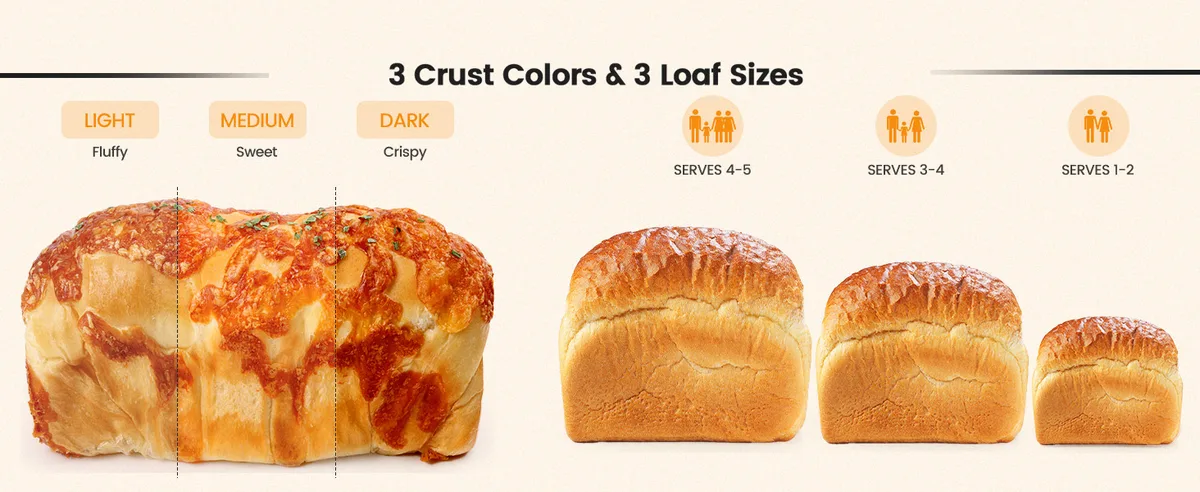
In short, don't buy based on the biggest number. Buy based on how many slices you'll actually eat before the loaf goes stale. For most readers, that means 1.5 lb.
Your Machine's Limit: Max Flour Capacity & Pan Shape
Your bread machine has a physical ceiling. It's not the label on the front. It's the maximum flour capacity, usually printed in the manual or stamped inside the pan.
This number tells you exactly how much dry flour the machine can knead and bake without overflowing.
Manufacturer specifications, like those on Zojirushi's official support pages, list this as a per-loaf figure. A compact machine might cap out at 2 cups of flour. A full-size machine can handle 4 cups.
That range spans everything from tiny 1 lb loaves to hefty 2.5 lb bricks.
Pan shape matters just as much as total volume. Two machines can both claim a 2 lb capacity, but one has a tall vertical pan and the other a wide horizontal pan. Vertical pans trap heat on the sides and produce a taller, squarer loaf.
Horizontal pans bake lower and wider, which is great for standard sandwich slices.
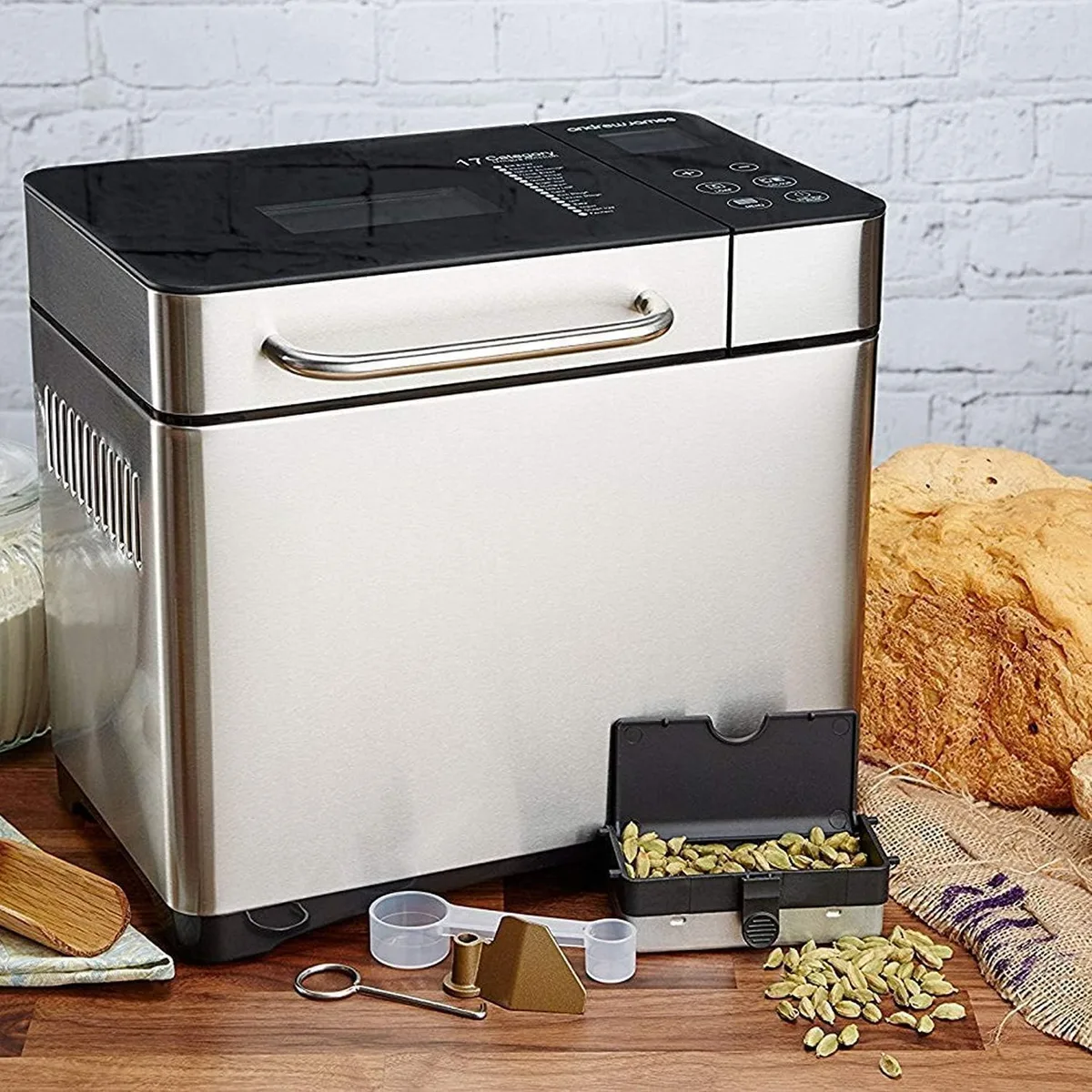
Check the pan itself. If a recipe calls for more flour than the machine's max, the dough will climb past the paddle and push the lid. If it calls for far less, the loaf won't fill the pan and you'll get a pale, squat result.
Both are easy to fix once you know your machine's real limit.
Step-by-Step: Scaling a Recipe for a Different Loaf Size
Scaling a recipe isn't as simple as hitting the 1 lb or 2 lb button. The machine's built-in settings assume your recipe matches its pan. When you change the loaf size, you need to adjust the ingredients proportionally.
Here's how to do it without wrecking the dough.
Step 1: Find your machine's maximum flour capacity. Check the manual or the manufacturer's website. Write it down. This is your hard ceiling.
Step 2: Choose a base recipe designed for your machine. If the recipe says it makes a 2 lb loaf and your machine maxes at 3 cups of flour, confirm the recipe uses about 3 cups. If it uses less, you have room to scale up.
Step 3: Scale by weight, not volume. This is the biggest mistake we see. Volume measurements are unreliable because flour density changes with scooping and humidity. Use a kitchen scale and work in grams.
If a 1.5 lb loaf uses 300 grams of flour, a 2 lb loaf needs about 400 grams. The percentage increase applies to every ingredient.
Step 4: Keep the hydration ratio identical. Water and flour move together. If you increase flour by 33%, increase water by 33% too. The dough should look the same as the original, just bigger.
Step 5: Adjust yeast carefully. Yeast doesn't need to scale linearly in most cases. Scaling up? A quarter teaspoon of extra yeast is usually enough.
Scaling down? Keep at least a half teaspoon for a proper rise.
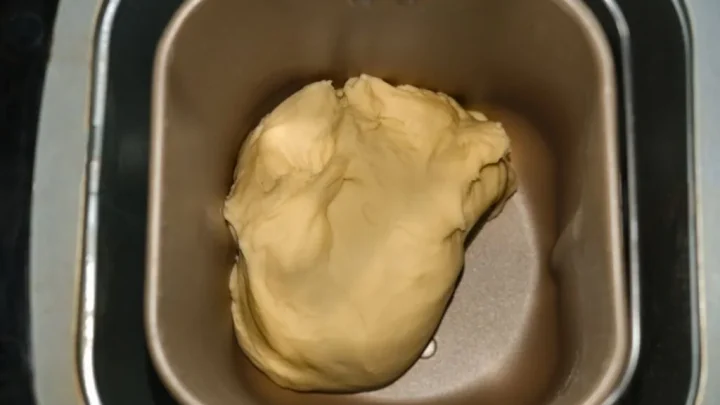
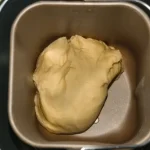
Step 6: Watch the first knead. During the first 10 minutes, lift the lid and look. The dough should form a smooth, soft ball that clears the sides. If it's too stiff, add water one tablespoon at a time.
If it's a sticky mess, add flour one tablespoon at a time.
Here's a quick reference for scaling a standard 300 gram flour recipe:
| Desired Loaf Size | Flour (grams) | Water (grams) | Yeast (teaspoons) | Salt (teaspoons) |
|---|---|---|---|---|
| 1 lb | 250 | 170 | 0.75 | 1 |
| 1.5 lb | 300 | 200 | 1 | 1.25 |
| 2 lb | 400 | 270 | 1.25 | 1.5 |
| 2.5 lb | 500 | 335 | 1.5 | 2 |
These are starting points, not laws. Flour brands absorb water differently. Humid days need less liquid.
Dry winter air needs a touch more. The first bake with a new size is always a calibration run. Your second loaf will be better.
Mistakes to Avoid: Common Loaf Size Errors
Even experienced bakers mess this up. Here are the most common mistakes we see, and how to avoid them.
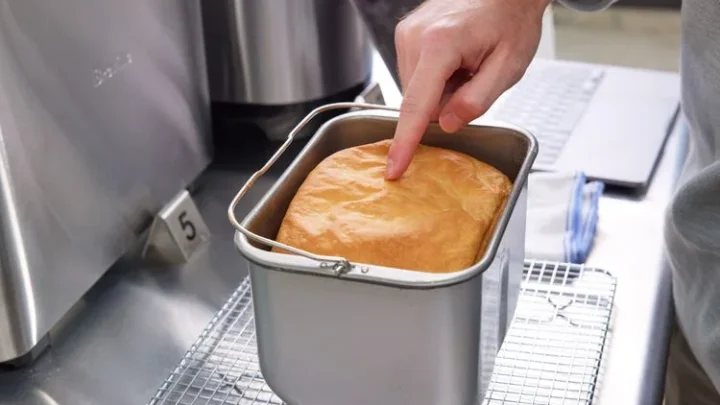
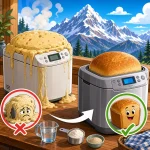
Overfilling the pan. Dough climbs past the top, hits the lid, and collapses. It also bakes unevenly because the top cooks before the center finishes. Check your max flour capacity before you start.
If the recipe calls for more, size down.
Under-filling the pan. A tiny dough ball in a huge pan makes a short, dense, pale loaf. The bread doesn't rise tall enough to form good structure. If your machine is a 2 lb model, don't force it to make a 1 lb loaf without adjusting the recipe.
Doubling a recipe without checking rise headroom. Doubling the ingredients doesn't double the machine's capacity. The dough needs vertical space to rise. If you're unsure, watch the first knead.
Ignoring flour brand and humidity. Different flours absorb different amounts of water. A recipe that works perfectly with one brand can be a sticky mess with another. Adjust based on what the dough looks like.
Choosing a size based on the recipe title, not the machine. Many recipes are written for ovens, not bread machines. A "2 lb" recipe from a baking blog might assume a much larger pan than your machine has.
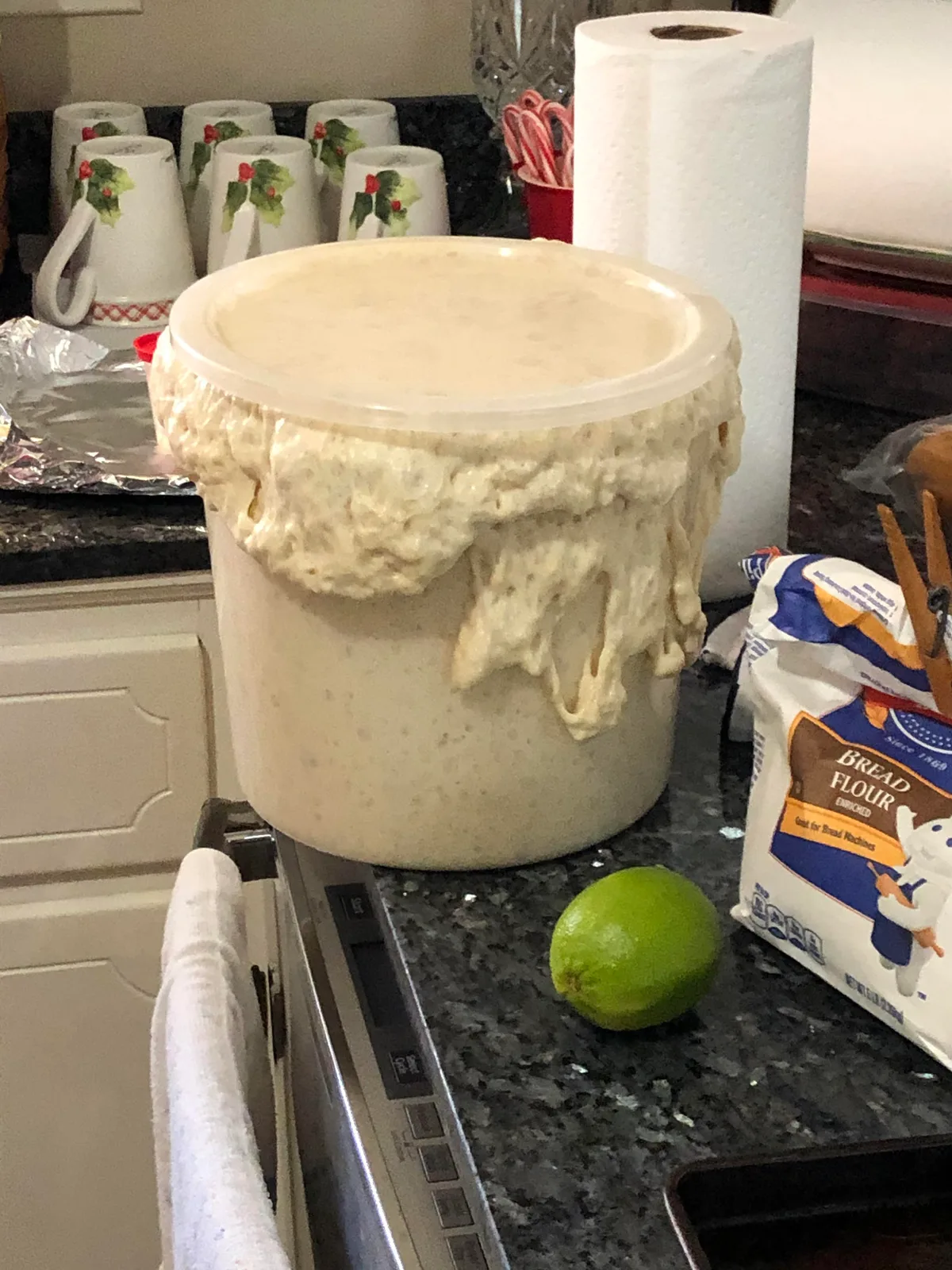
If you want the full breakdown on why dough escapes the pan, our deep dive into bread machine overflow covers every cause and fix.
Bread Types That Change Your Loaf Size Decision
Not all breads behave the same way inside a bread machine. The dough's structure and rise potential matter more than your household size.
- White bread. Forgiving, rises high, and fills the pan evenly. You can push toward the machine's max.
- Whole wheat and dense grains. Heavier dough doesn't rise as much. Size down one notch for a better crumb.
- Gluten-free batters. They don't develop structure like wheat dough. They need a smaller loaf to bake through properly.
- High-hydration and artisan-style dough. Wet dough climbs quickly and spills over fast. Size down or lower the hydration.
- Sweet breads with fruit or nuts. Add-ins steal space in the pan. Keep the total volume modest to avoid overfill.
Real Scenarios: Who Should Pick Which Size
The single baker. A 1 lb loaf is perfect. It gives you 8 to 10 slices, which is about four days of toast or sandwiches. No waste, no stale bread guilt.
The sandwich family. A 2 lb loaf is the workhorse. Sixteen to twenty slices covers school lunches and weekday breakfasts. Bake every two days and it never goes stale.
The mix-it-up baker. A 1.5 lb loaf is the sweet spot. It fits standard recipes, works with most machines, and leaves room to experiment with different flours.
The gluten-free baker. A 1 lb loaf is safer. Gluten-free batters don't rise as reliably. Smaller loaves bake through evenly and crush less.
The weekend-only baker. A 1 lb loaf. Bake on Sunday, finish it by Thursday. Then you get fresh bread again on Saturday.
Quick Reference: Loaf Size Specs & Slice Yields
Here's the short version for quick scanning.
- 1 lb loaf: 1.5 to 1.75 cups flour, 8 to 10 slices, bakes in roughly 2 to 2.5 hours.
- 1.5 lb loaf: 2 to 2.5 cups flour, 12 to 14 slices, bakes in roughly 2.5 to 3 hours.
- 2 lb loaf: 3 to 3.25 cups flour, 16 to 20 slices, bakes in roughly 3 to 3.5 hours.
- 2.5 lb loaf: 3.5 to 4 cups flour, 20 to 24 slices, bakes in roughly 3.5 hours.
Dough weight is always higher than finished loaf weight. A 2 lb dough ball loses moisture in the oven and comes out closer to 1.7 lb. That's normal, not a failure.
Frequently Asked Questions
Can I bake a 2 lb recipe in a 1.5 lb machine?
No. A 1.5 lb machine typically maxes out around 2.5 cups of flour. A 2 lb recipe usually needs 3 cups or more.
The dough will overflow, collapse, or bake unevenly. Use a recipe that matches your machine's max flour capacity.
How do I know if my pan is too full?
Watch the first knead. If the dough climbs past the top of the pan or presses against the lid, the pan is too full. Also check for brown bits on the lid after baking.
That's evidence the dough touched it during the rise.
Why does my bread keep collapsing at the top?
The most common cause is overfilling. Too much dough rises above the pan's support and falls in on itself. Another cause is too much yeast, which over-proofs the dough.
Try sizing down one notch or trimming the yeast by a quarter teaspoon.
Do I need to change the loaf size if I use a different flour?
Yes. Whole wheat, rye, and gluten-free flours absorb more water and rise less than white flour. That means they need a smaller loaf size or a lower hydration ratio.
Start one size down and adjust based on what you see.
Is a bigger bread machine always better?
No. A bigger machine makes larger loaves, but it also takes longer to bake and is harder to store. If you bake for one or two people, a compact 1 lb machine produces fresher bread with less waste.
Size should match your habits, not your ambitions.
Final Recommendation: Your Quick-Start Decision Guide
Start with the 1.5 lb setting. It works with most machines and most recipes. Before your first bake, check the manual for max flour capacity.
Compare that number to your recipe's flour amount.
Then adjust based on results. If the dough touches the lid, size down. If the loaf is squat and pale, size up or add more dough.
Keep notes on what works. Within three bakes, you'll know exactly which setting is yours.
When in doubt, remember this: a smaller loaf that bakes beautifully beats a bigger one that collapses. Choose the size your machine handles with confidence, and the bread will taste better every time.

Similar Posts