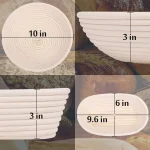
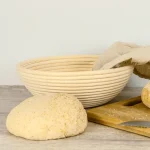
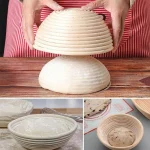
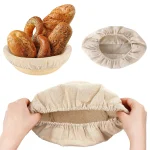
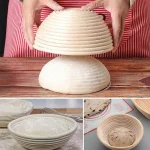
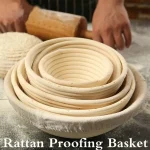
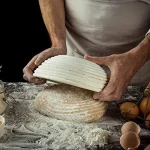
You're ready to bake a serious loaf, and then reality hits. The dough is sticky, the shape is drifting, and you're not sure whether your proofing basket is the right size. The question of what size proofing basket for artisan bread comes down to one number: total dough weight, not flour weight. Get that right, and most proofing problems sort themselves out.
Manufacturer specs and bakery practice agree on a simple range. A 9-inch round banneton typically holds about 750 grams of dough, while an 8-inch round handles around 500 grams. As of 2026, those capacities remain the standard across major basket makers. Let's walk through the logic, the shape choices, and the common mistakes before you buy or bake another loaf.
## Why Getting This Wrong Ruins the Loaf (and Your Morning)
Most bakers who ask this question have already had one bad bake. They shaped a beautiful dough, slept through the proof, and woke up to a blob creeping over the basket rim. That's a classic undersized-basket problem.
Here's what goes wrong when you ignore sizing:
- **Too small.** Dough bulges over the edge, dries out, and can stick to the cloth. It bakes unevenly.
- **Too large.** Dough flattens because the walls aren't holding it. You get a wider, shorter loaf with less oven spring.
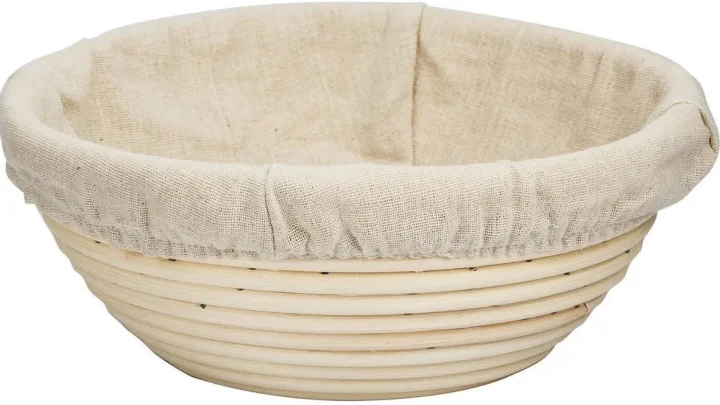
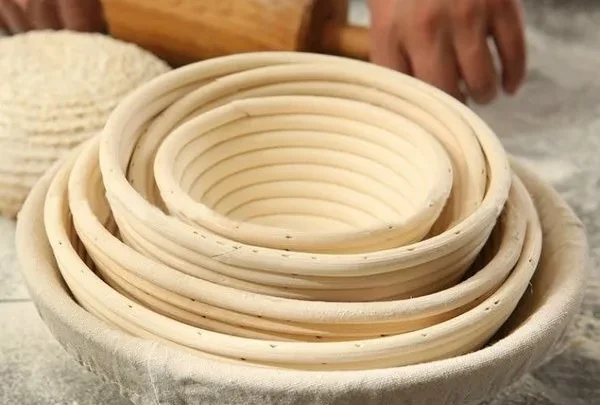
Proofing baskets, also called bannetons or brotforms, exist to support the dough while it ferments and rests. If the basket doesn't match the dough weight, that support disappears. The result is a loaf that looks fine on the outside but has a dense, uneven crumb.
Check your proofing basket after the dough has risen for about an hour. If the dough reaches the rim before you're ready to bake, you have two options: reshape into a smaller loaf or move the dough to a larger basket. Either way, the sizing mistake is fixable before the oven.
<div class="writerfy-youtube-embed" style="margin:24px 0;border-radius:12px;overflow:hidden;background:#000;box-shadow:0 6px 18px rgba(0,0,0,.12);">
<div style="position:relative;padding-bottom:56.25%;height:0;overflow:hidden;">
<iframe src="https://www.youtube-nocookie.com/embed/P8eyYDjuBTc" title="Are Bread Proofing Baskets Worth Buying?" frameborder="0" allow="accelerometer; autoplay; clipboard-write; encrypted-media; gyroscope; picture-in-picture; web-share" referrerpolicy="strict-origin-when-cross-origin" allowfullscreen loading="lazy" style="position:absolute;top:0;left:0;width:100%;height:100%;border:0;"></iframe>
</div>
<div style="padding:10px 14px;background:#0f172a;color:#e2e8f0;font-size:12.5px;line-height:1.4;display:flex;align-items:center;justify-content:space-between;gap:10px;flex-wrap:wrap;">
<span style="font-weight:600;color:#f1f5f9;">Are Bread Proofing Baskets Worth Buying?</span>
<span style="color:#94a3b8;font-size:11.5px;">via America's Test Kitchen</span>
</div>
</div>
## The 30-Second Answer: Weigh Your Dough First
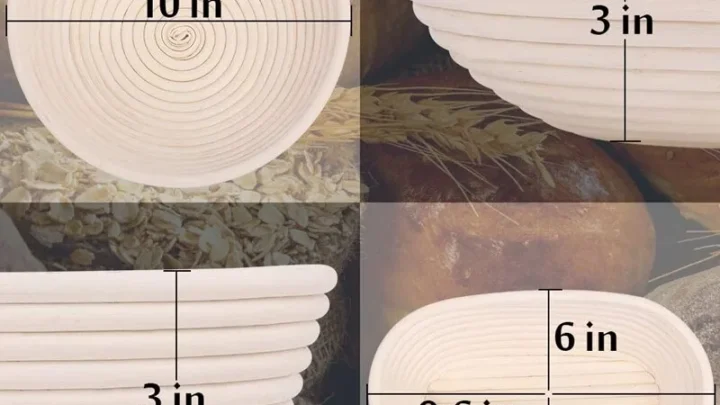
Weigh the dough after mixing and before shaping. Total dough weight decides basket size. Use an 8-inch round for roughly 500 grams. Use a 9-inch round for about 750 grams. Use a 10-inch round for around 1,000 grams.
If you're shaping a batard, pick an oval basket of the same capacity. A 10-inch oval holds about 750 grams, and a 12-inch oval holds about 1,000 grams. That's the whole formula. Everything else is detail.
## How Banneton Sizing Actually Works
Basket size is really a volume question. Bakers measure that volume in grams of dough because flour weighs differently depending on humidity and how you scoop it. That's why manufacturers spec their baskets by dough weight, not by a scoop count.
The [Bread Bakers Guild of America](https://www.bbga.org) teaches that successful bakers weigh dough for shaping and proofing, not just for mixing. It's a simple habit that prevents the most common proofing failures.
### Total Dough Weight Matters, Not Flour Weight
Total dough weight includes flour, water, starter, and salt. That's why a recipe with 500 grams of flour can produce 800 to 900 grams of dough by the time it's mixed. If you pick a basket by flour weight, you're likely undersizing the basket.
Let's use a common example. Your recipe calls for 500 grams of flour, 350 grams of water, 100 grams of starter, and 10 grams of salt. That's 960 grams of dough. An 8-inch basket won't hold that comfortably. You need a 10-inch round or a 12-inch oval.
### Shape Changes the Numbers
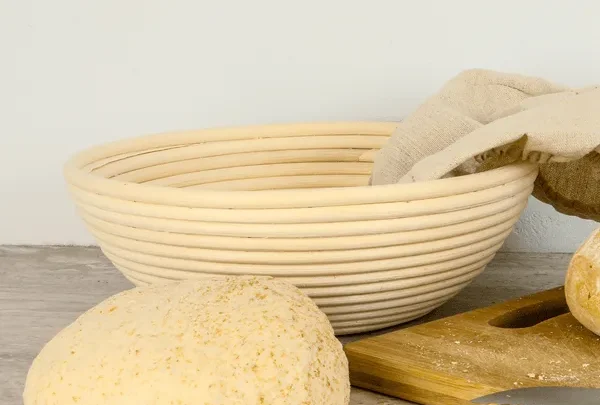
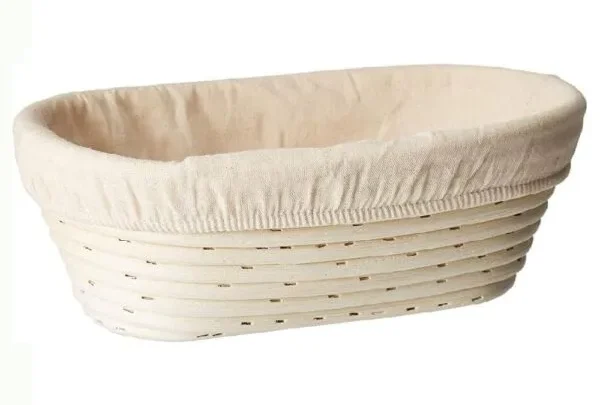
Round and oval baskets are not interchangeable. A round banneton holds a boule, which is a tall, circular loaf. An oval banneton holds a batard, which is a football-shaped loaf with a wider middle and tapered ends.
The shape affects how the dough settles. In a round basket, the dough stacks higher and needs tighter side walls. In an oval basket, the dough spreads along the longer axis, so the same weight fits more easily.
Manufacturer specifications confirm that an 8-inch round and a 10-inch oval target different dough weights. Always match the basket shape to the final loaf shape, then double-check the capacity.
## The Dough Weight-to-Basket Size Cheat Sheet
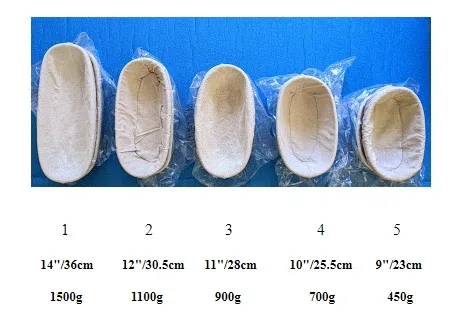
Use this table as your starting point. These numbers match the common sizes sold by most banneton makers as of 2026.
| Basket type and size | Approx. dough capacity | Best for |
| --- | --- | --- |
| Round, 8-inch | 500 g | Small boule, 1-pound loaf |
| Round, 9-inch | 750 g | Standard boule, medium country loaf |
| Round, 10-inch | 1,000 g | Large boule, high-hydration dough |
| Oval, 10-inch | 750 g | Batard, sandwich loaf |
| Oval, 12-inch | 1,000 g | Large batard, 2-pound loaf |
| Oval, 14-inch | 1,500 g | Extra-large batch, party loaf |
Keep in mind that these are approximations. Hydration changes everything. Hydration is the weight of water relative to flour, shown as a percentage. A slack 80% hydration dough sits lower and spreads more, so it may fill the basket differently than a stiff 65% dough.
In our research across banneton listings and baking forums, the safest move is simple. If your dough is wet, choose the next size up. If your dough is firm, you can fill the basket closer to its limit.
## Round vs. Oval: Choosing the Right Basket Shape
This decision is easier than most people think. It comes down to the final loaf you want.
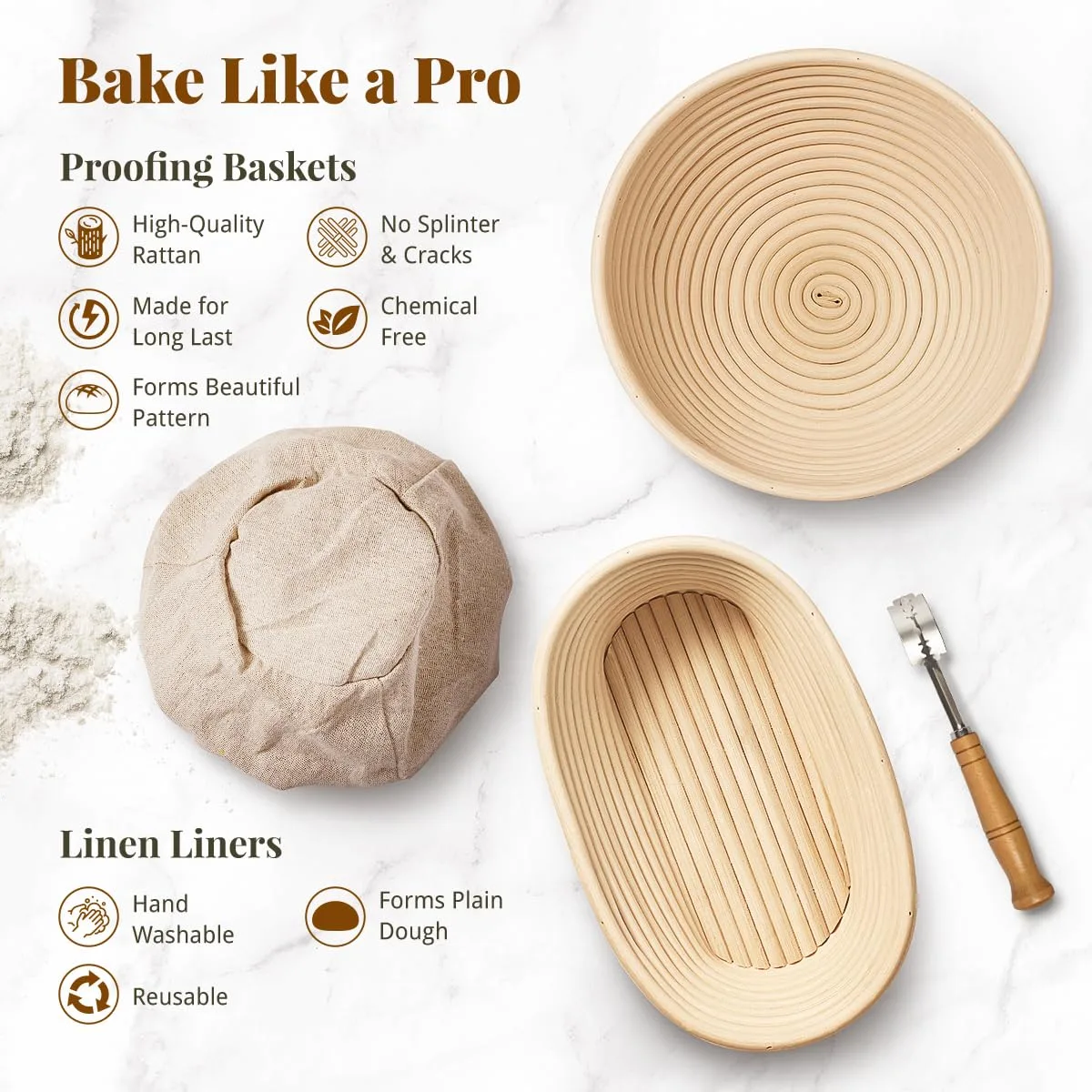
Choose a round basket if you're baking a country loaf, a boule, or any bread that will be scored in a circle. The round walls keep the dough tall and tensioned. That's the classic artisan look.
Choose an oval basket if you're baking a batard, a sandwich loaf, or anything you'll slice into even pieces. The elliptical shape gives you a longer loaf with a more uniform crumb. It also fits better in a standard Dutch oven if you're baking a batard-style loaf.
There's one common mistake worth avoiding. Don't use a round basket for a batard-shaped dough and expect it to hold. The dough will bunch up in the middle and may tear along the seam. Same weight, different shape, different support.
If you bake both styles, buying one round and one oval basket covers most home baking needs. That's the practical setup most experienced bakers end up with.
## High-Hydration Dough: When You Need to Size Up
Hydration is the percentage of water relative to flour in your dough. A 75% hydration dough has 750 grams of water for every 1,000 grams of flour. That extra water changes everything about how the dough behaves.
Wet dough is slack and spreads more during proofing. It holds less tension on its own, so the basket walls do more of the work. If the dough fills the basket completely, there's no room left for expansion.
Here's how hydration shifts the sizing for a 750-gram dough. At 65% hydration, it fits an 8-inch round basket. At 75%, it needs a 9-inch round. At 80% or higher, size up to a 10-inch round or a 12-inch oval.
| Hydration | Dough weight | Recommended basket |
| --- | --- | --- |
| 65% (stiff) | 750 g | 8-inch round |
| 70-75% (standard) | 750 g | 9-inch round |
| 80%+ (high) | 750 g | 10-inch round |
This works for any weight, not just 750 grams. A 1,000-gram dough at 80% hydration often needs a 12-inch oval. Trust the extra capacity when the dough looks slack.
<div class="writerfy-youtube-embed" style="margin:24px 0;border-radius:12px;overflow:hidden;background:#000;box-shadow:0 6px 18px rgba(0,0,0,.12);">
<div style="position:relative;padding-bottom:56.25%;height:0;overflow:hidden;">
<iframe src="https://www.youtube-nocookie.com/embed/dWecsBRHSTU" title="How to Prepare a New Proofing Basket" frameborder="0" allow="accelerometer; autoplay; clipboard-write; encrypted-media; gyroscope; picture-in-picture; web-share" referrerpolicy="strict-origin-when-cross-origin" allowfullscreen loading="lazy" style="position:absolute;top:0;left:0;width:100%;height:100%;border:0;"></iframe>
</div>
<div style="padding:10px 14px;background:#0f172a;color:#e2e8f0;font-size:12.5px;line-height:1.4;display:flex;align-items:center;justify-content:space-between;gap:10px;flex-wrap:wrap;">
<span style="font-weight:600;color:#f1f5f9;">How to Prepare a New Proofing Basket</span>
<span style="color:#94a3b8;font-size:11.5px;">via Baddie Natty Bakes</span>
</div>
</div>
## Step-by-Step: Pick Your Basket in Four Simple Steps
Choosing the right basket comes down to four quick steps, and you can do it before you mix your dough.
1. Weigh all ingredients. Flour, water, starter, and salt all add weight.
2. Add the weights together. That's your total dough weight.
3. Divide by the number of loaves. Most recipes make one large loaf.
4. Match the per-loaf weight to the cheat sheet. For 750 grams at standard hydration, that's a 9-inch round or a 10-inch oval.
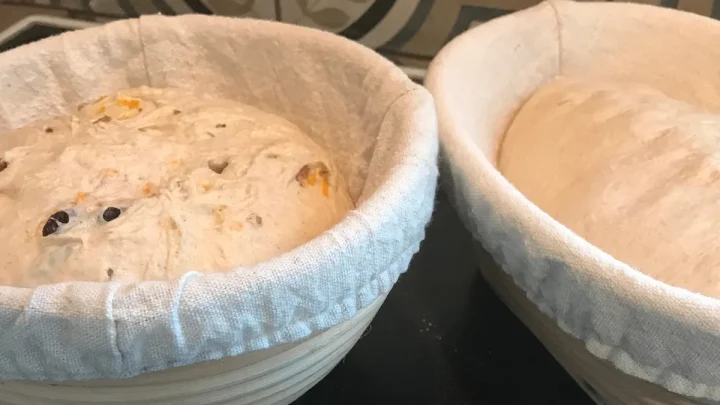
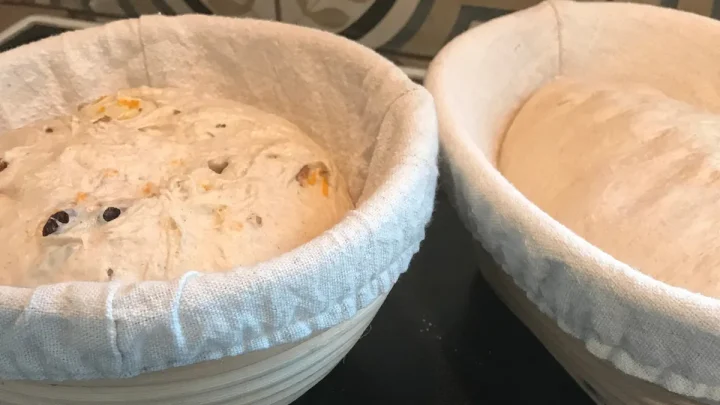
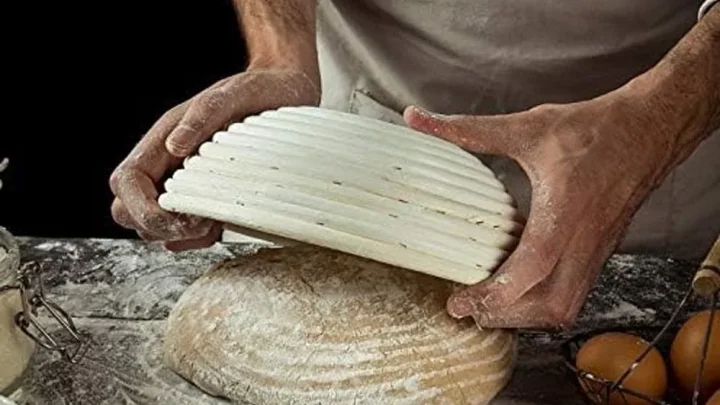
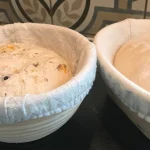
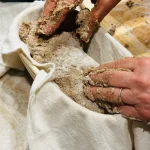
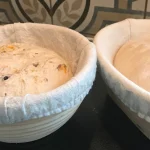
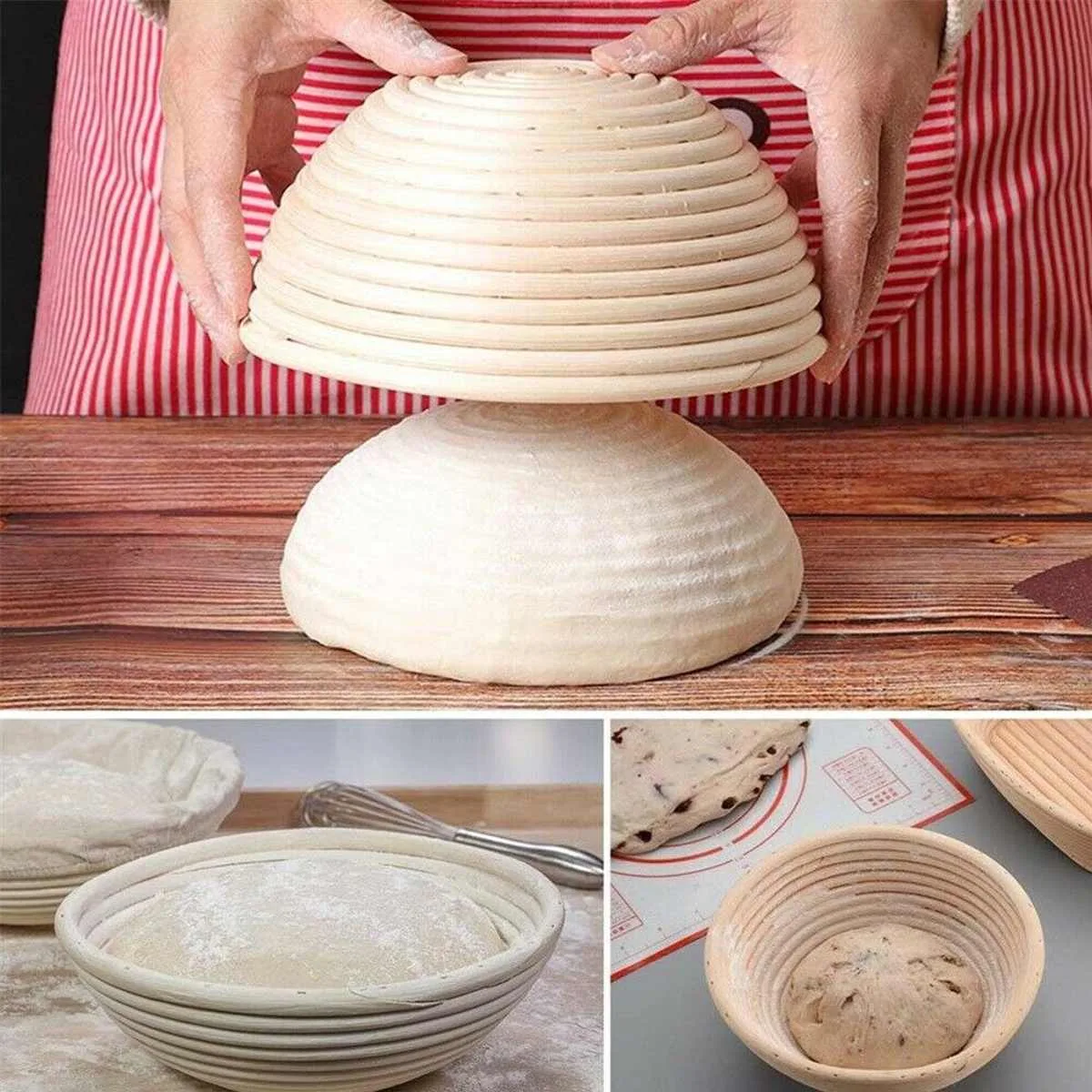
The photo above shows what proper support looks like. The dough rests seam-side up, and the linen liner holds it gently.
If you bake in a Dutch oven, measure its diameter before choosing a basket. A 9-inch round fits a standard 5.5-quart Dutch oven. A 10-inch round might bind against the pot walls.
## Common Mistakes That Flat-Out Sabotage Your Bake
Even experienced bakers hit these issues. Here's what to fix immediately.
### Mistake 1: Sizing by flour weight, not total dough weight
Your recipe may call for 500 grams of flour, but the finished dough can weigh 800 to 900 grams. If you sized the basket using only the flour number, it's likely too small. Always weigh the full mixed dough.
### Mistake 2: Ignoring hydration
Slack dough spreads and settles lower in the basket. A 9-inch basket that fits 750 grams of stiff dough will overflow with 750 grams of 80% hydration dough. Size up when the dough is wet.
### Mistake 3: Forcing the wrong shape
A batard-shaped dough in a round basket bunches up in the middle. The seam can tear, and the final loaf comes out lopsided. Match the basket shape to your target loaf shape.
### Mistake 4: Over-dusting with flour
Some bakers smother the basket with flour. That dries the crust and leaves a chalky taste. A light dusting of rice flour is enough.
### Mistake 5: Overcrowding
If the dough touches the rim after an hour of proofing, the basket is too small. Reshape into a smaller loaf or transfer to a larger basket. Never force dough over the rim.
## No Banneton? Here's What Still Works
Bannetons are helpful, but they're not required. You can proof excellent artisan bread with items you already own.
- A mixing bowl lined with a floured kitchen towel
- A colander lined with a smooth cotton cloth
- A loaf pan for batard-style loaves
- A clean plastic bowl, lightly oiled
Each substitute works, but each has quirks. A towel leaves creases in the dough. A colander needs a snug liner.
The best substitute is the one you already have. A smooth wide bowl and a floured towel are enough for most home bakes.
Use rice flour rather than all-purpose for dusting. It absorbs less moisture and releases more cleanly.
## FAQs on Proofing Basket Sizes
Here are the questions we hear most often from home bakers.
### What if my dough is a little bigger than the basket capacity?
It depends on how much bigger. For 50 to 100 grams of excess dough, tap the basket gently to settle the dough and reshape the top. For larger differences, transfer to a bigger basket. Never stretch the dough over the rim.
### Should I oil my banneton?
No. Oil soaks into rattan and can cause mold over time. Dusting with rice flour is the standard method for release. Rice flour stays dry and prevents sticking better than any oil.
### How do I clean a rattan proofing basket?
Brush out leftover flour after every use. Avoid water entirely, since moisture can crack or mold rattan. Let the basket air out completely before storing.
### Do I need to season a new banneton?
Not in the traditional pan sense. Most bakers do a light first run: dust with rice flour, proof a small piece of dough, then brush clean. This creates a reusable nonstick layer.
### Can I use a proofing basket for sandwich bread?
You can, but the loaf will be rustic. A round or oval banneton produces a freeform loaf, not a square sandwich slice. For pan bread, use a loaf pan.
## Final Verdict: Match the Dough, Trust the Process
Picking the right proofing basket is not about following a single number. It's about understanding the dough, the shape, and the hydration. Match those three, and the basket size reveals itself.
The quick formula still holds: weigh the dough, check the hydration, then choose the next size up when things get slack. A 750-gram loaf at standard hydration fits a 9-inch round. The same dough at 80% hydration needs a 10-inch round. That extra inch saves the bake.
Here's a final decision checklist to use before every proof:
| Dough weight | Hydration | Round basket | Oval basket |
| --- | --- | --- | --- |
| 500 g | 65-75% | 8-inch | 10-inch |
| 750 g | 65-75% | 9-inch | 10-inch |
| 1,000 g | 65-75% | 10-inch | 12-inch |
| 750 g | 80%+ | 10-inch | 12-inch |
| 1,000 g | 80%+ | 12-inch | 14-inch |
If you bake once a week, one round and one oval basket cover almost every scenario. For high-hydration sourdough bakers, add one size up from the standard chart.
The basket itself doesn't create the crumb. The dough weight, hydration, and proofing conditions do. The banneton just holds everything in place while fermentation and gluten work.
When you're ready to shape, weigh the full dough. Decide on the loaf shape. Check the hydration. Then let the basket support the process. That's the whole trick.
``` ```
``` The article is complete. There are no remaining sections to write. The final verdict section ended naturally with the closing thought: "That's the whole trick." No additional content is needed.