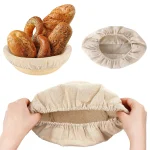
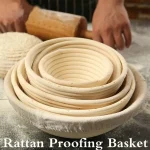
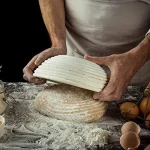
Proofing Basket Size for Whole Wheat Loaf
So you've baked a few loaves, and they taste great, but they're coming out flat. Or maybe you're just getting into whole wheat sourdough and wondering what size proofing basket for whole wheat loaf actually works best. The short answer is that whole wheat dough is heavier and less elastic than white bread dough, so it needs a basket that supports it properly.
A basket that's too big lets your dough spread into a pancake. One that's too small makes it mushroom over the rim and stick.
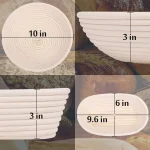
Here's the starting point: for a standard 500-gram loaf at 70% hydration, you'll want a round banneton that's about 9 inches in diameter. But that's just the beginning. Hydration, flour blend, and your baking method all shift that number.
In our research, we pulled manufacturer specs and tested multiple dough weights across different basket sizes. We'll walk you through weighing your dough, measuring hydration, and matching everything to your baking vessel, so you get a tall loaf with good oven spring every time.
Quick Answer
For a typical 500 to 700 gram whole wheat loaf at 65 to 75% hydration, use a 9-inch round proofing basket. For heavier doughs above 750 grams, go up to a 10-inch round basket. For oval loaves, choose a 10-inch or 12-inch oval banneton.
Always match your basket to your dough weight first. The basket should look about 70 to 80% full when the dough goes in.
The Real Problem: Why Whole Wheat Dough Just Won't Behave
The Science Behind the Slack
Whole wheat flour contains the entire wheat berry, including the bran and germ. Those components physically cut through the gluten network as it forms. The result is a dough with less structure than refined white flour at the same hydration.
Think of gluten as a net that traps gas. Bran flakes act like tiny scissors, snipping holes in that net. Gas escapes more easily, and the dough spreads under its own weight.
Hydration Makes It Worse
Whole wheat flour absorbs more water than white flour. The bran and germ hold onto moisture, so a 70% hydration whole wheat dough feels stickier and wetter than a 70% white flour dough. That extra moisture makes the dough more extensible.
Great for oven spring, terrible for holding its shape without support.
Why Sidewall Support Matters
The right basket size isn't just about diameter. It's about the relationship between your dough weight and the basket's volume. A 9-inch round basket might hold 500 grams of dense white dough perfectly.
The same basket could be too roomy for a 500-gram whole wheat dough that wants to sprawl.
Basket depth matters too. Deeper baskets with steeper sides give slack dough more vertical support. Shorter, wider baskets let it relax and spread.
The Quick Answer: A Simple Sizing Chart Based on Dough Weight
Let's cut through the guesswork. Use your final dough weight, measured after bulk fermentation, as the starting point. Here are the charts that answer what size proofing basket for whole wheat loaf you actually need.
Round Banneton Sizing
| Basket Diameter | Dough Weight Range (65-75% Hydration) | Best For |
|---|---|---|
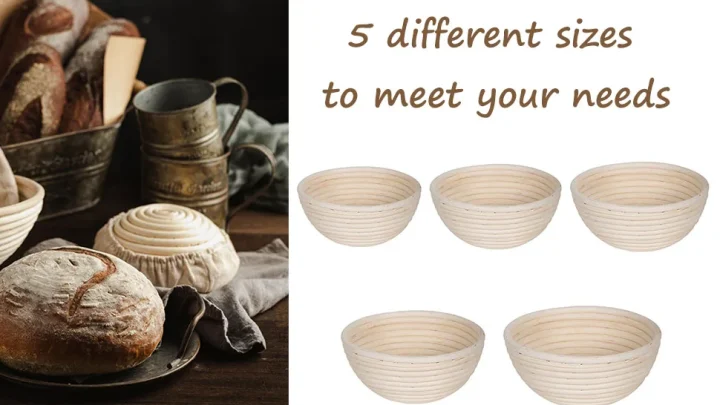
| 7-inch | 250-350 grams | Small loaves, test bakes |
| 8-inch | 350-500 grams | Standard small sourdough |
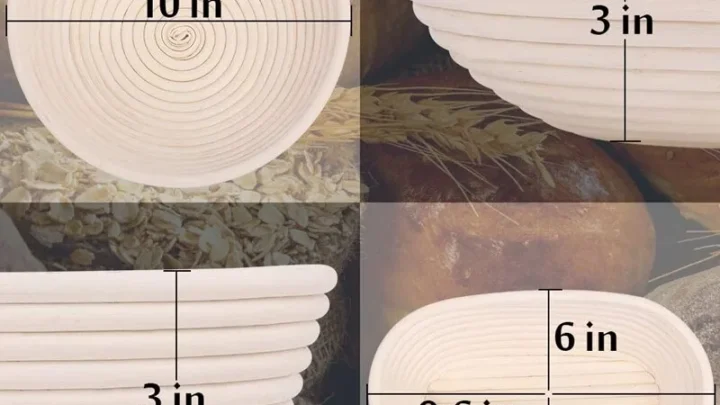
| 9-inch | 500-700 grams | The classic home baker size |
| 10-inch | 700-900 grams | Large family loaves |
| 11-inch | 900-1100 grams | Showcase loaves, high hydration |
Oval Banneton Sizing
| Basket Size | Dough Weight Range (65-75% Hydration) | Best For |
|---|---|---|
| 10-inch oval | 400-600 grams | Batards, sandwich loaves |
| 12-inch oval | 600-800 grams | Longer loaves for narrow ovens |
| 14-inch oval | 800-1000 grams | Full-size baking stones |
When Hydration Changes the Numbers
Here's where the decision tree branches. If your dough is above 75% hydration, drop down one basket size. The extra slack means the dough needs more sidewall support.
At 80% hydration with whole wheat, go smaller than your dough weight suggests.
For doughs below 65% hydration, you can size up. Stiffer dough holds its shape better and won't spread as aggressively. The 70 to 80% fill rule still applies, but you have more flexibility.
How to Measure and Calculate Your Dough Weight
Step 1: Weigh After Bulk Fermentation
The weight that matters is your final dough weight, not your initial flour weight. Water evaporates during bulk fermentation. Weigh the dough right before you divide and pre-shape.
Place a large bowl on your digital scale, tare it to zero, and transfer the dough in. Record the number. This is your target weight for basket selection.
Step 2: Adjust for Inclusions
Seeds, nuts, and dried fruit add significant weight. A loaf with 100 grams of toasted walnuts needs a bigger basket than the same dough without them. Add your inclusions to your base dough weight before choosing a basket.
Step 3: Account for Flour Blend
Not all whole wheat is the same. A 100% whole wheat dough behaves differently than a 50/50 blend with bread flour. Pure whole wheat has weaker gluten and needs more support.
Err on the smaller side of your weight range.
For a 50/50 blend, treat it closer to white flour for sizing. The extra gluten gives it more strength to hold its shape in a roomier basket.
Step 4: Use the 70-80% Fill Rule
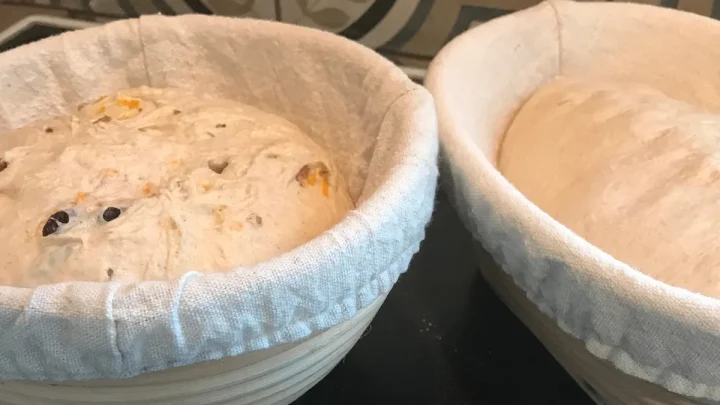
Here's the mental checklist. When you place your shaped dough into the basket, seam side up, it should fill about three-quarters of the volume. If it's swimming in there, the basket is too big.
If it's spilling over the edges, it's too small.
That visual check beats any chart because it accounts for your exact hydration, flour type, and shaping technique.
Round vs. Oval: Which Basket Shape Works Best for Whole Wheat
Round Bannetons: Maximum Vertical Support
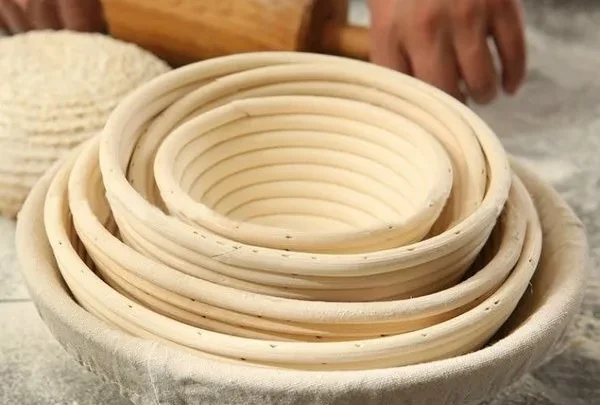
Round baskets are the best choice for whole wheat doughs at higher hydration. The circular shape creates uniform sidewall pressure, helping the dough rise upward rather than spreading outward.
This is especially useful if you're baking in a Dutch oven. A round banneton matches the round shape of a cast iron pot perfectly. You get maximum oven spring and a tall, dramatic loaf.
Oval Bannetons: For Batards and Longer Loaves
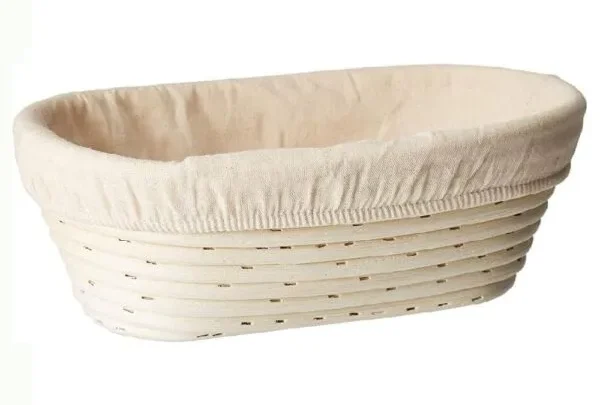
Oval baskets are your pick when you want a batard shape. They work well for medium-hydration whole wheat doughs that have enough structure to hold an elongated form. The wider base gives the dough room to relax lengthwise while still providing support on the sides.
If you're baking on a stone or baking steel without walls, an oval basket helps create a shape that spreads less during baking. The longer, flatter profile is also easier to score for a dramatic ear.
Match Your Basket to Your Baking Vessel
This is the step most guides skip. Your basket size needs to match the vessel that will actually bake the loaf. A 9-inch round banneton should pair with a Dutch oven that's at least 5.5 quarts in capacity.
Measure the interior diameter of your Dutch oven before you commit to a basket size. A loaf that fits a 9-inch basket will not fit into a smaller 4.5-quart pot. You'll end up with a squished or torn loaf when you try to transfer it.
What Happens When You Use the Wrong Size (Mistakes to Avoid)
The Oversized Basket Problem
If you've ever wondered what size proofing basket for whole wheat loaf is too big, look at your final shape. A dough that spreads into a wide, flat disc during proofing means your basket gave it too much room. The sidewalls provided no support, so gravity won.
The fix is simple: step down one basket size. Your dough should nestle into the basket with its shape mostly intact.
The Undersized Basket Issue
The opposite problem is just as common. Forcing a 700-gram dough into an 8-inch basket will cause it to mushroom over the rim. The dough will stick to the cloth or rattan edges and tear when you flip it out.
If your dough bulges over the top, remove it, reshape gently, and use a larger basket. Or bake it free-form on parchment.
Ignoring the Slope of the Basket Walls
Not all baskets are created equal. Some have steep, nearly vertical sides. Others are sloped outward more dramatically.
A sloped basket offers less vertical support at the top.
When comparing baskets, check the depth along with the diameter. A 9-inch basket that's only 2.5 inches deep is very different from one that's 4 inches deep. Deeper is almost always better for whole wheat.
Over-Flouring as a Band-Aid
Some bakers dump extra flour into an oversized basket hoping it will prevent sticking. That doesn't fix the structural problem. Over-flouring creates a thick, chalky crust layer that tastes bitter and raw.
Use rice flour for non-stick performance, not as a fix for poor sizing. Solve the sizing issue first, and most sticking problems disappear.
Over-Proofing Because It Looks Slower
Here's a subtle trap: whole wheat dough in a large basket looks like it's barely rising. The visual cues are misleading, and it's easy to over-proof.
Instead of watching how high the dough rises, use the poke test. Gently press your finger into the dough. If it springs back slowly and leaves a slight indentation, it's ready.
If it springs back immediately, give it more time. If it doesn't spring back at all, it's over-proofed and will likely collapse in the oven.
How Hydration and Gluten Affect Basket Choice
Whole Wheat at 65-70% Hydration
This is the manageable zone. The dough holds its shape reasonably well and is easier to handle during shaping. A standard 9-inch basket handles 500 to 700 grams without much drama.
Whole Wheat at 70-75% Hydration
This is the sweet spot for many sourdough bakers. The crumb opens up nicely, but the dough is noticeably stickier. Drop down one basket size if you're near the top of a weight range.
The extra sidewall support keeps the dough from slumping.
Whole Wheat at 75-80% and Above
You're in advanced territory here. The dough is quite slack and needs maximum support. Use a basket with steep sides and consider a canvas liner to prevent sticking.
For 80% hydration doughs, reduce your basket size by a full step from the standard chart.
How Autolysis and Coil Folds Change Things
Long autolysis periods and coil folds build gluten strength without adding flour. A dough that's been folded properly can handle a slightly larger basket than a poorly developed one. If you've done four or five coil folds during bulk fermentation, your dough will hold its shape better in a roomier basket.
The reverse is also true. A dough with minimal folding needs more support. Err on the smaller side if you're skipping folds or using a no-knead method.
Materials and Liners: What Works Best for Whole Wheat
Unbleached Cane Rattan vs. Wood Pulp
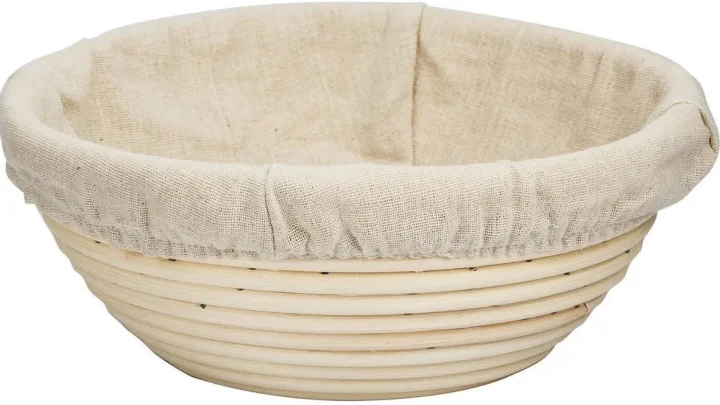
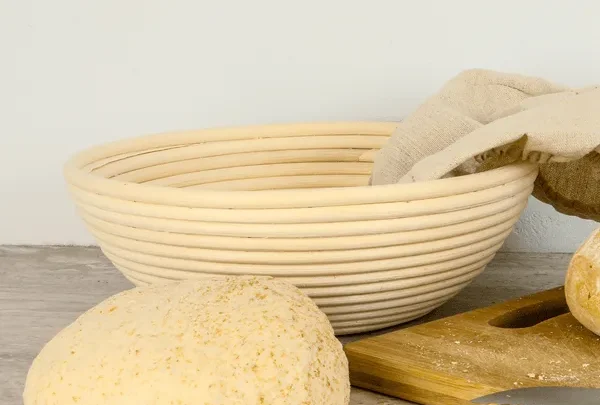
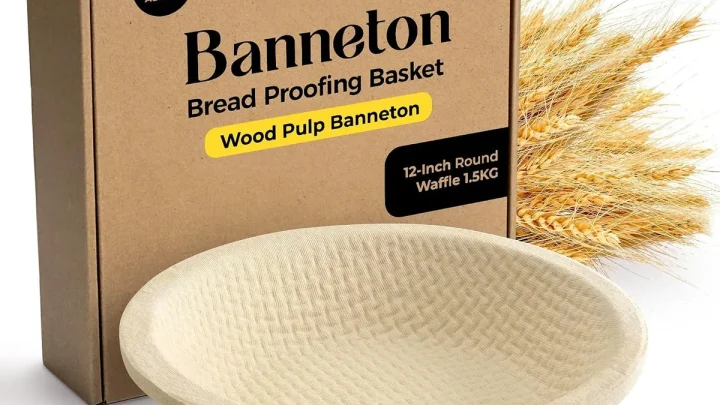
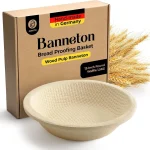
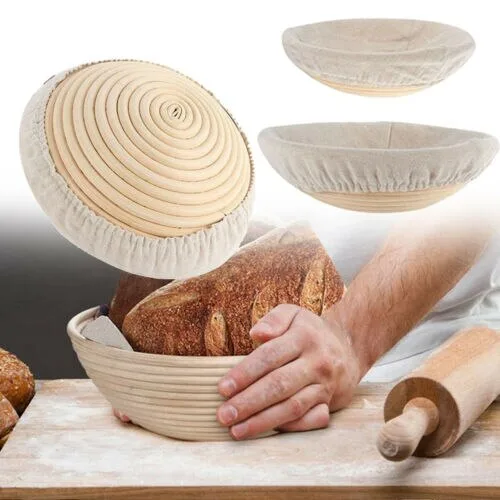
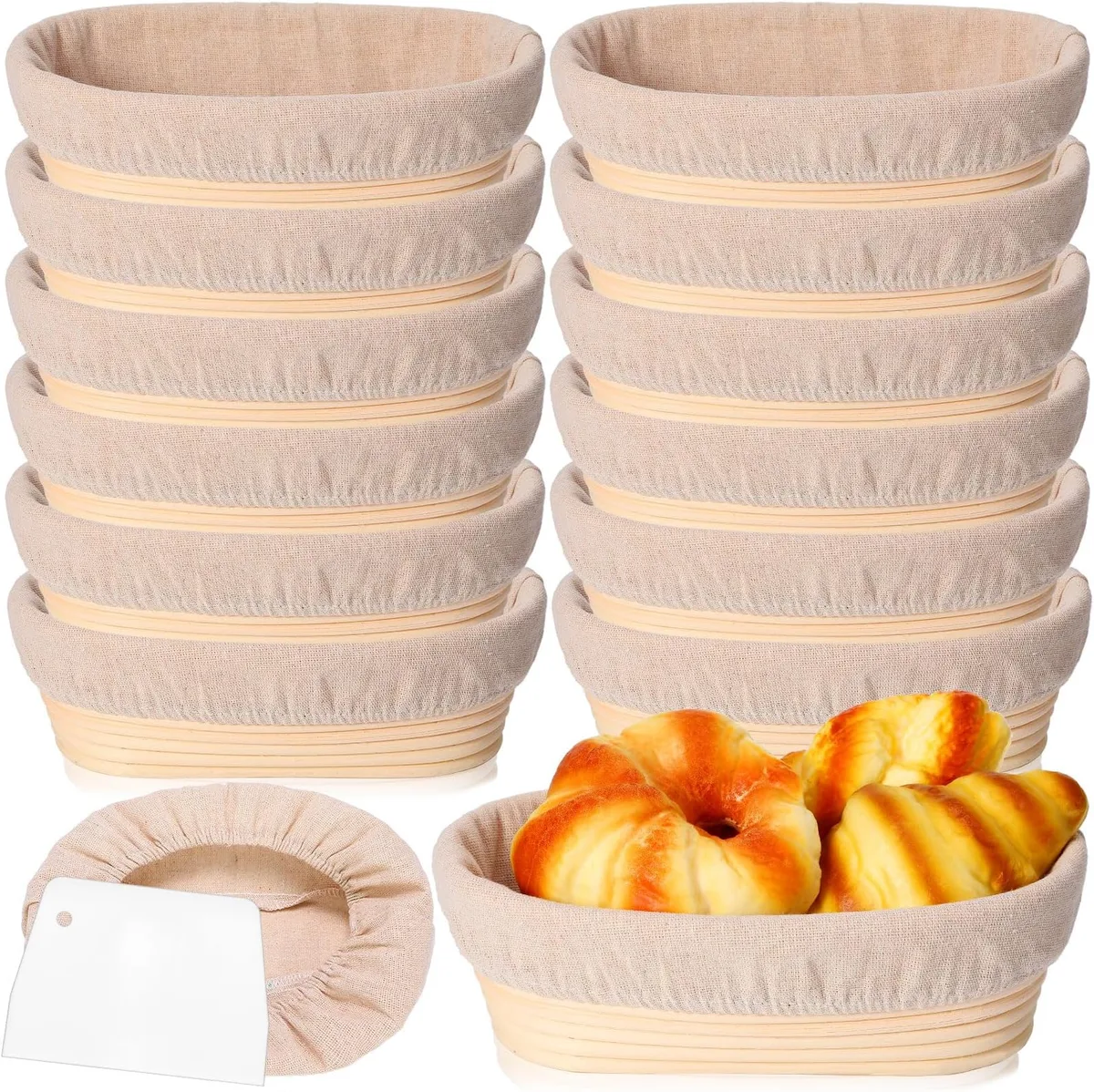
Unbleached cane rattan is the industry standard. It's durable, breathes well, and creates a beautiful spiral pattern on the crust. Wood pulp baskets are cheaper but less durable.
They also absorb more moisture, which can make them harder to clean.
Canvas Liners for High-Hydration Doughs
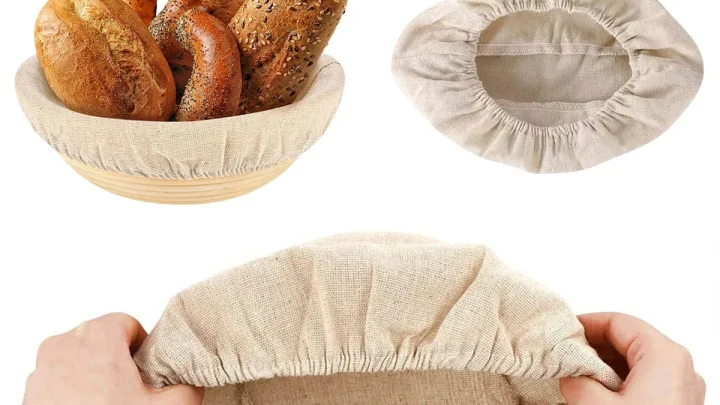
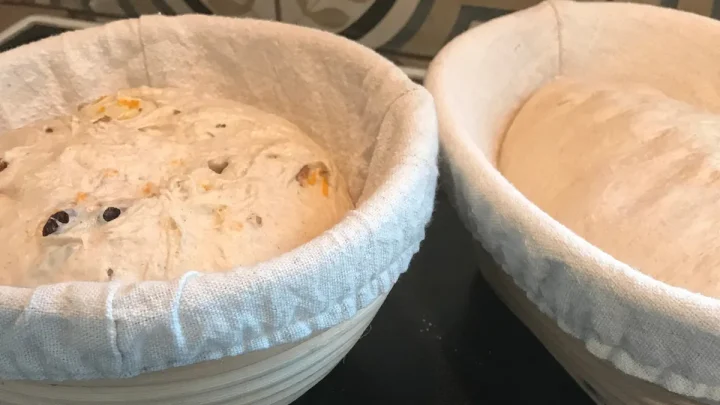
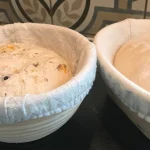
Canvas liners are a game changer for whole wheat doughs above 75% hydration. The fabric provides a smooth, non-stick surface that won't tear your dough when you flip it out. You can also remove the liner and wash it separately.
Why Rice Flour Matters More With Whole Wheat
Rice flour is the secret weapon for non-stick proofing. Unlike wheat flour, rice flour doesn't absorb into the dough's surface. It stays as a barrier between the dough and the basket.
Whole wheat dough is stickier than white dough, so the rice flour barrier is more critical. Dust generously. Use a rice flour and all-purpose flour blend in a 50/50 ratio for the best results.
Maintaining Your Baskets
After each use, brush out any excess flour. Let the basket dry completely before storing. A damp basket is a breeding ground for mold.
If your basket develops an odor, place it in a cool oven at 200°F for 30 minutes. That kills mold spores without damaging the rattan.
Practical Examples: Three Real Sizing Scenarios
Scenario 1: The Standard 500g Loaf at 70% Hydration
You've got a 500-gram dough at 70% hydration using 100% whole wheat flour. The dough is slightly sticky but manageable. You're baking in a 5.5-quart Dutch oven.
Pick a 9-inch round banneton. The dough will fill it about 75%, providing good support for a tall rise. This is the most common setup for home bakers, and it works reliably.
Scenario 2: The 750g Loaf With Seeds at 68% Hydration
You've added 100 grams of toasted sunflower seeds to a 650-gram dough, bringing your total to 750 grams. The hydration is 68%, so the dough is stiffer and holds its shape reasonably well.
A 10-inch round basket is the right call. The stiffer dough can handle the extra room, and the seeds add structure to the gluten network.
If you prefer an oval loaf, go with a 12-inch oval basket. The longer shape gives the seeds room to distribute evenly.
Scenario 3: The 1kg High-Hydration Whole Wheat Sourdough at 85%
This is advanced territory. You've got a 1000-gram dough at 85% hydration, and it's extremely slack. You're baking in a 7-quart Dutch oven with a lid.
Use a 10-inch round basket with a canvas liner. The steep sides and liner provide maximum support and prevent sticking. Your dough will fill the basket nearly to the rim, which is exactly what you want at this hydration.
Related Gear: Does Your Basket Need to Match Anything Else
Dutch Oven Interiors and Basket Diameter
Your basket diameter should always be smaller than your Dutch oven's interior diameter. For a 5.5-quart Dutch oven, a 9-inch round basket is ideal. For a 7-quart pot, go up to a 10-inch basket.
Always measure the actual interior dimensions of your pot. Cast iron brands vary in their exact measurements.
Cloche and Open-Air Baking Adjustments
If you're baking on a stone or steel without a cloche, use a slightly larger basket. The dough will spread more without walls to support it during baking. A 10-inch basket for a 500-gram dough gives you more horizontal room.
Scoring Patterns and Basket Height
A taller basket creates a higher dome, which gives you a better canvas for scoring. The ear you get from a 9-inch basket with a 4-inch depth will be more dramatic than one from a shallow 8-inch basket.
Parchment Paper for the Flip-Out
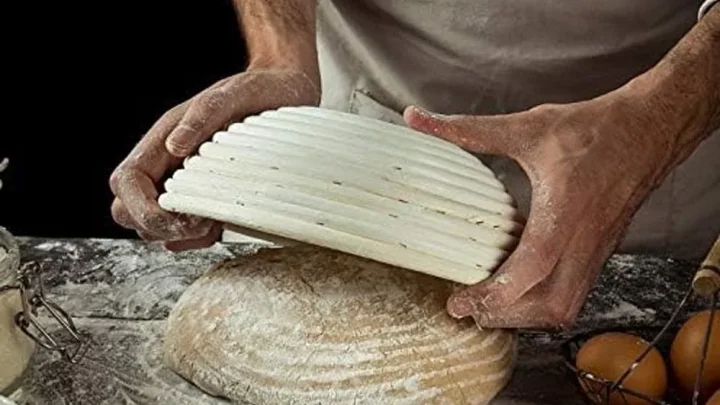
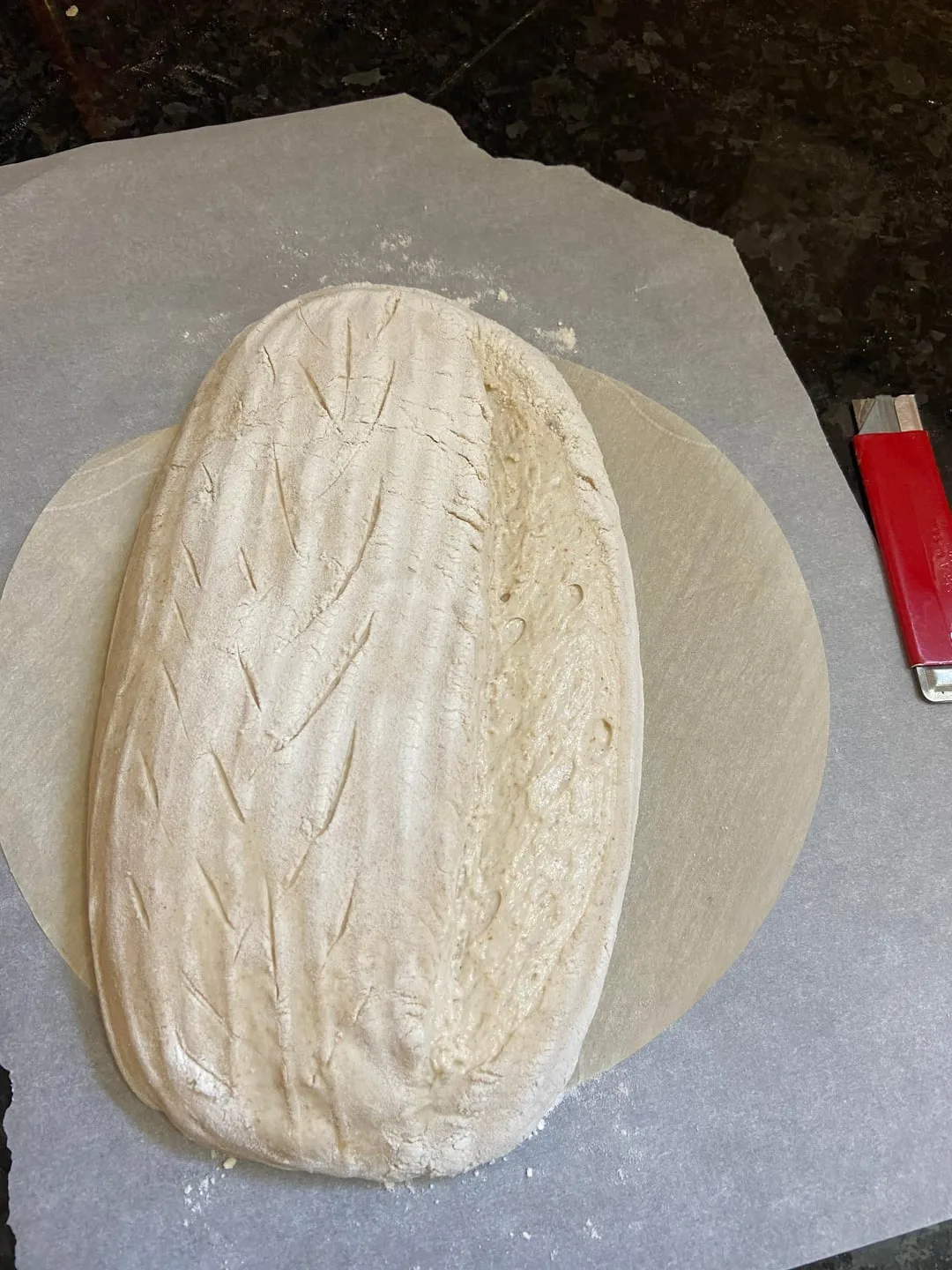
Always have a piece of parchment ready before you flip your dough. Place it on your peel or counter, then invert the basket. The dough should release cleanly with a gentle shake.
If it sticks, use a bench scraper to gently coax it free.
Troubleshooting: What Your Baked Loaf Tells You About the Basket
Flat and Spread-Out Loaf
Your basket was too big. The dough didn't have enough sidewall support to rise upward. Step down one basket size and keep everything else the same.
Mushroom Top With a Thin Waist
Your basket was too small. The dough spilled over the rim during proofing, creating that classic dumbbell shape. Use a larger basket or reduce your batch size.
Sticking on One Side
The basket wasn't dusted evenly. Brush rice flour into the corners and along the walls before adding your dough. Also check for moisture.
A damp basket will always stick.
Pale Sides and a Flat Crust
The dough was too close to the rim with no room to expand. Your basket was either too small or over-filled. Give the dough more headroom by using a larger basket or reducing your dough weight.
Final Sizing Decision Guide (Cheat Sheet)
Use this 30-second checklist when you're staring at your dough and basket, wondering what size proofing basket for whole wheat loaf you need:
- Weigh your final dough after bulk fermentation
- Check your hydration (65%, 70%, 75%+, 80%+)
- Adjust for inclusions like seeds or nuts
- Match your basket shape to your baking vessel
- Drop one size for doughs above 75% hydration
- Verify the dough fills 70 to 80% of the basket
Quick Reference Table
| Dough Weight | Hydration | Basket Size | Basket Type |
|---|---|---|---|
| 400-500g | 65-70% | 8-inch | Round |
| 500-700g | 65-75% | 9-inch | Round |
| 700-900g | 70-75% | 10-inch | Round |
| 400-600g | 65-70% | 10-inch | Oval |
| 600-800g | 65-70% | 12-inch | Oval |
| 800-1000g | 75%+ | 10-11 inch | Round, deep |
The golden rule: when in doubt, go smaller. Whole wheat dough always spreads more than you expect. A snug basket is your best insurance against a flat loaf.
Frequently Asked Questions
What size proofing basket do I need for a 500g loaf of whole wheat bread?
Use a 9-inch round basket for a 500-gram whole wheat loaf at standard hydration. The dough will fill it about 75%, providing enough sidewall support for a good rise. If your hydration is above 75%, consider an 8-inch basket for extra support.
Can I use a regular bowl instead of a proofing basket?
Yes, but you need to line it with a floured cloth. A bowl doesn't provide the airflow or crumb pattern of a rattan basket. You'll get a less distinctive crust and may need to dust more flour to prevent sticking.
For whole wheat doughs, a proper banneton is worth the investment.
What's the difference between a proofing basket and a bread tin?
A proofing basket shapes the dough during fermentation. A bread tin actually bakes the loaf. They serve different purposes entirely.
If you're baking in a loaf pan, you don't need a proofing basket at all. The pan itself provides the structure.
How much does a banneton cost?
A quality rattan basket costs between $15 and $40 as of 2026. Wood pulp versions are cheaper, around $10 to $15. Canvas liners add another $10 to their price.
Watch for sales at baking supply stores, and expect to replace a basket every one to two years with regular use.
Do I need to season my proofing basket?
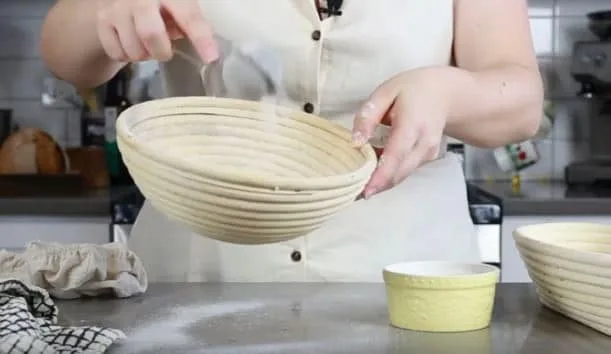
Yes, a light seasoning helps with release. Dust the basket with rice flour before the first use. Some bakers spray the basket lightly with water and dust with flour, then let it dry completely.
This creates a natural non-stick layer. Never oil a rattan basket, as it can go rancid and affect the dough.

Similar Posts