Beginner Sourdough: What Size Proofing Basket to Choose?
Trying to figure out what size proofing basket for beginner sourdough baking you need can feel surprisingly complicated. The answer is simpler than most guides make it: start with a 9-inch round basket.
As of 2026, the standard beginner sourdough recipe uses 500 grams of flour. That produces roughly 950 to 1,000 grams of total dough once you add water, starter, and salt. A 9-inch basket holds about 1,000 grams, which is exactly the range you need.
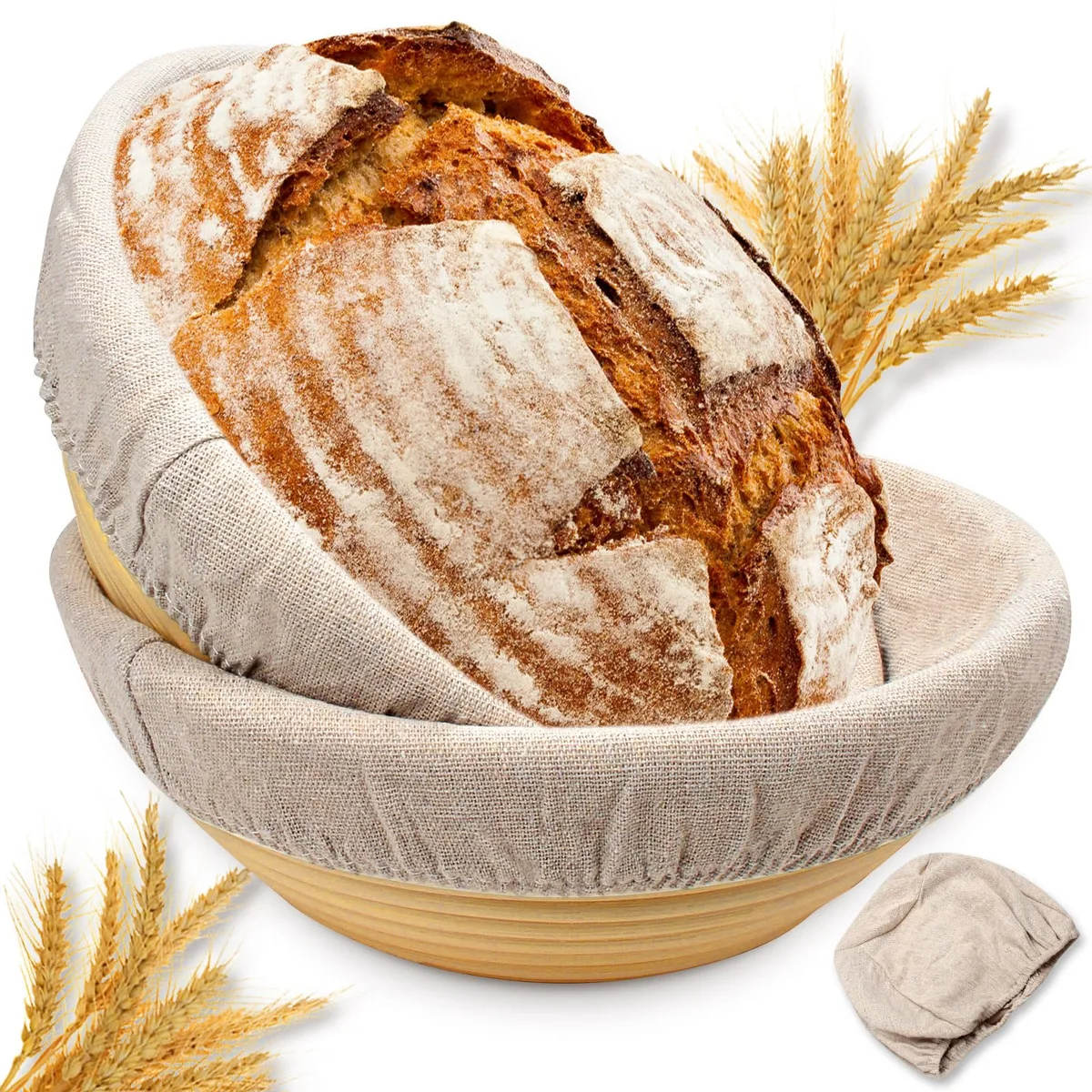
Why Most Beginners Pick the Wrong Size (And How to Avoid It)
The biggest mistake isn't buying too small. It's buying too big.
Large baskets look safer. You assume the dough needs room to grow. In reality, a basket that's too large gives the dough nothing to grip.
The dough spreads sideways and bakes into a flat, wide loaf instead of a tall one.
The other common error is trusting the flour weight on the product listing. A basket labeled "500 grams" usually means total dough weight, not flour weight. Your 500-gram flour recipe creates almost twice that in dough.
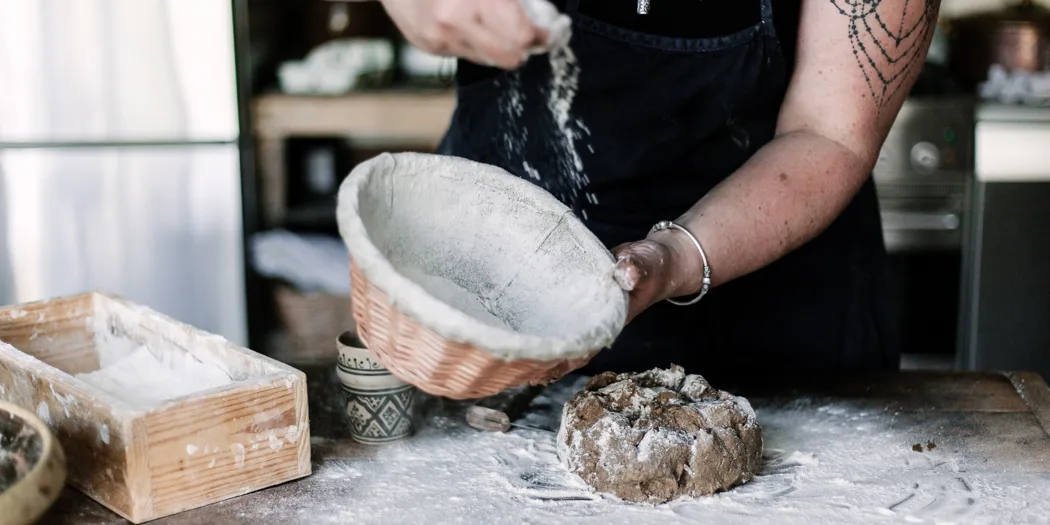
Quick Answer
Most beginners should buy a 9-inch round proofing basket. It holds roughly 1,000 grams of dough. That fits a standard recipe made with 500 grams of flour.
Choose 8 inches for smaller batches and 10 inches for large, high-hydration loaves.
What a Proofing Basket Actually Does for Sourdough
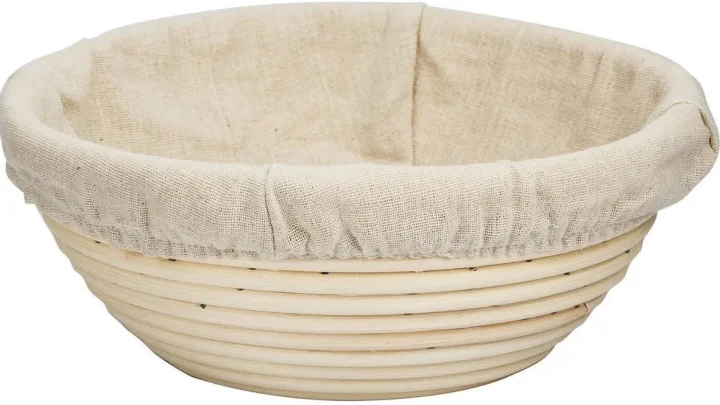
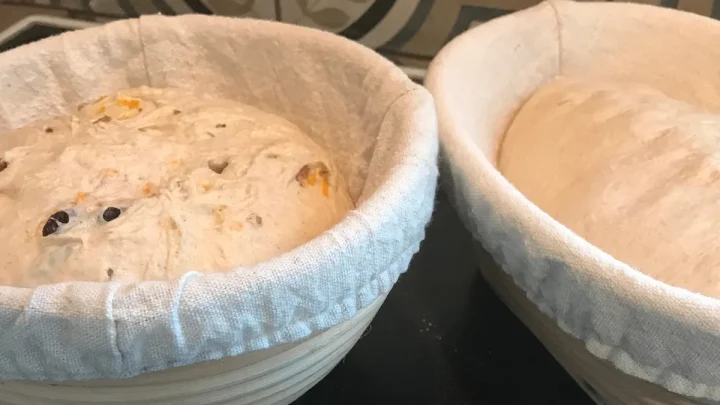
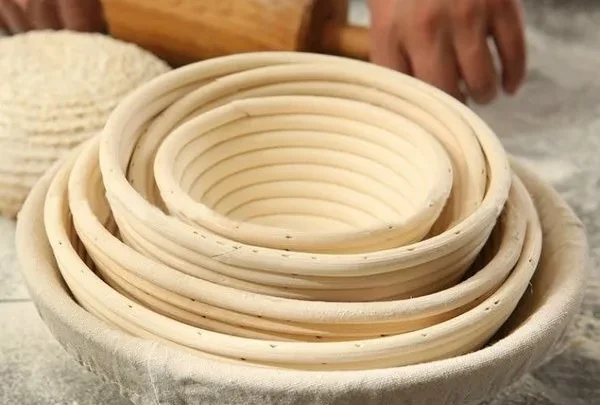
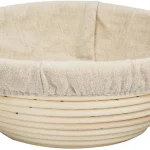
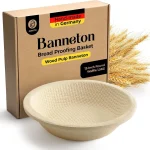
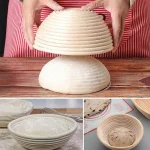
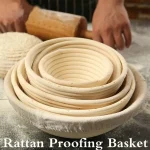
A proofing basket, also called a banneton, holds the shape of your dough during the final proof. It supports wet, loose dough so it rises upward instead of flattening across your counter.
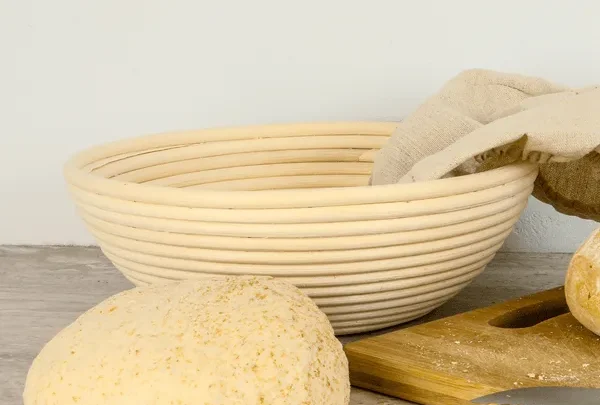
Most baskets are woven from natural rattan or cane. The open weave allows airflow around the dough, which helps form a light skin on the surface. It also leaves the classic flour-dusted rings on the crust.
| Material | Pros | Cons |
|---|---|---|
| Natural rattan | Breathable, creates crust pattern | Needs careful drying |
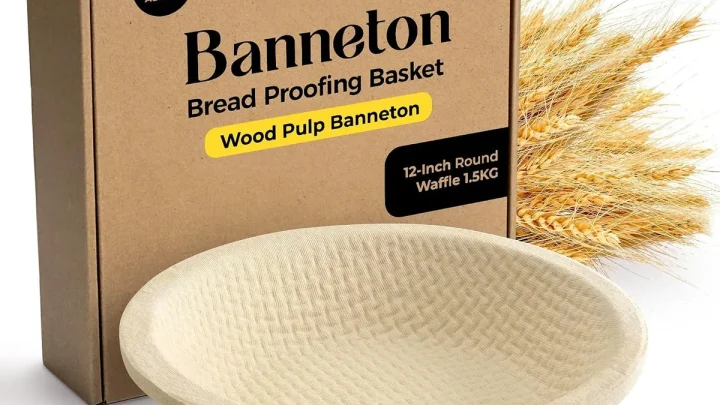
| Wood pulp | Cheap, smooth sides | Less airflow, no pattern |
| Plastic | Easy to clean, durable | No pattern, less traditional |
Bannetons are for proofing only. Never place the basket itself in the oven. You turn the dough out onto parchment or a peel before baking.
Round vs Oval vs Bâtard: Which Shape Should You Start With?
Round baskets make round loaves called boules. Oval baskets make oval loaves called bâtards. For a beginner, round is the better choice.
Round loaves are easier to shape. They require fewer folds and less tension control. They also fit standard Dutch ovens, which are round.
A 9-inch boule drops right into a 4.5 to 6 quart pot.
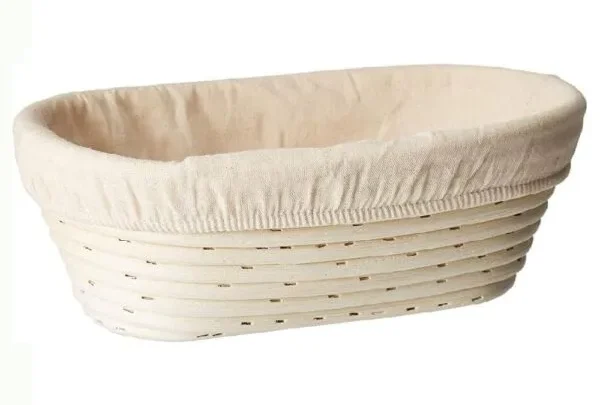
Oval bannetons create longer loaves with larger slices. That works well for sandwiches, but shaping a bâtard takes more practice. It's easy to end up with an uneven, lopsided loaf.
| Shape | Best For | Difficulty |
|---|---|---|
| Round (boule) | Dutch ovens, beginners | Easier |
| Oval (bâtard) | Sandwich slices | Moderate |
Basket Sizes Explained: 7", 8", 9", and 10" — What Each Holds
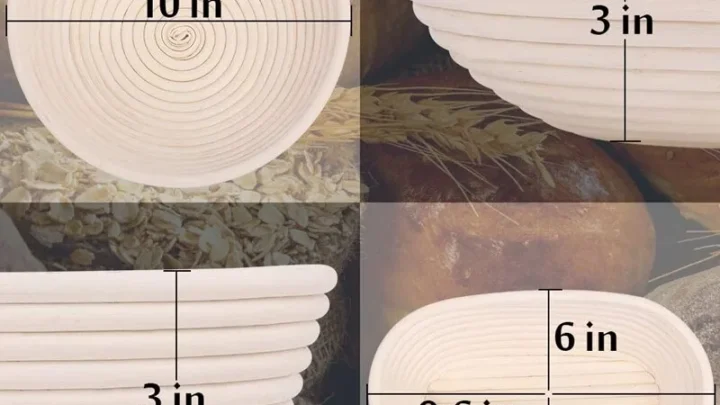
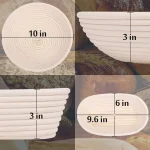
Basket sizes refer to the diameter at the top of the basket, not the volume. A 9-inch basket is a round bowl roughly 3 to 4 inches deep.
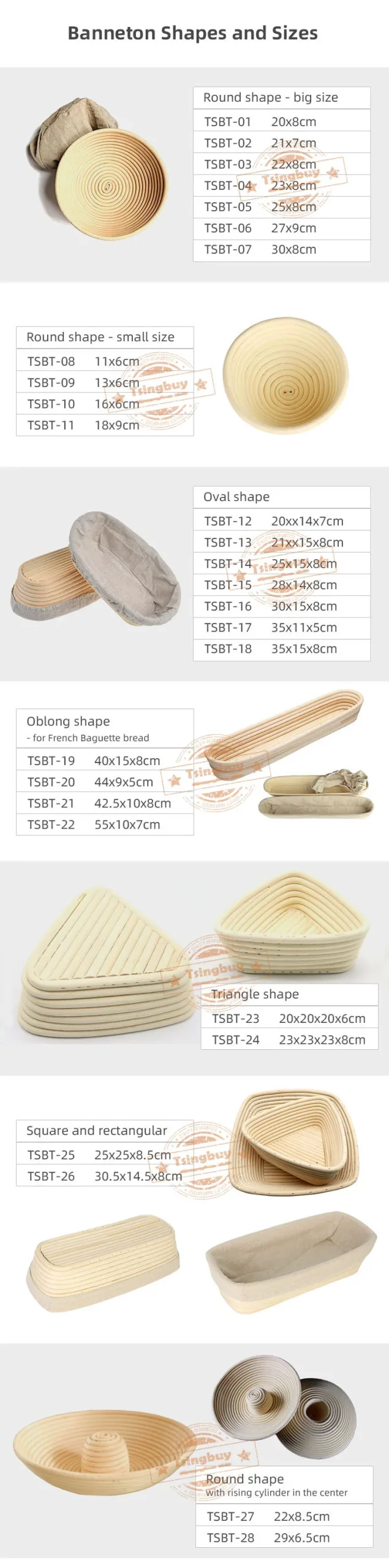
Here's what each size holds based on total dough weight.
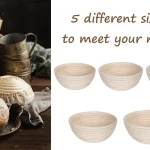
- 7-inch / 18 cm holds about 500 grams
- 8-inch / 20 cm holds about 750 grams
- 9-inch / 23 cm holds about 1,000 grams
- 10-inch / 25 cm holds about 1,250 grams
A 9-inch basket is the sweet spot. It matches standard beginner recipes, fits typical Dutch ovens, and fits comfortably on most fridge shelves. The 10-inch basket often doesn't fit home refrigerators.
The One-Basket Beginner Strategy (Skip the Multi-Pack)
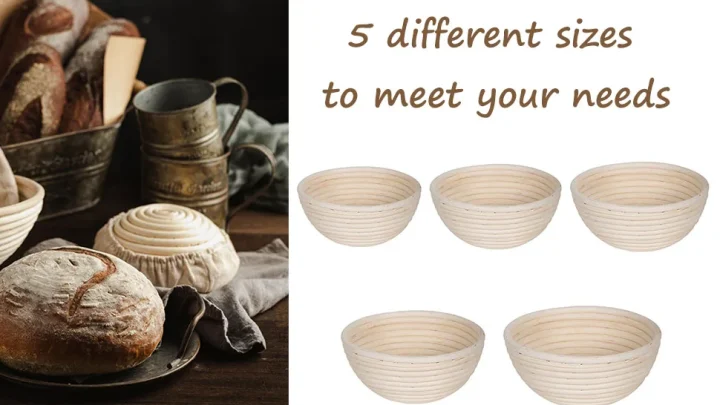
Banneton sets look tempting. Two baskets, two liners, and a dough scraper for one low price. The problem is that most sets pair an 8-inch and a 10-inch basket.
Your standard 950-gram dough falls awkwardly between those sizes. It's too big for the 8-inch and too small for the 10-inch. Buy one quality 9-inch round basket instead.
Master the basics with a single loaf, then decide if you need more.
Banneton vs Bowl with a Tea Towel: Is the Basket Even Worth It?
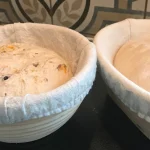
A mixing bowl lined with a floured tea towel can work. It's a common budget hack that has produced plenty of good loaves. But it's not the same as a real banneton.
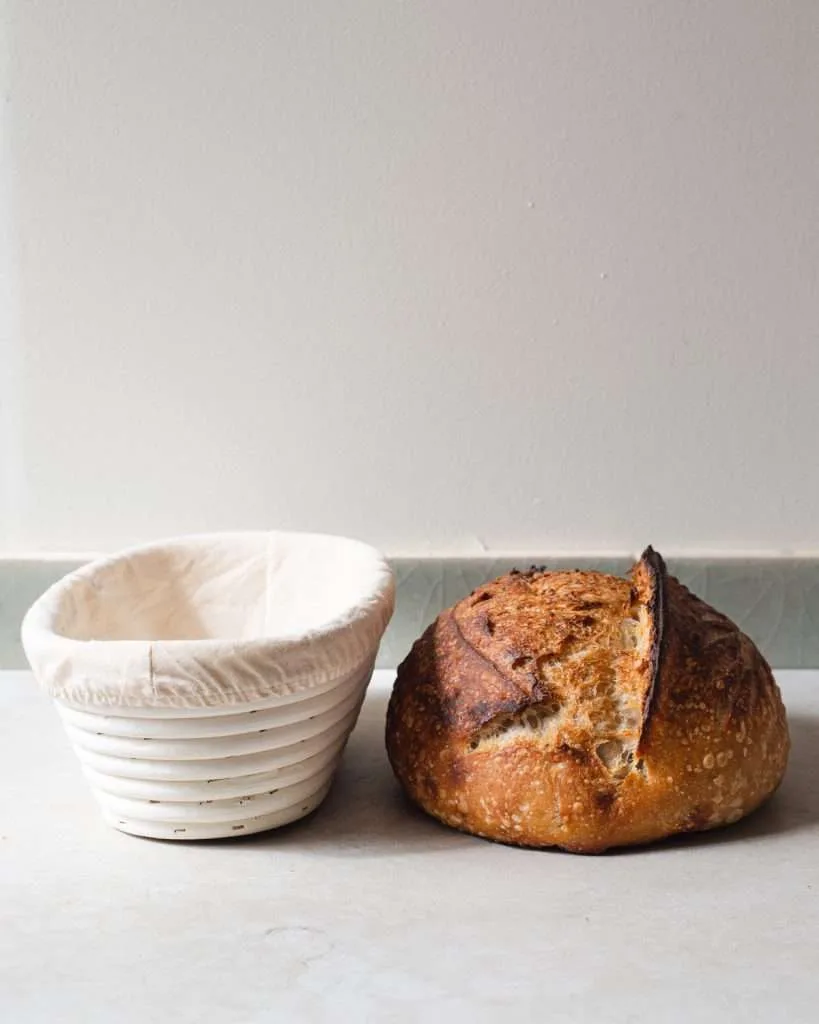
A bowl traps moisture and limits airflow. A banneton wicks moisture away from the dough, which helps build tension and oven spring. It also leaves that distinctive flour pattern on the crust.
| Factor | Banneton | Bowl with Tea Towel |
|---|---|---|
| Cost | $10 to $45 | Free to $5 |
| Crust pattern | Distinctive rings | Plain |
| Airflow | High | Low |
| Cleaning | Brush and dry | Launder towel |
For the price of a takeout meal, the banneton removes most of the variables that frustrate beginners.
Real-World Matching: Putting a Standard 950g Loaf in the Right Basket
Let's run the numbers on a typical beginner recipe.
- 500 grams flour
- 350 grams water (70% hydration)
- 100 grams starter
- 10 grams salt
That yields around 960 grams of total dough. A 9-inch basket holds roughly 1,000 grams. Perfect fit.
If you raise hydration to 80%, water jumps to 400 grams. Total dough weight climbs past 1,000 grams. The dough will also be softer and spread more.
Step up to a 10-inch basket, or proof at room temperature for less time and use the fridge to firm the dough.
Manufacturer guidance from King Arthur Baking matches these general dough weight recommendations.
5 Common Sizing Mistakes That Ruin Beginner Loaves
These are the errors that show up again and again in home baking forums.
1. Trusting flour weight instead of dough weight. A basket labeled "500 grams" refers to total dough, not your flour. The flour in your recipe creates nearly double that weight.
2. Buying the largest basket for "room to grow." That 10-inch basket just gives your dough room to flatten. The walls are what support a tall loaf.
3. Ignoring your fridge space. A big basket that doesn't fit on your fridge shelf forces you to proof at room temperature. You lose the tangy flavor of a cold, slow fermentation.
4. Using a basket that's too small for high-hydration dough. Wet dough spreads more aggressively. If you're baking at 80% hydration, size up.
5. Buying a set before you know your favorite recipe. Your ideal basket size depends on the loaf you bake most often. Nail that recipe first, then buy around it.
How to Use Your New Basket: A Simple Step-by-Step for the First Bake
Using a banneton takes about five minutes of active effort.
Step 1: Weigh your dough after mixing. This number determines whether your basket fits.
Step 2: Pre-shape into a round. Let it rest uncovered for 20 to 30 minutes. This relaxes the gluten.
Step 3: Do the final shape. Build surface tension by dragging the dough across the counter.
Step 4: Dust the basket with rice flour. Rice flour stays dry and doesn't absorb into the dough. All-purpose flour can stick.
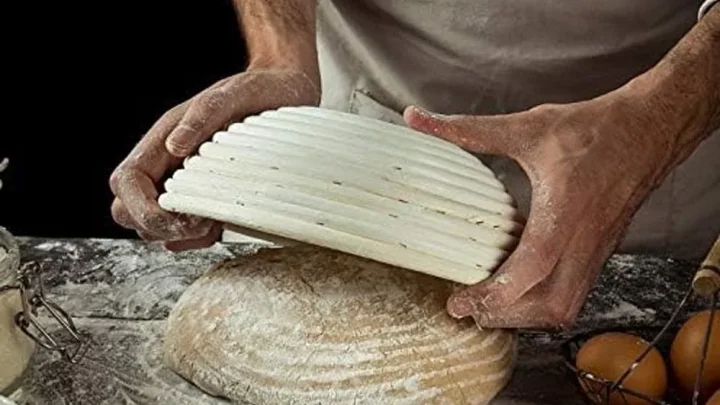
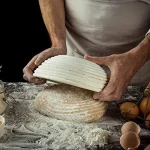
Step 5: Place the dough seam side up. The smooth top rests against the basket wall and creates the flour pattern.
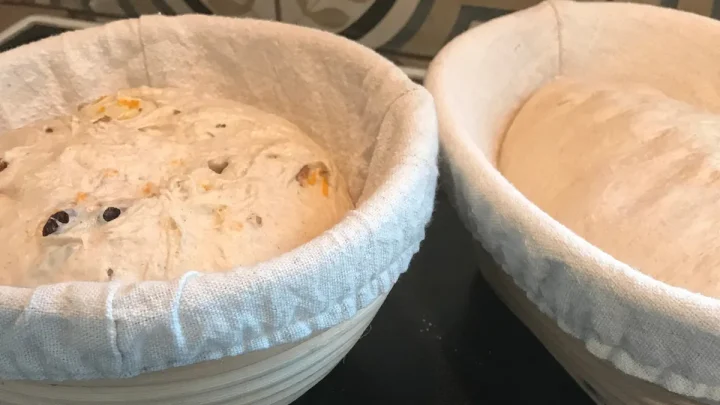
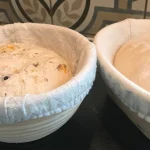
Step 6: Cover and proof. Use the linen liner or a clean plastic bag. Proof at room temperature for 1 to 2 hours, or in the fridge for 8 to 18 hours.
Step 7: Turn it out onto parchment. It should release cleanly. If it sticks, you under-dusted or the dough was too wet.
Cleaning and Care: Keep Your Basket from Getting Gross
Brush out all excess flour after every use. Never submerge the basket in water. Rattan and wood pulp swell, warp, and crack when soaked.
For stubborn dough residue, scrape gently with a dry utensil. Air-dry the basket completely before storing it in a dry spot.
If mold appears, brush it off and leave the basket in direct sunlight for a few hours. Sunlight kills mold spores without soaking the material. If the smell persists, replace the basket.
They're inexpensive enough that replacing is safer than risking contaminated dough.
FAQs: Proofing Basket Size, Fit, and Dough Weight Questions
What size proofing basket do I need for a beginner sourdough recipe?
A 9-inch round basket is the right choice for most beginners. It holds roughly 1,000 grams of dough, which matches a standard recipe built on 500 grams of flour. It also fits typical Dutch ovens and standard fridge shelves.
Can an 8-inch basket hold 900 grams of dough?
No. An 8-inch basket maxes out around 750 grams. A 900-gram dough will overflow the rim and lose its shape.
Use a 9-inch basket for anything between 800 and 1,100 grams.
What's the difference between inches and centimeters on proofing baskets?
They measure the same thing: the basket's top diameter. One inch equals 2.54 centimeters. A 9-inch basket is a 23-centimeter basket.
European brands often list only the centimeter measurement.
Should I buy a round or oval proofing basket as a beginner?
Start with round. Round loaves are easier to shape and drop directly into a standard Dutch oven. Oval bâtard loaves work well for sandwiches but require more shaping skill.
Learn the round loaf first.
Final Verdict: The Best First Basket for a Beginner Sourdough Baker
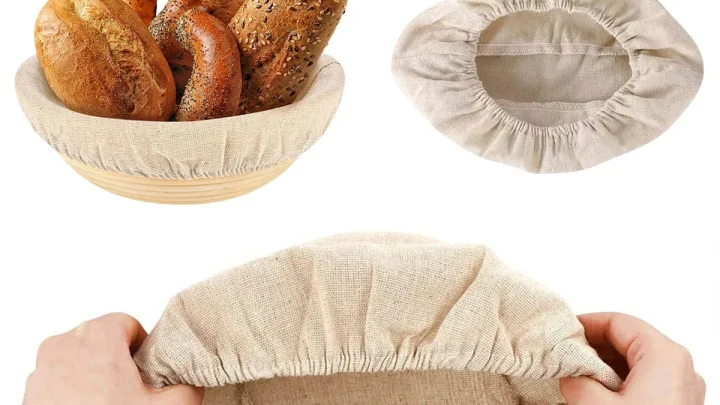
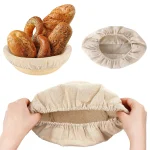
Buy a single 9-inch round banneton with a linen liner. It matches the weight of a standard beginner dough. It fits a typical Dutch oven and fits on most fridge shelves.
The 7-inch is too small. The 10-inch is too big. The sets force you to compromise.
The 9-inch round basket is the just-right answer, and it will carry you from your first loaf to confident weekly bakes.

Similar Posts